 Tours
Tours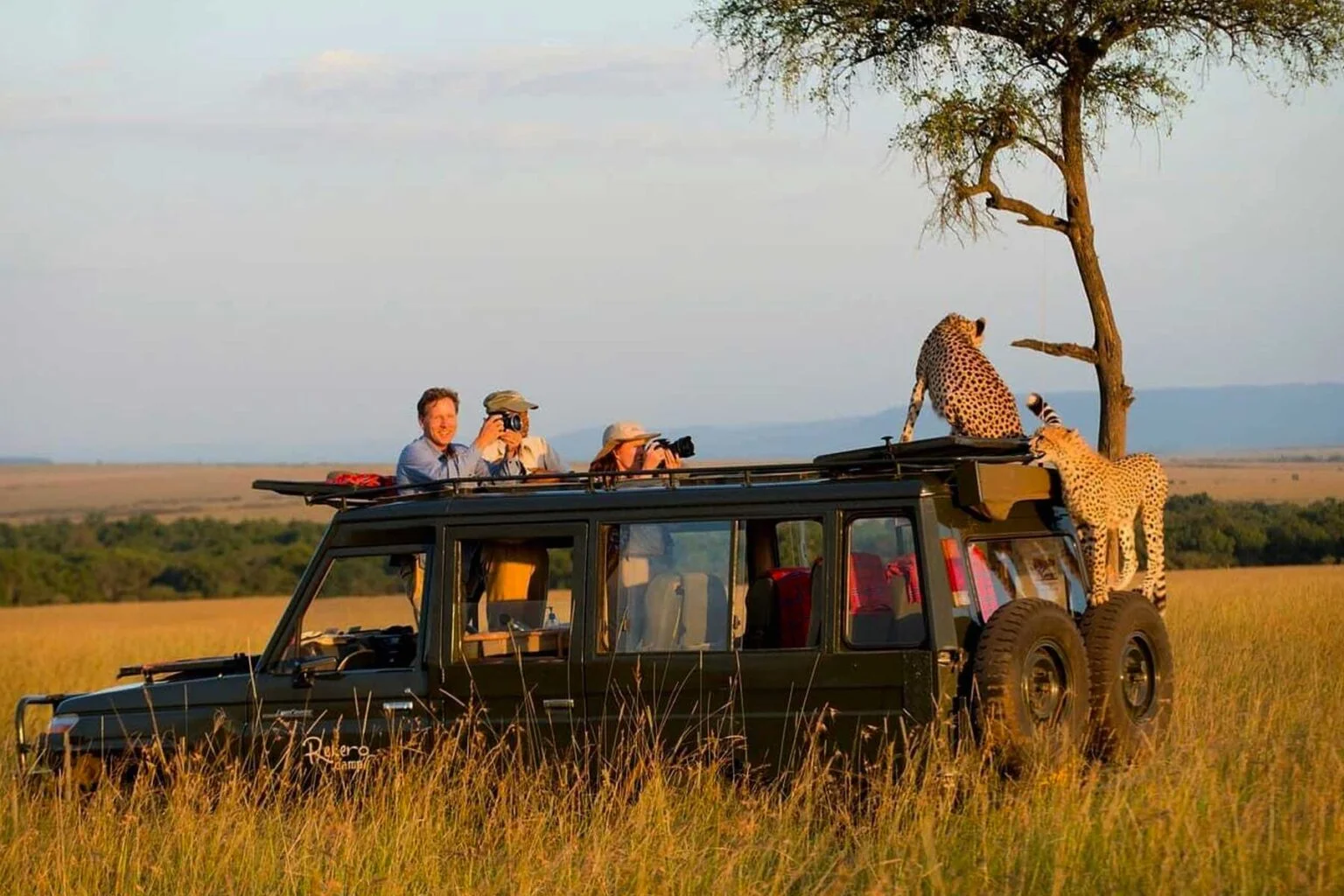
NoMiddleManTours · Jun 22, 2026 · 13 min read
A guide-grade breakdown of how game drives in Tanzania actually work — gate hours, why there are no night drives inside the national parks, morning versus afternoon productivity, private versus shared vehicles, the radio network, the crater rules and what to tip.
A game drive in Tanzania is not a bus tour with animals. It is a slow, structured hunt for wildlife from a 4x4 with a pop-up roof, run inside a hard window of legal driving hours, governed by rules most first-timers never hear until they are already in the seat. Get the mechanics right — the time of day you go out, the vehicle you book, the guide who works the radio — and the same park delivers two completely different trips. This is the working knowledge a 20-year guide carries in their head: when the cats actually move, why you cannot drive after dark in the Serengeti, what the Ngorongoro Crater really costs to enter, and what to hand your guide at the end.
The one rule that shapes everything: 6 AM to 6 PM, no night drives#
Every Tanzania national park managed by TANAPA runs on the same clock: gates open at 6:00 AM and close at 6:00 PM, and no vehicle is permitted to drive inside the park after dark. There are no exceptions to "off by 6," and a few gates are stricter still — Ndabaka and Klein's Gate into the Serengeti stop allowing entry after 4 PM, and the Ngorongoro Crater's Seneto descent road closes at 4 PM. This single rule cascades into your whole itinerary: it dictates how far you can transfer in a day, why lodges push you out the door before dawn, and the reason your morning drive feels rushed if you slept an hour from the gate.
The corollary trips up nearly everyone: there are no night drives inside Tanzania's national parks. That spotlit search for leopard, genet, aardvark, bushbaby and hunting hyena that you have seen in films is real, but it is not legal inside the Serengeti, Tarangire, or any other standard TANAPA park — Lake Manyara is the one exception, where a small number of operators hold special TANAPA night-drive permits, but it is not a standard offering. After-dark game viewing happens only in private conservancies and Wildlife Management Areas (WMAs) that sit on the park boundaries and play by different rules. The Tarangire-area WMAs — Randilen, Burunge and Manyara Ranch — and reserves like Mwiba on the southern Serengeti boundary are where you book a genuine night drive. If a nocturnal sighting is on your wish list, you have to design for it: build at least one night at a conservancy or WMA camp into the trip, because no amount of money buys you a night drive in the park itself.
 Destination
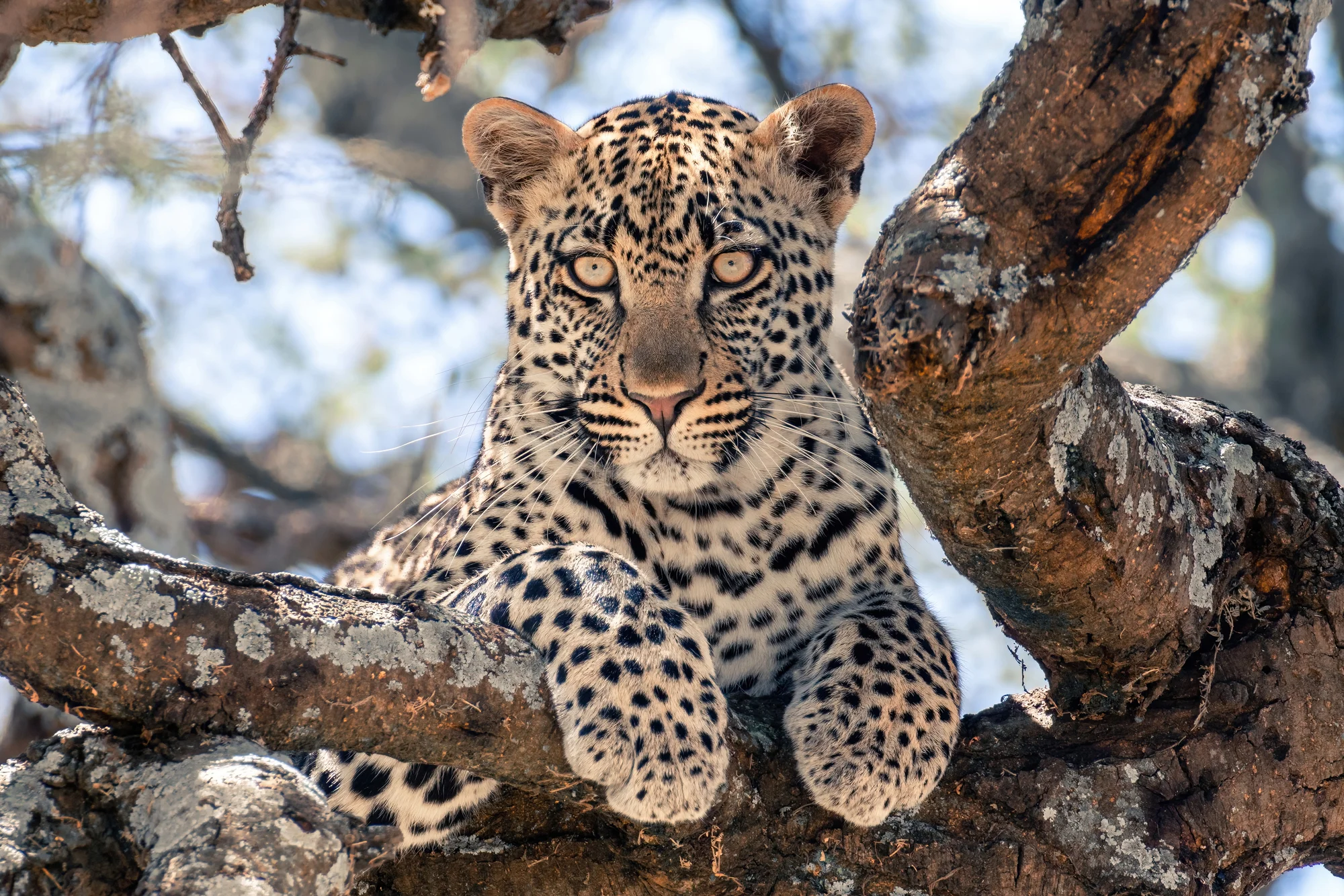
Serengeti National Park
national_park
The numbers at a glance#
Before the detail, here is every hard fact a game-drive day in northern Tanzania runs on.
| Item | The number | Notes |
|---|---|---|
| Park gate hours | 6:00 AM – 6:00 PM | No driving inside parks after dark |
| Night drives in parks | Not allowed | Conservancies and WMAs only |
| Most productive window | First & last 2 hours of light | Dawn beats dusk for cats |
| Off-road driving | Banned in parks | Allowed in conservancies/WMAs |
| Standard vehicle | Land Cruiser, pop-up roof | Max 6–7 so all get a window |
| Ngorongoro entry | US$82.60 per adult / 24 hrs | Conservation-area fee |
| Crater descent fee | US$295 per vehicle / descent | Flat, not per person |
| Crater ranger | ~US$40 per vehicle | Required, paid at rim |
| Crater floor limit | 6 hours | Strictly observed |
| Tip (private guide) | US$15–25 per person / day | Lump sum at trip end, in USD |
Morning versus afternoon: when the wildlife actually moves#
If you remember one tactical thing, remember this: the first and last two hours of daylight do most of the work. Predators hunt in the cool, rest through the heat, and become near-invisible from roughly 11 AM to 4 PM when they lie up in shade. The dawn drive — out of camp by 6 AM, ideally already inside the park — is the single most productive window of the day. You catch cats still on a kill or walking the roads they used overnight, the light is soft for photography, and the air is cold enough that lions stay out in the open instead of vanishing into cover.
The honest comparison: a morning drive is more productive than an afternoon drive in almost every park, almost every season. Afternoons are good for elephant and general plains game, for hippo pools, and for the golden hour right before the 6 PM cut-off when predators stir again — but the statistical bulk of the cat sightings come at dawn. This is exactly why where you sleep matters so much. A camp deep inside central Serengeti near Seronera puts you on a sighting at first light; a lodge an hour outside the gate means you are queuing at 7 AM while the best hour is already gone. The midday gap is not wasted — it is for a bush lunch, a rest, the swimming pool, or a slow drive past a hippo pool — but plan the day around the bookends, not the middle.
A detail nobody tells first-timers: in the green season of November to May, you can sometimes stay out longer through the morning because the heat builds later and cloud cover keeps animals active — your guide will read the day. In the dry peak of June to October, the productive window closes harder and earlier as the sun climbs.
Full-day versus half-day drives#
A half-day drive runs roughly 6 AM to noon or noon to 6 PM and suits a small, well-stocked park where you return to the same camp. A full-day drive means you leave at dawn with a packed lunch and stay out until the gate closes, covering ground a half-day cannot reach. The choice is not about stamina — it is about geography.
In central Serengeti around Seronera, where predator density is the highest in Africa, two half-days bracketing a midday rest often beat one full day: you hit both productive windows and skip the dead heat. But a full day is the right tool when you need to transit and game-view at once. The classic example is the 5-to-6-hour transfer from Seronera to Kogatende in the northern Serengeti — about 180 km of park track that you treat as a full-day game drive rather than a transfer, because you are inside the park the whole way and will see plenty en route. The same logic applies to reaching the Silale Swamp in southern Tarangire, which is too far inside the park to attempt as a day trip from outside the gate. Match the drive length to the distance you actually need to cover, not to a sense that "more hours equals more animals."
Private versus shared vehicle: the decision that changes the trip#
This is the choice that separates a good safari from a frustrating one, and it is worth real money. On a shared (group) game drive you ride with strangers, on a fixed schedule, and the vehicle goes where the majority wants — which means you leave a brilliant leopard sighting because someone else is bored, or you skip the dawn start because the group voted for breakfast first. On a private vehicle you and your party have the 4x4 and the guide to yourselves: you set the wake-up time, you stay at a sighting for forty minutes if the light is right, and you can chase the radio call across the park without a committee.
The practical breakdown: shared drives are cheaper and perfectly fine for a first, budget-conscious trip in a high-density park like the central Serengeti, where you will see a lot regardless. But for photographers, for families with small children who need flexibility, for honeymooners, or for anyone on a once-in-a-lifetime trip, a private vehicle is the highest-value upgrade on the whole safari — more impactful than a tier jump in lodging. It is the difference between watching wildlife and directing your own day.
Window seats, the pop-up roof, and where to actually sit#
The standard Tanzania safari vehicle is a Toyota Land Cruiser with a pop-up roof — a hinged hatch that lifts so you can stand and shoot 360 degrees over the cab. Two logistics nobody mentions until you are jammed against a stranger's elbow: every window must be a window seat, and the middle row is the prize. A properly outfitted vehicle seats a maximum of six or seven so that everyone has their own window and their own roof opening; if an operator crams in more, someone is shooting over a shoulder. The middle bench gives the best balance of roof access and a low, stable shooting position; the back row bounces hardest on corrugated roads; the front passenger seat next to the guide is quiet and good for conversation but limits your roof movement.
Two more field rules: keep your gear in a soft bag on the floor, not the seat, so the roof space stays clear, and never stand up or open a door at a predator sighting — animals read the vehicle as one large, harmless shape, and a human breaking that silhouette can turn a relaxed lion edgy in seconds. Stay seated below the roofline, move slowly, and let the guide position the car.
The radio network: the invisible advantage of a great guide#
Here is the leverage point that decides how many cats you see, and it has almost nothing to do with luck. Tanzania's guides share sightings over a radio network. When one driver finds a leopard draped in a sausage tree along the Seronera River, that location travels by radio to every guide listening — and a strong, well-connected guide turns one vehicle's find into yours. A weak or freelance guide outside the network simply does not get the calls.
This is why the single highest-leverage decision you make is the operator and the guide, not the lodge. A great guide reads tracks and alarm calls, knows individual leopards by territory, understands which kopjes a pride favours at which hour, and is plugged into the chatter that surfaces the once-a-week sightings. The lodge is where you sleep; the guide is who finds the animals. Spend up on the guide before you spend up on thread count. It also pays to ask, when you book, whether your guide will be with you for the whole trip — continuity means they learn what you want to see and the territories fill in over the days.
 Luxury
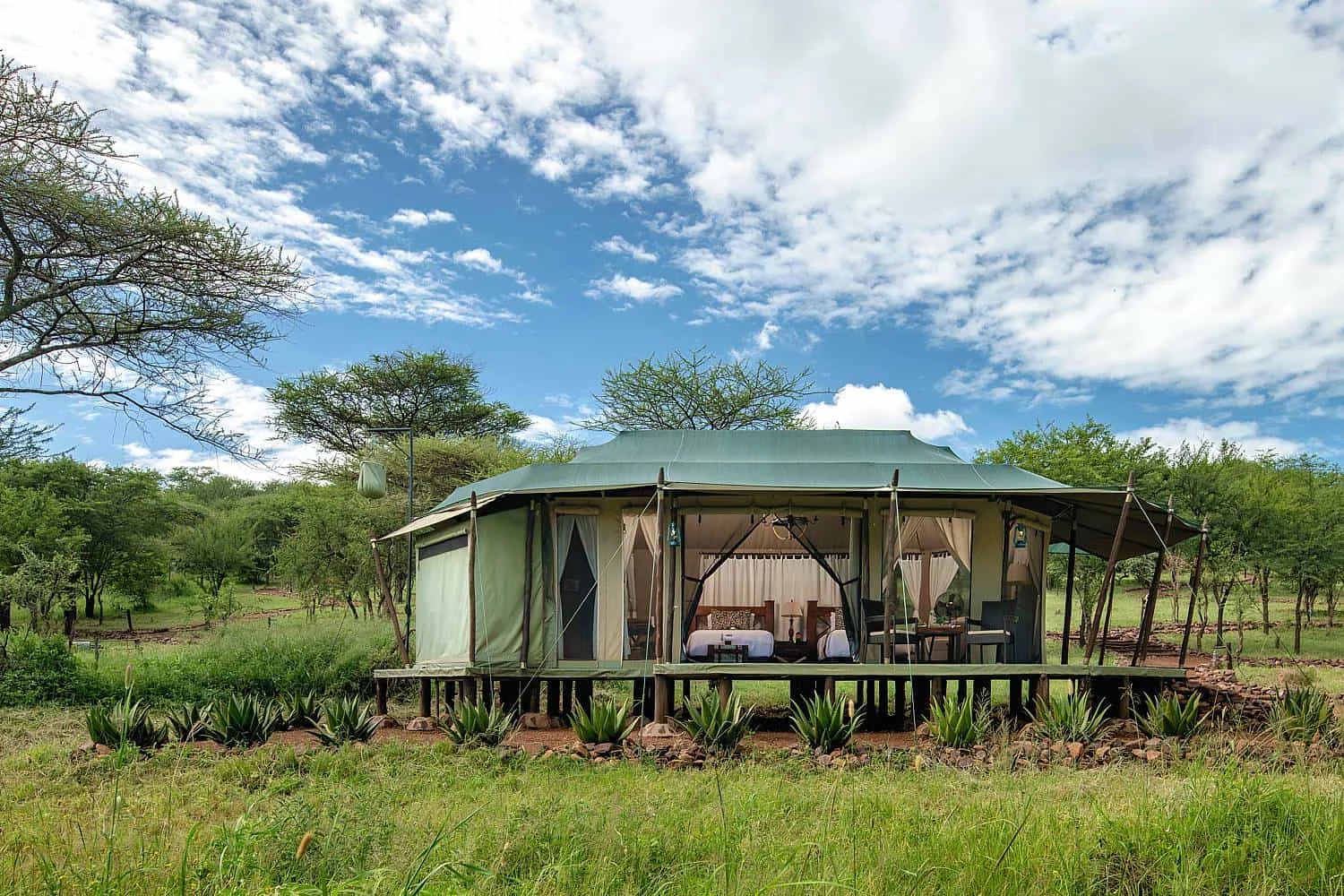
Ole Serai Luxury Camp — Seronera
Luxury · Serengeti National Park
The Ngorongoro Crater: a different rulebook and a real bill#
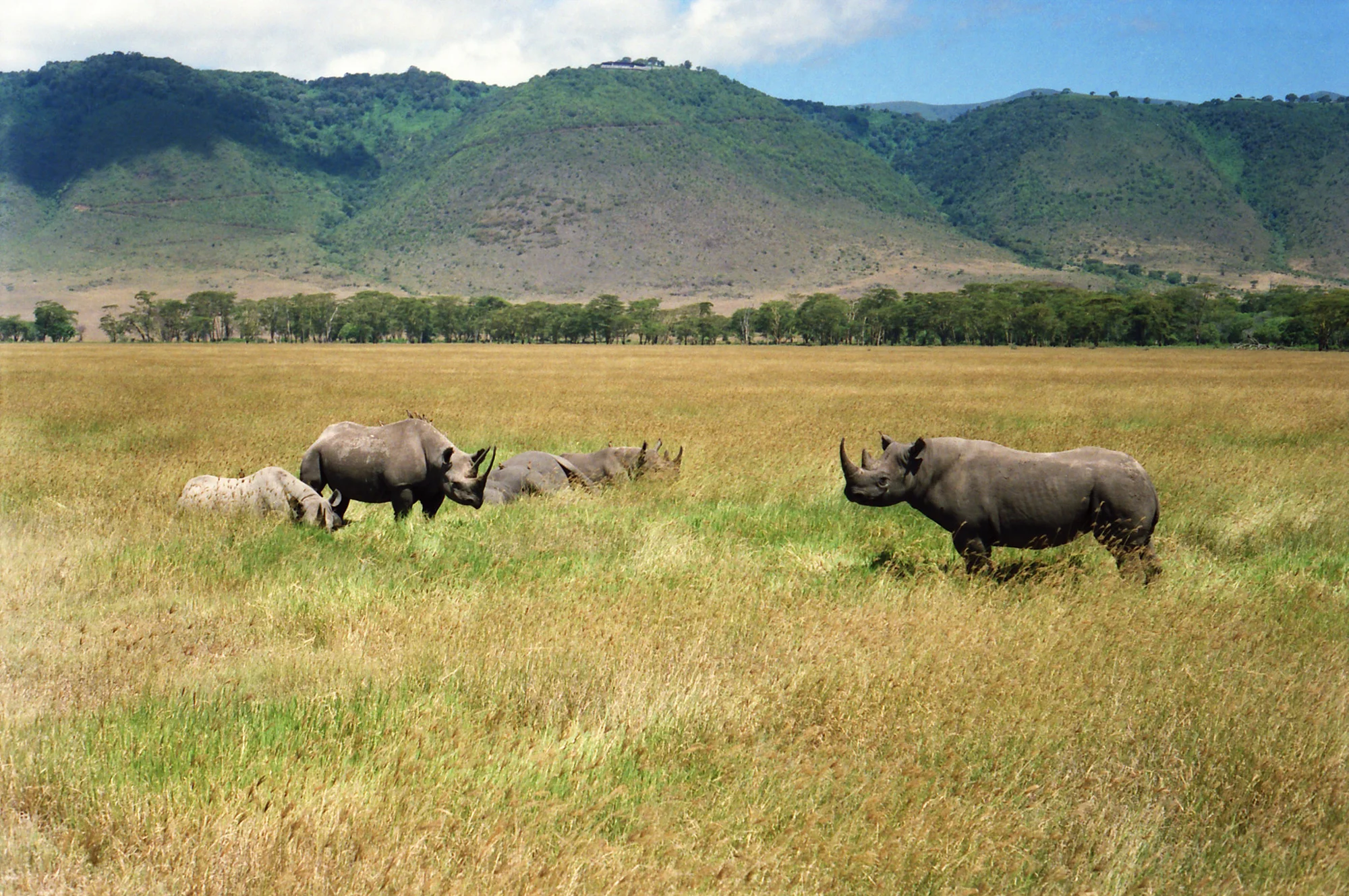
The Ngorongoro Crater is the one place on the northern circuit that is not a TANAPA park — it is a multiple-use conservation area run by the NCAA, and it has its own rules and its own costs. A crater game drive is the single best chance in Tanzania to see black rhino, alongside lion, elephant and dense buffalo on an enclosed floor, which is why nearly every classic itinerary includes it. But the bill is layered and worth knowing before you are surprised by it.
Entry to the conservation area is US$82.60 per adult per 24 hours. On top of that, descending to the crater floor costs a flat US$295 per vehicle per descent — not per person, not per day, but each time the car goes down — plus roughly US$40 for the licensed ranger required for the descent, arranged at the rim gate. There is also a strictly observed six-hour limit on the crater floor, so the day runs to a clock: most guides aim to arrive at the Seneto descent road by 6 AM (remember it closes to descents at 4 PM), work the floor — the Lerai Forest, the open grassland by Lake Magadi, the hippo pool — until around noon, then ascend the one-way Lerai road before the limit runs out. You also cannot get out of the vehicle on the crater floor except at the designated picnic site. Stay on the crater rim the night before and you start the descent in the golden first hour; sleep down in Karatu outside the conservation area and you save substantially on lodging but realistically reach the descent road closer to 7:30 or 8 AM.
 Destination
Ngorongoro Conservation Area
conservation_area
Off-road driving: allowed in conservancies, banned in the parks#
One more rule that quietly shapes what your sightings look like: off-road driving is prohibited inside Tanzania's national parks. Vehicles must stay on established tracks, which is why a leopard fifty metres off the road in the Serengeti is a binocular sighting, not a front-row one — your guide cannot legally cut across the grass to it. This protects the habitat and spreads pressure, but it does cap how close you get.
The flip side is the case for the private conservancies and WMAs again: in those areas off-road driving is allowed, so a guide can leave the track to position you metres from a cheetah on a kill or follow a hunting wild dog pack. Combine that with permitted walking safaris and night drives, and a night or two at a conservancy on the edge of the ecosystem buys a fundamentally different, more intimate kind of game viewing than the park alone. It is the strongest argument for pairing a classic park circuit with an off-the-beaten-path conservancy leg.
Tipping your guide: the norms, in numbers#
Tipping is expected, it is a meaningful part of a guide's income, and vague advice helps nobody, so here are working figures. For a private driver-guide, plan US$15 to US$25 per person per day — on a two-person vehicle that is US$30 to US$50 total per day, which the whole car pools and hands over as a lump sum at the end of the safari, in cash, ideally US dollars in clean post-2006 notes. On a shared group game drive the guide tip is the same US$15 to US$25 per person per day, with the lower end of that range appropriate on a large-group shared vehicle. At lodges, a separate communal tip box of a few dollars per guest per day covers the back-of-house staff, and you can hand a bush cook or camp butler something directly. If your guide genuinely made the trip — found the rhino, worked the radio hard, taught you the ecosystem — tip above the range; it is the clearest signal in the industry and it travels. Carry the cash with you, because there are no ATMs in the parks.
Putting it together: a classic game-drive circuit#
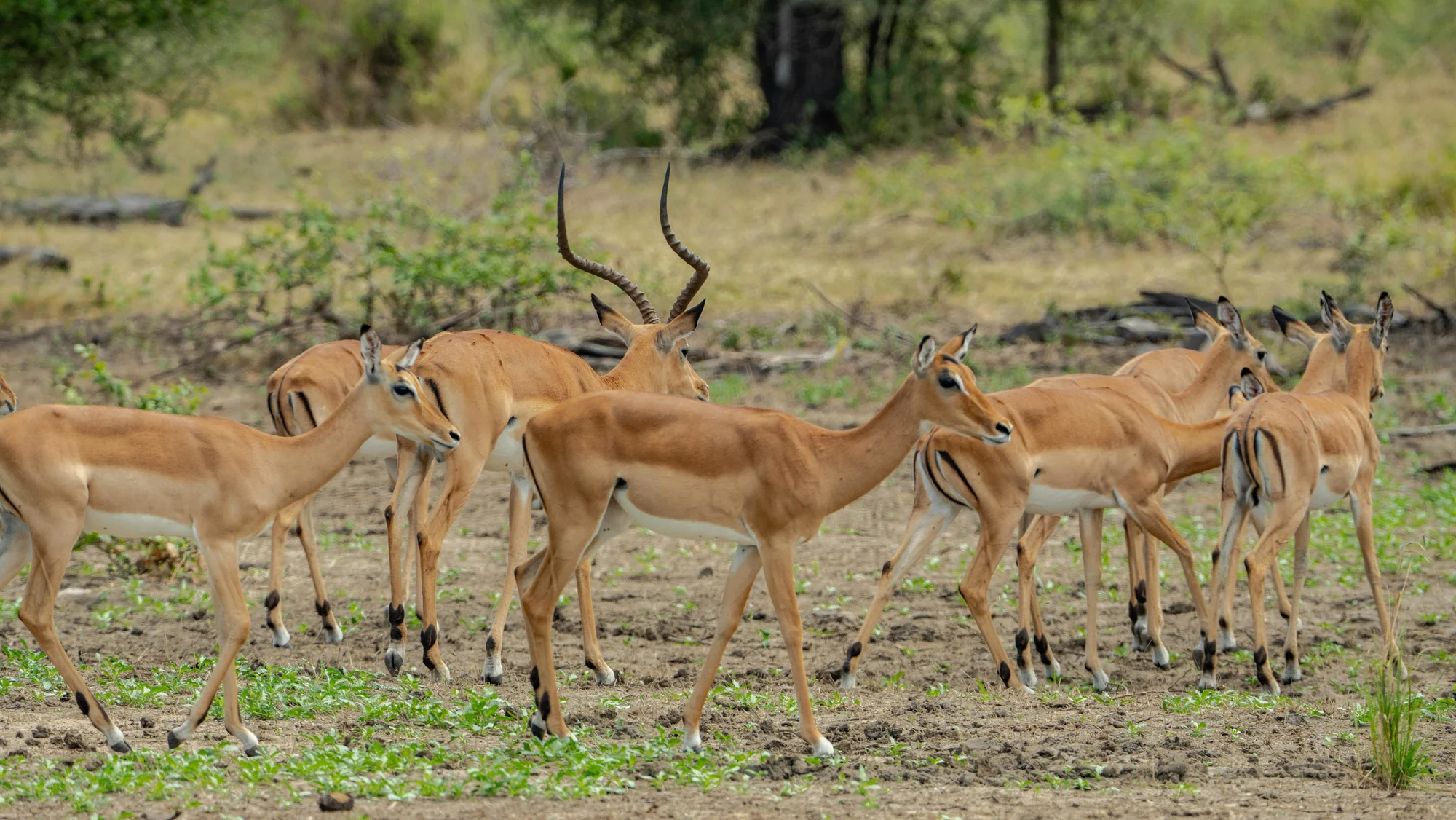
The northern circuit is built around exactly these mechanics — dawn drives, a private vehicle, full-day transits that double as game drives, and a crater day timed to the descent clock. A classic seven-day loop opens in Tarangire, drops through Lake Manyara, times the Ngorongoro Crater for an early descent, and gives the bulk of its nights to the cat-rich central Serengeti before the crater finale. The route below threads all of that into one trip.
 Itinerary
7-Day Comprehensive Northern Circuit Safari (Crater Finale)
7 days · From $2,433 pp
If you would rather compare every game-drive-focused route — durations, regions, vehicle styles and lodge tiers — start here:
Compare Tanzania safari routesFrequently asked questions#
What time do game drives start and end in Tanzania? Tanzania national park gates open at 6 AM and close at 6 PM, and no driving is allowed inside the parks after dark. Morning drives usually leave camp by 6 AM to catch the most productive window; full-day drives run until the 6 PM gate closing with a packed lunch in the bush.
Are night drives allowed in Tanzania? Not inside the standard national parks. Night drives are prohibited in TANAPA parks such as the Serengeti and Tarangire; the one exception is Lake Manyara, where a small number of operators hold special TANAPA night-drive permits, though it is not a standard offering. To reliably do a spotlit night drive for nocturnal species you stay in a private conservancy or a Wildlife Management Area on a park boundary, like the Tarangire WMAs or Mwiba, where different rules apply.
Is a morning or afternoon game drive better? Morning drives are more productive in almost every park and season because predators hunt in the cool hours at dawn and rest through the midday heat. Afternoons are good for elephant, plains game and the golden hour before the 6 PM cut-off, but the bulk of cat sightings come at first light.
Should I book a private vehicle or a shared game drive? A shared vehicle is cheaper and fine for a first budget trip in a high-density park like the central Serengeti. A private vehicle lets you set your own schedule, stay at a sighting as long as you like, and chase radio calls freely — it is the highest-value upgrade for photographers, families and once-in-a-lifetime trips.
How much does it cost to drive into the Ngorongoro Crater? The Ngorongoro Conservation Area charges US$82.60 per adult per 24 hours, plus a flat US$295 per vehicle for each descent to the crater floor and about US$40 for the required ranger. There is also a strictly observed six-hour time limit on the crater floor.
Can the driver go off-road to get closer to animals? Not in the national parks — off-road driving is prohibited, so vehicles must stay on the tracks. Off-road driving is allowed in private conservancies and Wildlife Management Areas, which is why a conservancy leg lets a guide position you much closer to a sighting.
How much should I tip my safari guide in Tanzania? For a private driver-guide, plan US$15 to US$25 per person per day — on a two-person vehicle that is US$30 to US$50 total per day, handed over as a lump sum at the end of the safari in US dollars. On a shared group drive the guide tip is the same US$15 to US$25 per person per day, with the lower end appropriate on a large-group shared vehicle, plus a separate communal tip for lodge and camp staff.
Why does the safari vehicle have a pop-up roof, and where should I sit? The hinged pop-up roof lets you stand and photograph 360 degrees over the cab. A properly outfitted Land Cruiser seats six or seven so everyone gets a window seat; the middle bench offers the best mix of roof access and a stable shooting position, while the back row bounces hardest on rough roads.
Ready to plan the real thing?
Compare honest, all-in safari packages with real lodge choices — straight to the local operator, no middleman.
Browse safari packagesKeep reading
planning
What a Tanzania Safari Really Costs, Line by Line
planning
Lodge, Tented Camp or Mobile? Safari Stays in Tanzania, Explained

planning
Getting Your Tanzania Visa: The 2025–2026 Playbook

planning
Shots, Pills & the Yellow-Fever Trap: Health Prep for Tanzania & Kenya
planning
Sleeping in the Wild: Fly-Camping & Walking Safaris in Tanzania
planning
Tanzania or Kenya? An Honest Safari, Trek & Beach Showdown