 Tours
Tours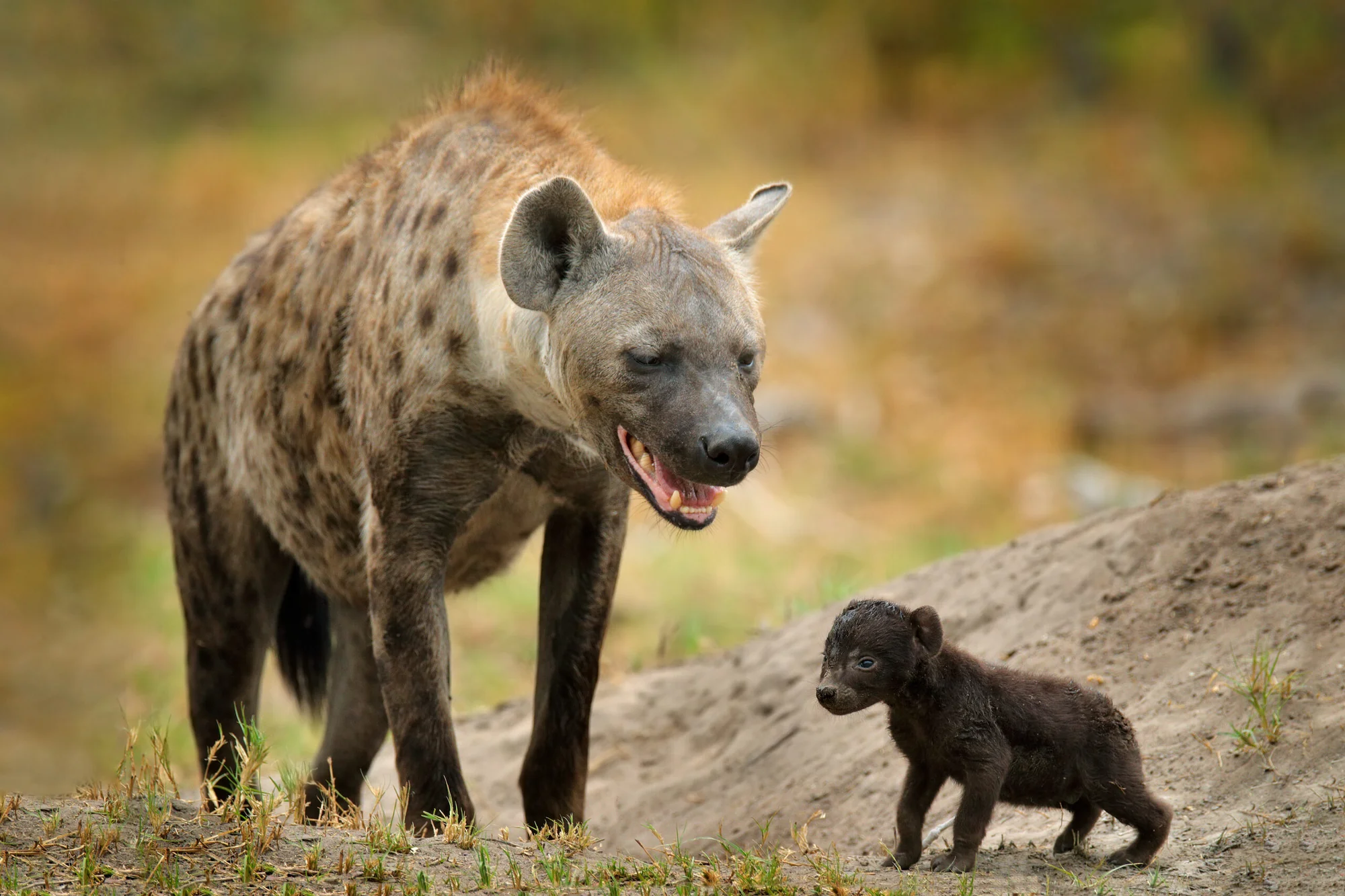
NoMiddleManTours · Jun 22, 2026 · 13 min read
A guide-grade look at Tanzania's hyenas — how to tell the two species apart, where to see them, and the truth about the Ngorongoro Crater clans, matriarchal society and the lion rivalry that almost nobody gets right.
There are two hyena species in Tanzania and almost everyone meets only one of them. The spotted hyena is everywhere lions are — you will see it on practically any safari day in the Ngorongoro Crater or the central Serengeti. The striped hyena is a different animal entirely: smaller, solitary, nocturnal and so rarely seen that many career guides have logged it only a handful of times. This guide separates the two, tells you exactly where and when to find them, and corrects the single biggest myth on the savanna — that hyenas are cowardly scavengers living off the lion's leftovers. In the crater, it is frequently the other way around.
 Destination
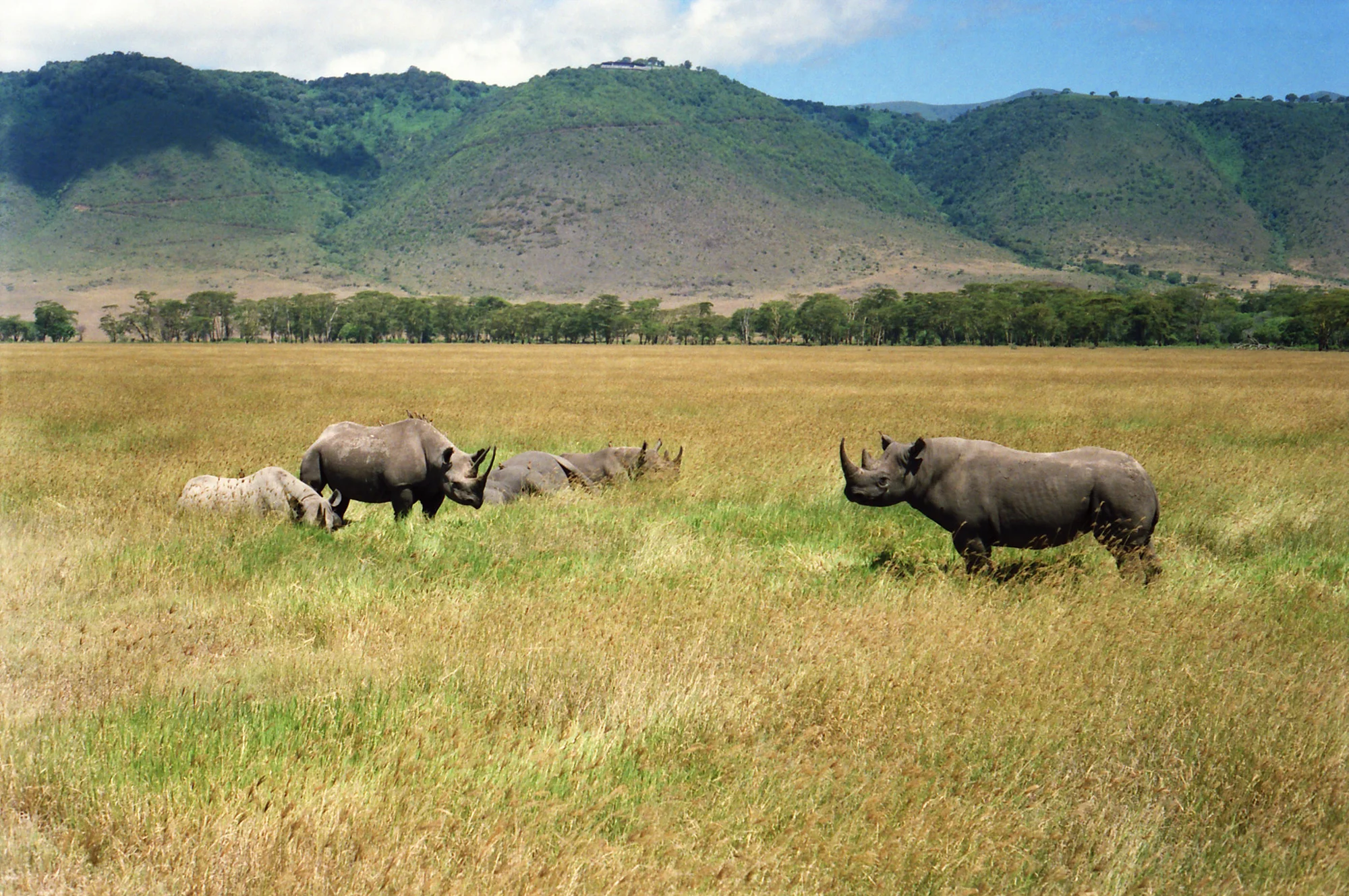
Ngorongoro Conservation Area
conservation_area
The short answer: two species, where, and how likely#
| Species | Status in Tanzania | Best place to see | Active when | How likely |
|---|---|---|---|---|
| Spotted hyena | Common, widespread | Ngorongoro Crater floor; central Serengeti (Seronera) | Dawn, dusk, night; also lazing by day | Near-certain over 2–3 game-drive days |
| Striped hyena | Rare, secretive | Dry northern bush, Tarangire fringes, Maasai steppe | Strictly nocturnal | Low — a genuine lucky sighting |
If "I want to see hyenas in Tanzania" simply means the clan-living, whooping, bone-crushing predator most people picture, you will see the spotted hyena without trying. Park entry to the Serengeti is US$82.60 per adult per day and the Ngorongoro Conservation Area is the same per 24 hours; all gates run 6 AM to 6 PM and there is no driving after dark inside the national parks, so every wild hyena encounter happens in daylight hours unless you are on a private concession.
Spotted vs striped: how to tell them apart in the field#
The two species look superficially similar at a glance and are wildly different in biology. Knowing which you are looking at — and why one is a daytime regular and the other a ghost — is the first useful thing to get straight.
The spotted hyena (Crocuta crocuta) is the big one: a barrel-chested animal up to 80 kg, sandy-brown with irregular dark blotches, rounded ears, and that distinctive sloping back where powerful forequarters taper to lower hindquarters. It lives in large social groups called clans, hunts in coordinated packs, and is the source of the eerie rising "whoop" you hear across the plains at night and the manic "laughter" — actually a stress and excitement call, not amusement. This is the hyena of the Ngorongoro Crater and the Seronera plains.
The striped hyena (Hyaena hyaena) is smaller — roughly 25 to 40 kg — pale grey with vertical black stripes down its flanks, pointed ears, and a long erectile mane along the spine that it raises to look larger when threatened. It is solitary or lives in tiny family units, scavenges and forages far more than it hunts, and is strictly nocturnal. In Tanzania it favours drier, more open bush in the north and the Maasai steppe rather than the predator-dense grasslands. Because it moves only after dark and avoids vehicles, sightings inside the parks are genuinely rare; most are headlight glimpses on a private concession night drive or a fleeting dawn crossing. If a guide finds you a striped hyena, treat it as a trophy sighting on the order of an aardvark or a caracal.
A field shortcut: spots and a low slung sandy body in daylight near a kill or a den = spotted; vertical stripes, a raised crest along the back, and a lone animal slipping through dry bush at night = striped.
The myth, corrected: who really steals from whom#
Here is the counterintuitive truth that decades of research on the Serengeti and Ngorongoro clans established, and that almost no safari brochure tells you: the spotted hyena is one of Africa's most successful hunters, and lions scavenge from hyenas at least as often as the reverse.
The cartoon version — noble lion makes the kill, cackling hyenas slink in to steal the scraps — gets the relationship backwards more often than not. Long-term field studies in the Ngorongoro Crater and the Serengeti found that spotted hyenas kill the large majority of what they eat, running down wildebeest, zebra and gazelle in stamina chases that can cover several kilometres. They are not built for the ambush sprint of a lion; they are built for the long pursuit, and a coordinated clan can pull down prey far larger than a single hyena. Lions, by contrast, are powerful but lazy opportunists that will readily commandeer a hyena kill if they can, especially where male lions are present. The technical word for this two-way theft is kleptoparasitism, and on the open crater floor — where neither side can hide a kill — it runs in both directions, with the outcome usually decided by simple numbers.
That numbers rule is the key to reading any standoff you witness. A clan of fifteen or twenty hyenas will mob and displace a lioness or two from a carcass through sheer noise and mass. But a single adult male lion changes the maths instantly: he can hold a kill against a whole clan, and male lions kill hyenas outright when they get the chance — not for food, but to suppress a rival. This is why you so often see a tense, circling, whooping confrontation around a carcass that never quite tips into a fight: both sides are constantly counting heads. What looks like cowardice is arithmetic.
Ngorongoro Crater: the most-studied hyenas on Earth#
If you want to understand hyenas, the Ngorongoro Crater is the place — and not by accident. The enclosed crater floor, roughly 264 square kilometres of grassland ringed by ~400-metre walls, holds an unusually dense and stable population of spotted hyenas living in well-defined, neighbouring clans. Because the animals cannot easily disperse out of the bowl and the terrain is open, the crater has hosted some of the longest-running hyena research anywhere on the continent, beginning with Hans Kruuk's pioneering 1960s study and continuing through modern long-term monitoring. The result for a visitor is simple: you are looking at clans whose territories, dens and individual histories are genuinely known to science.
What you actually see on the floor is clan life in the open. Hyenas lounging in muddy wallows through the heat of the day. Cubs — born almost black — playing at communal den entrances, often old aardvark or warthog burrows in the open grassland. The whole social machinery of greetings, scent-marking and rank on display, because there is nowhere to hide it. The crater's hyena-versus-lion rivalry is the most reliably observed in Africa: with both predators packed into the same small floor and the same prey herds, carcass confrontations are a near-daily event, and a patient morning often delivers a full standoff between a hyena clan and a lion pride over a kill. The usual hunting and feeding theatre plays out around the Lerai Forest edge and the open grassland near Lake Magadi, the crater's shallow alkaline soda lake.
A planning note that catches people out: the crater is done as its own day, not as a side trip from inside the Serengeti. Ngorongoro Crater is roughly a 4-hour drive from central Serengeti (Seronera) and considerably farther from the northern Kogatende sector, so it is normally tackled while transiting between Karatu and the park rather than as a detour. Descend via the Seneto road early — the gate opens at 6 AM and that first hour, before the floor warms and the predators settle, is the best window for active hyenas. Costs for the crater day stack up beyond park entry: a US$295-per-vehicle crater service fee for the descent, plus roughly US$40 for the mandatory ranger. Ascend the Lerai road before the six-hour floor limit expires.
Staying on the crater rim rather than down in Karatu is the single biggest lever for hyena viewing, because it puts you at the Seneto descent at first light instead of still processing at the gate.
 Ultra Luxury
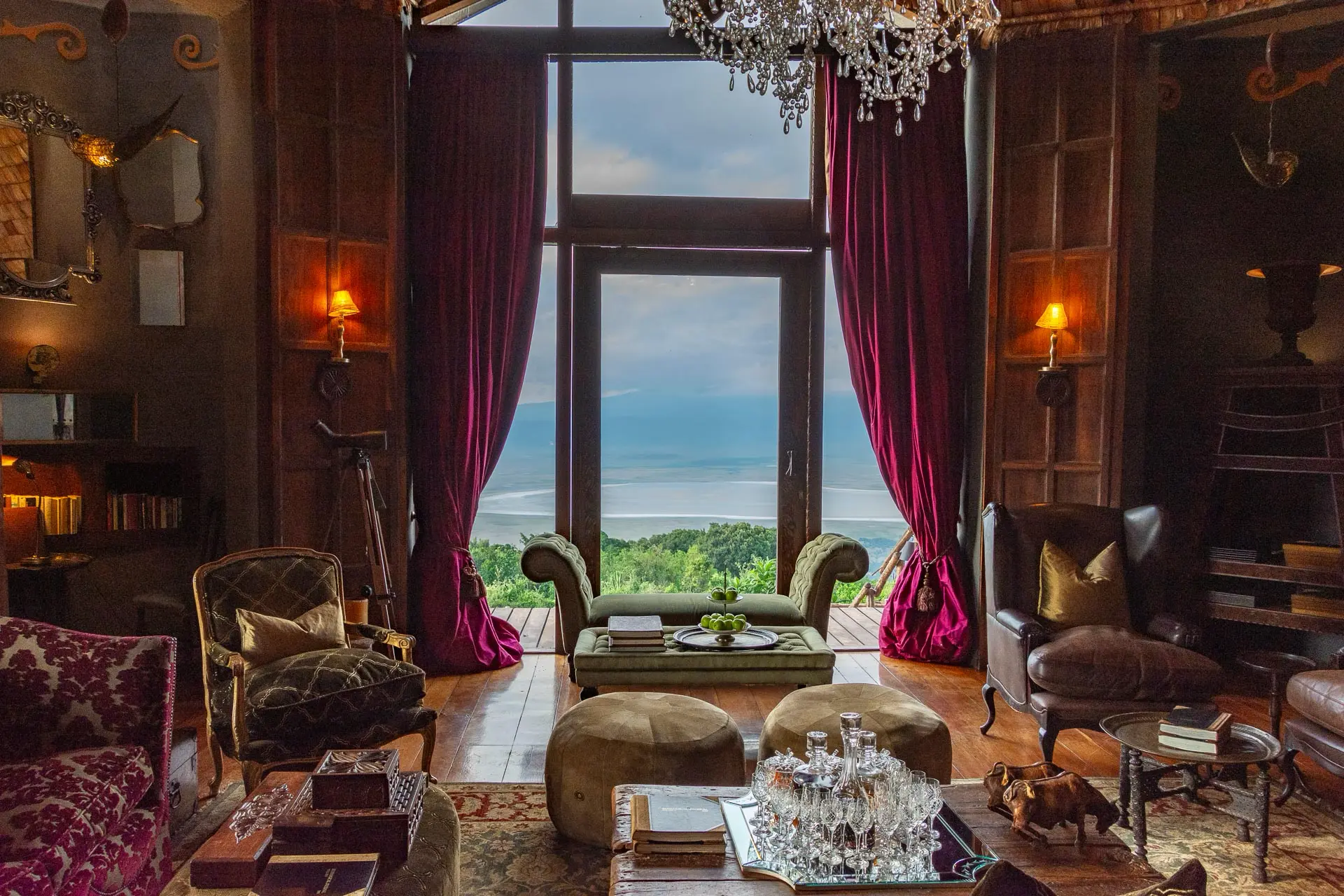
andBeyond Ngorongoro Crater Lodge
Ultra Luxury · Ngorongoro Conservation Area
Matriarchy: the most misread society on the savanna#
The other thing nobody tells you is how the clan is organised — and it is the opposite of how lions or wolves work. Spotted hyena clans are matriarchal. Females are larger, more aggressive and socially dominant over every male in the clan, and they run a strict, inherited rank system. A cub's status is determined at birth by its mother's rank: the offspring of high-ranking females eat first, grow faster and breed earlier, while a male — even a large adult male — sits at the bottom of the queue. Adult males typically leave the clan they were born into and join a new one, where they spend years patiently working their way up from the very bottom of the social ladder.
This female dominance comes with one of the strangest pieces of anatomy in the animal kingdom, which guides will mention and visitors invariably misread: female spotted hyenas have heavily masculinised genitals, to the point that telling males from females in the field is notoriously difficult and the females give birth through that same anatomy. The upshot for what you watch on the crater floor is that the big, confident animal leading a clan into a carcass confrontation, the one calling the shots in a standoff with a lioness, is almost always a high-ranking female. Read the social drama through that lens and the whole scene makes a different kind of sense.
When and where to go: the field calendar#
Spotted hyenas are resident year-round, so unlike the migration there is no narrow season — but a few patterns sharpen the odds.
| Period | What's happening | Hyena angle |
|---|---|---|
| Dec–Mar | Wildebeest calving on the southern (Ndutu) plains | Peak predator action; hyenas hunt vulnerable calves; den activity high |
| Apr–May | Long rains, lush and quiet | Cheapest months; predators harder to read in tall grass; crater stays reliable |
| Jun–Oct | Dry season, herds and predators concentrate at water | Easiest all-round viewing; carcass confrontations frequent; crossings in the north |
| Nov | Short rains begin, herds shifting south toward Ndutu | Strong all-round; resident crater and Seronera clans unaffected by migration timing |
The central Serengeti around Seronera carries the highest predator density in Africa — lion, leopard, cheetah and hyena all year — so two or three nights based there reliably puts you on hunting clans and dens, especially around dawn and dusk when the cats are working and the hyenas trail them. The crater adds the densest, most observable clan population and the textbook lion rivalry. For the rare striped hyena, the dry, open country around the fringes of Tarangire and the broader Maasai steppe is the better bet, and only on a night drive from a private concession or conservancy — never inside the national park after the 6 PM gate.
 Luxury
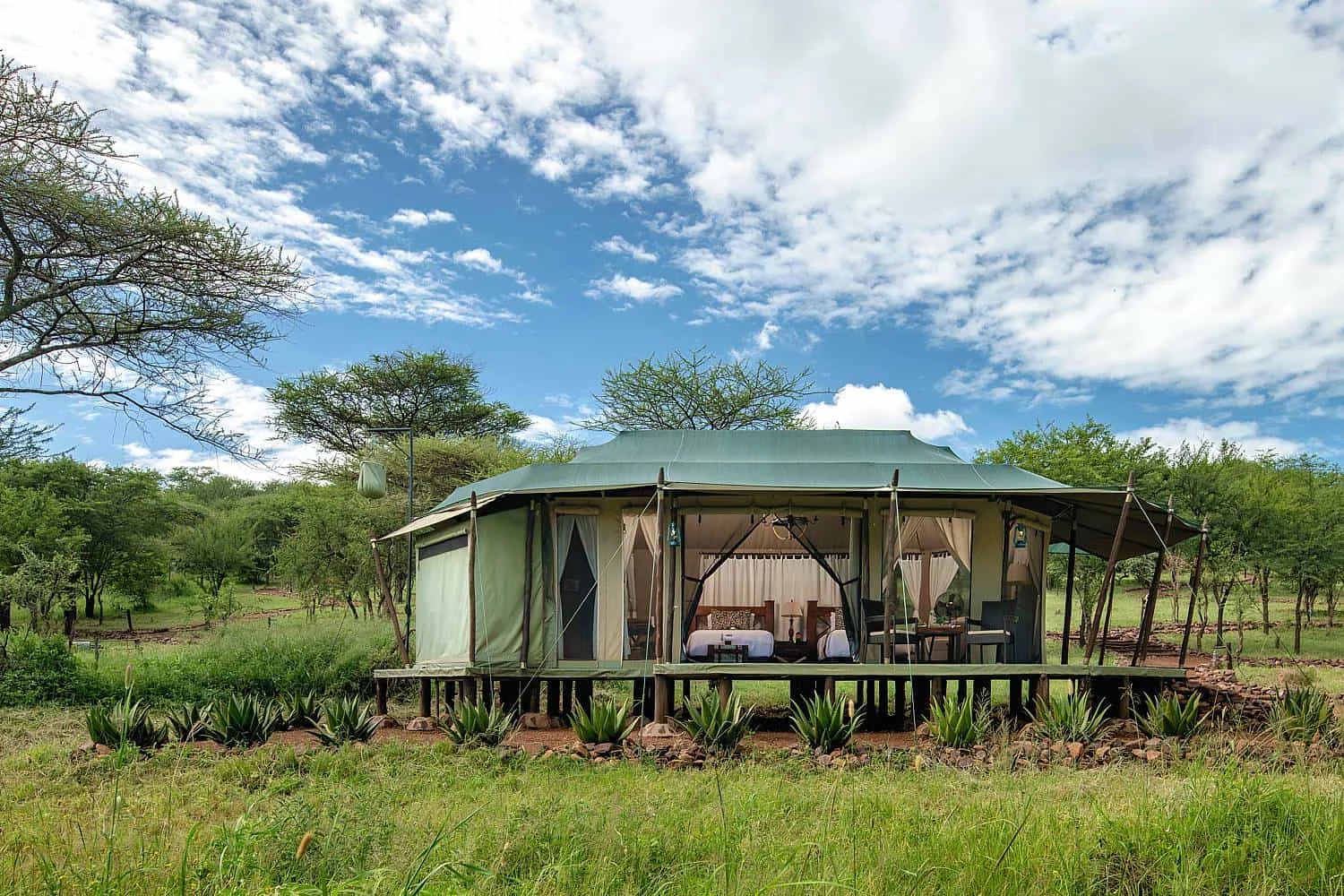
Ole Serai Luxury Camp — Seronera
Luxury · Serengeti National Park
How to actually watch hyenas well#
A few field-tested habits turn a hyena from background scenery into the most interesting animal of the day.
Go at dawn for confrontations. The hour after the 6 AM crater gate, and the first and last ninety minutes of light on the Seronera plains, hold the carcass disputes and the active hunting. By mid-morning most hyenas are flat out in a wallow.
Find the den. A communal den — usually a cluster of old burrows in open ground with flattened, well-worn earth around the holes — is where you see cubs, nursing, greetings and the whole social system. A good guide knows the active dens, and time parked quietly there beats chasing across the plains.
Count heads in a standoff. When you find a carcass with hyenas and lions, the entire drama is decided by numbers and by whether a male lion is present. Watch the arithmetic rather than waiting for a fight that usually does not come.
Listen at night from camp. Even though you cannot drive after dark, an unfenced camp in or beside the parks delivers the whoops and the laughter through the night — one of the defining sounds of the African bush, and free.
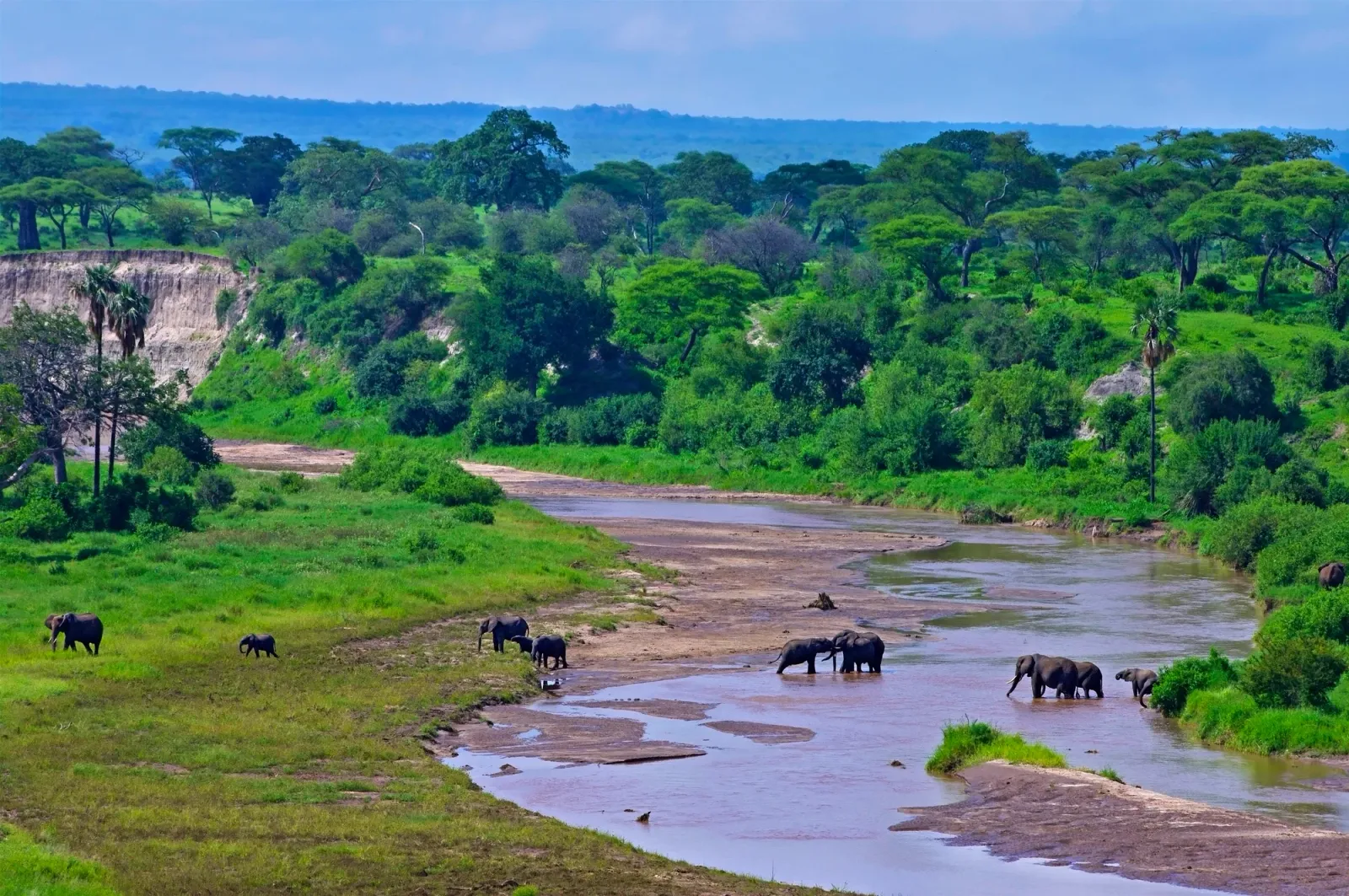
The classic northern-circuit route below threads exactly the two places that deliver hyenas best — the predator-dense central Serengeti and a crater finale — and is the most efficient way to bank both the clans and the lion rivalry in one trip.
 Itinerary
5-Day Classic Northern Circuit Safari
5 days · From $1,465 pp
If you would rather compare the predator-focused routes side by side — durations, regions and lodge tiers — start with the Big Five collection, since every one of these trips combines the crater and the cat-rich Serengeti where hyenas are most visible:
See all Big Five & predator safarisFrequently asked questions#
How many species of hyena are in Tanzania? Two. The spotted hyena is common and widely seen on safari, especially in the Ngorongoro Crater and central Serengeti. The striped hyena is small, solitary, strictly nocturnal and genuinely rare to see, favouring dry bush in the north and the Maasai steppe.
Where is the best place to see hyenas in Tanzania? The Ngorongoro Crater is the single best place: a dense, stable, heavily studied spotted-hyena population on an open floor where clan life and the famous lion rivalry play out in daylight. The central Serengeti around Seronera, with the highest predator density in Africa, is the next best.
Do hyenas really steal kills from lions, or is it the other way around? Both happen, but the popular image is backwards as often as not. Spotted hyenas hunt and kill most of what they eat, and lions frequently scavenge hyena kills. A large clan can displace a lioness from a carcass, but a single male lion can hold a kill against a whole clan and will kill hyenas given the chance.
Are hyenas matriarchal? Yes. Spotted hyena clans are female-dominated. Females are larger and outrank every male, and a cub inherits its rank from its mother. Adult males usually leave to join a new clan and start at the bottom of the social ladder, so the animal leading a confrontation is almost always a high-ranking female.
When is the best time to see hyenas in the Serengeti and Ngorongoro? They are resident year-round, so there is no narrow season. The dry months of June to October give the easiest all-round viewing as herds and predators concentrate at water, while December to March around the southern calving brings peak hunting and den activity. The crater is reliable in any month.
Can you see hyenas on a night drive in Tanzania? Not inside the national parks. Driving is prohibited after the 6 PM gate closing, so all park viewing is in daylight. Night drives — the best chance for the nocturnal striped hyena — are only possible on private concessions or in conservancies bordering the parks.
What does it cost to do the Ngorongoro Crater for hyena viewing? Ngorongoro Conservation Area entry is US$82.60 per adult per 24 hours, plus a US$295-per-vehicle crater service fee for the descent and roughly US$40 for the required ranger. Staying on the crater rim rather than in Karatu lets you reach the Seneto descent at the 6 AM gate, the prime window for active hyenas.
Are hyenas dangerous to people on safari? Inside a vehicle you are not regarded as prey and hyenas largely ignore you. The real caution is around unfenced camps at night, where habituated hyenas can be bold around food and waste — which is why camps brief guests not to leave food out or walk unescorted after dark.
Ready to plan the real thing?
Compare honest, all-in safari packages with real lodge choices — straight to the local operator, no middleman.
Browse safari packagesKeep reading
wildlife
The Big Five in the Serengeti: Four You’ll Find, One You’ll Earn
wildlife
Black Rhino in Tanzania: Finding the Rarest of the Five
wildlife
The Stripes That Lead the Migration: Zebras in Tanzania
wildlife
River Giants: Where to Meet Tanzania’s Hippos
wildlife
The Dagga Boys: Cape Buffalo in Tanzania
wildlife
Built for the Plains: A Guide to Tanzania’s Cheetahs