 Tours
Tours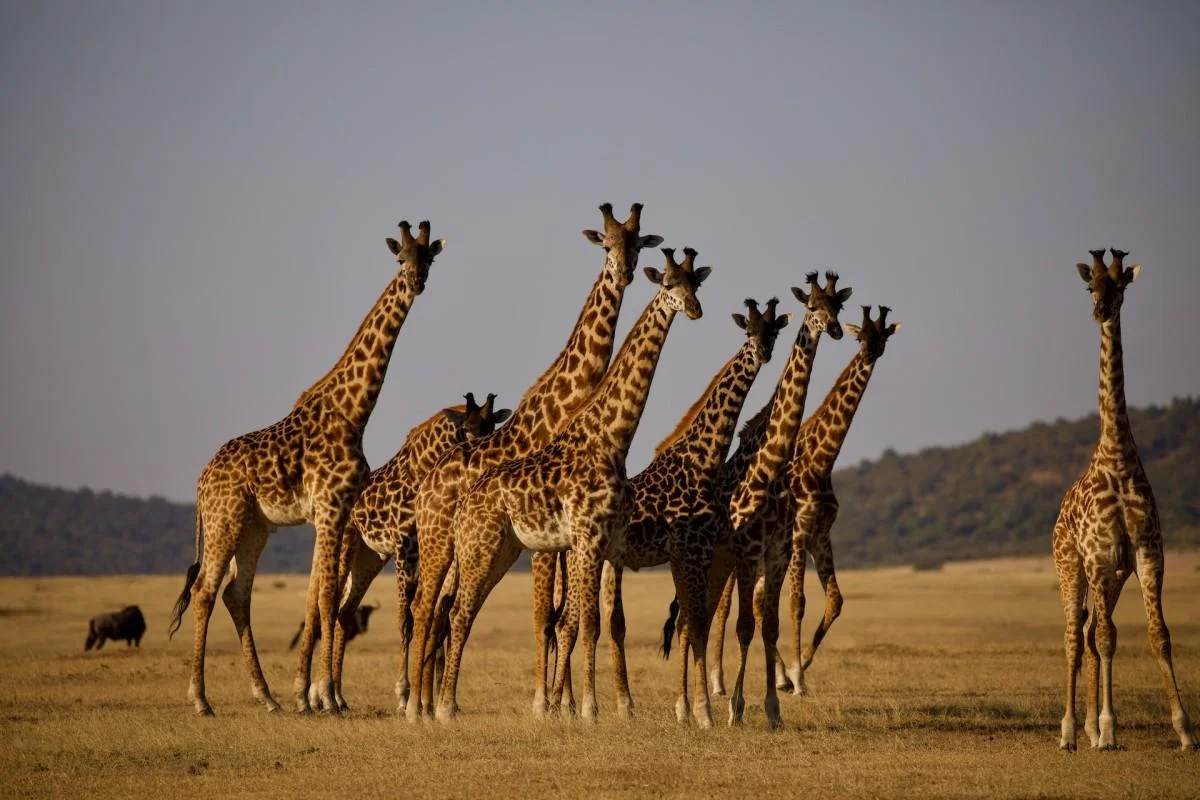
NoMiddleManTours · Jun 22, 2026 · 11 min read
The Maasai giraffe is the national animal of Tanzania and you will see it on almost every safari day — but the where, the why and the behaviour are richer than they look. A guide-grade field companion to the species, the best parks for density, the necking duels, and the legal protection nobody explains.
The giraffe you photograph on a Tanzanian safari is not just any giraffe — it is the Maasai giraffe, the largest of all giraffe types and the national animal of Tanzania. You will almost certainly see one on your first game-drive morning, browsing acacia at the edge of the plains with that unhurried, slow-motion gait. What most visitors never learn is how much is going on behind that calm: a protected national symbol, a browser that has co-evolved with the very thorn trees it eats, bulls that settle dominance with sledgehammer necks, and a population whose density swings wildly from one park to the next. This is the field companion the destination guides skip — what the animal actually is, where it gathers thickest, and the behaviour a 20-year guide watches for that you would otherwise drive straight past.
 Destination
Tarangire National Park
national_park
The short answer: which giraffe, where, and how reliably#
Tanzania holds one giraffe type across its northern and southern safari circuits — the Maasai giraffe (Giraffa tippelskirchi), distinguished by its jagged, vine-leaf-shaped coat blotches with ragged edges, unlike the neat geometric patches of the reticulated giraffe you find farther north in Kenya. It is a near-daily sighting on any mainland safari, but the parks differ sharply in how many you will see together.
| Park | Giraffe density | Best months | What makes it distinctive |
|---|---|---|---|
| Tarangire | Very high — large herds | Jun–Oct (dry) | Highest concentrations in the north; herds among baobab and acacia |
| Serengeti | High, well spread | Year-round | Resident across woodland edges; classic plains backdrop |
| Lake Manyara | High | Year-round | Browsing the groundwater forest and lake-shore acacia |
| Ngorongoro highlands | Low on crater floor | Year-round | Common on the rim and conservation-area woodland, rarely deep in the crater |
| Ruaha | Moderate | Jun–Nov | Big southern lion prides actually hunt them here |
The honest planning takeaway: you do not build a safari around giraffe — you will see them regardless — but if you want the photograph of a dozen towering against a baobab horizon, the northern circuit, and Tarangire specifically, is where that image lives.
The Maasai giraffe is the national animal of Tanzania#
This is the fact that reframes every sighting. The Maasai giraffe is Tanzania's official national animal, chosen as a symbol of grace and of the country looking forward and upward — and that status is not merely ceremonial. The giraffe is woven into national identity, appears in tourism iconography, and carries a weight of public protection that shapes how seriously wildlife authorities treat it.
It is also, quietly, a conservation story with edges. Across Africa the giraffe has suffered what scientists call a "silent extinction" — overall numbers fell by roughly 40 percent over three decades while the world watched the elephant and rhino. The Maasai giraffe in particular was reclassified as Endangered on the IUCN Red List in 2019, its East African population having dropped by around half. So the animal that feels ubiquitous on your drive is, at the species level, in trouble — which is exactly why its protected, national-symbol standing in Tanzania matters more than the brochures let on.
Why giraffes are legally protected — and why it actually matters#
Here is what nobody tells you on the vehicle: killing a giraffe in Tanzania is a serious wildlife crime, and the protection has teeth. Giraffes are covered under Tanzania's Wildlife Conservation Act, hunting or harming the national animal carries heavy penalties, and the species is listed on CITES Appendix II, which regulates international trade in giraffe parts.
The reason the law leans this hard is partly cultural and partly biological. Culturally, harming a national symbol is treated as an affront, not just a poaching statistic. Biologically, giraffes are slow to recover: a single calf after a roughly 15-month gestation, and a brutal first year in which more than half of calves are taken by lion, leopard, hyena and wild dog. A population knocked down does not bounce back the way a fast-breeding antelope does. There is also a grim, specific threat the protection targets — bushmeat and the trade in giraffe bone marrow and brain, driven by a folk belief in some communities that they cure disease. That myth has fuelled snaring across parts of East Africa, and it is one of the quieter pressures behind the species decline. The legal weight is the counterweight.
Tarangire: the giraffe capital of the north#
If you want density, you go to Tarangire. It carries some of the highest giraffe concentrations of any park in northern Tanzania, and the reason is the same one that draws the elephants in the dry season — the Tarangire River and the rich, varied browse along it. From June to October, when surrounding water sources fail, game pours toward the river corridor, and giraffe herds gather among the baobab and acacia woodland in numbers you rarely see elsewhere.
The behaviour is the payoff here. Watch a herd at the edge of the woodland and you will see them spread out, each animal working a different tree at a different height — a browsing strategy that lets a herd feed the same patch without competing. In the dry months you will catch them at the river in the heat of late morning, legs splayed into that vulnerable, awkward drinking stance that is one of the few moments a giraffe is genuinely exposed. A guide who knows the park times the river loops for exactly this. Pair a Tarangire morning with the dry-season elephant gathering and you have the densest concentration of big-bodied animals on the whole circuit. The park's classic mid-range bases — Tarangire Safari Lodge and Maramboi Tented Camp among them — put you on the woodland edge where the herds feed at first light.
The acacia coevolution: why giraffes and thorn trees need each other#
This is the detail that turns a giraffe sighting from a photo into a story. The giraffe and the acacia have shaped one another over millions of years in a slow evolutionary arms race, and once you see it you cannot unsee it.
Acacias defend themselves against being eaten with long, hard thorns — yet the giraffe simply works around them with a 45-centimetre prehensile blue-black tongue and tough, leathery lips that strip leaves from between the spines. The tongue's dark pigment is thought to be natural sunblock against the equatorial glare during the hours it spends extended. The tree has a second line of defence that is even more remarkable: when a giraffe browses, certain acacias flood their leaves with bitter tannins within minutes, making them unpalatable, and some release ethylene gas that drifts downwind to warn neighbouring trees, which pre-emptively raise their own tannin levels. A browsing giraffe, knowing this, feeds for only a few minutes per tree and moves on — and crucially moves upwind, into trees that have not yet been chemically warned. Watch a herd long enough and you will see this play out: short stops, constant drift across the woodland, never lingering. Some whistling-thorn acacias go further still, housing biting ants in swollen galls that swarm out to defend the tree.
The relationship is not all conflict. Giraffes are major pollinators and seed-dispersers for acacias, carrying pollen on their faces between flowering trees and spreading seeds through their dung. The thorn tree feeds the giraffe; the giraffe propagates the tree. It is one of the cleanest examples of coevolution on the savanna, and it is happening on every drive in the acacia woodland of Tarangire, the Serengeti and the lake-shore forests of Lake Manyara.
Necking: the slow-motion duel between bulls#
The single most misunderstood giraffe behaviour is necking — and seeing it is one of the great underrated safari spectacles. Two bulls stand flank to flank and swing their heavy heads and necks at each other like wrecking balls, the bony ossicones on the skull landing blows against ribs, flanks and legs. It looks almost gentle in the slow heat-haze, but the force is enormous: a full swing can stun or even knock down an opponent, and a giraffe skull is reinforced with bone laid down over a lifetime precisely to deliver and absorb these blows.
What the behaviour is for is the real insight. Necking is how males establish a dominance hierarchy and earn the right to mate — the bull who wins access to a female in oestrus is almost always the one who has out-duelled his rivals. There is a developmental angle too: young males spar in low-stakes, almost playful bouts to practise, while mature bulls fight in earnest. And there is a striking evolutionary footnote — one leading hypothesis holds that the giraffe's extraordinary neck was driven as much by sexual selection through necking combat as by the need to reach high browse, the "necks for sex" theory. So that long neck is not only a feeding tool; it is a weapon and a status symbol. If you see two bulls squaring up, ask your guide to cut the engine and wait. It builds slowly and it is unforgettable.
Beyond the giraffe: planning a Tanzania safari around it#
You will see giraffe everywhere, so the smarter planning move is to choose the safari that gives you the wildlife mix and the landscapes you want, knowing the giraffe comes free with the territory. The northern circuit — Tarangire, the Ngorongoro highlands, Lake Manyara and the Serengeti — is the densest, most reliable wildlife loop in the country and the one where giraffe herds are easiest to find in numbers. Farther south, Ruaha offers a wilder, emptier experience where you may watch the unusual sight of a large lion pride actually hunting an adult giraffe, something the northern parks rarely show.
If you would rather compare full routes side by side — durations, regions and lodge tiers — start with the country's flagship safari collection:
See all Tanzania safarisAnd because the giraffe shares the acacia woodland with the animals most travellers come for, a Big-Five-focused itinerary almost always delivers giraffe in abundance alongside the lion, leopard, elephant and buffalo:
Browse Big Five safarisThe breakfast-with-giraffes question (and the Tanzania answer)#
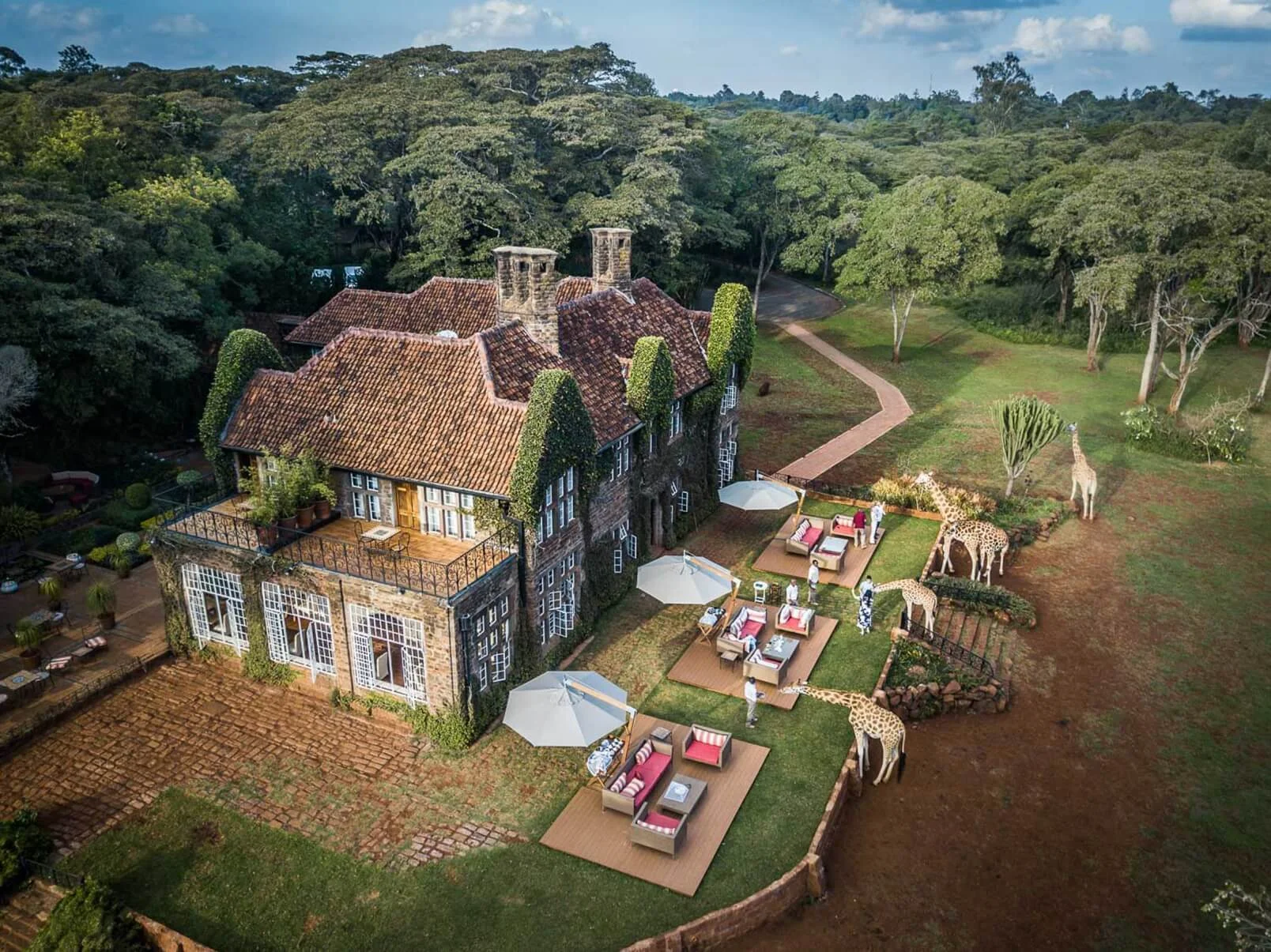
Every planner eventually asks about the famous photograph: a giraffe poking its head through a dining-room window at breakfast. That experience is real, but it is not in Tanzania — it is at Giraffe Manor in Nairobi, Kenya, home to a resident herd of the rarer Rothschild's giraffe. There is no equivalent in Tanzania, and that is by design: Tanzanian safari is about the wild animal in its own landscape, not the habituated one at the table.
 Ultra Luxury
Giraffe Manor
Ultra Luxury · Nairobi
What Tanzania offers instead is the giraffe as it is meant to be seen — a herd drifting through baobab country, a bull stripping an acacia thorn by thorn, two males trading slow blows at dusk. For most travellers that is the better photograph anyway. If a giraffe-and-Manor add-on appeals, it is a straightforward extension to a Tanzanian trip, since many northern-circuit safaris connect through Nairobi.
Frequently asked questions#
What type of giraffe lives in Tanzania? Tanzania is home to the Maasai giraffe, the largest of all giraffe types and the national animal of the country. It is recognised by its jagged, vine-leaf-shaped coat blotches with ragged edges, distinct from the neat geometric patches of the reticulated giraffe found farther north in Kenya.
Is the giraffe really the national animal of Tanzania? Yes. The Maasai giraffe is Tanzania's official national animal, chosen as a symbol of grace and of looking upward and forward. Its national-symbol status carries real legal weight, with harming a giraffe treated as a serious wildlife crime.
Where is the best place to see giraffes in Tanzania? Tarangire National Park holds some of the highest giraffe concentrations in the north, especially in the dry season from June to October when game gathers along the Tarangire River. The Serengeti, Lake Manyara and the Ngorongoro highlands also offer reliable, well-spread sightings year-round.
Are giraffes endangered in Tanzania? The Maasai giraffe was reclassified as Endangered on the IUCN Red List in 2019 after its East African population fell by roughly half. They feel common on safari, but at the species level they have suffered a so-called silent extinction, which is why their legal protection in Tanzania matters.
Why do giraffes fight with their necks? This behaviour is called necking. Male giraffes swing their heavy heads and necks to strike each other, using the bony ossicones on the skull as clubs. It establishes a dominance hierarchy and the right to mate, and one leading theory holds that the giraffe long neck evolved partly as a weapon for these combats.
How do giraffes eat acacia thorns? Giraffes use a 45-centimetre prehensile tongue and tough lips to strip leaves from between the spines. The acacia fights back by flooding browsed leaves with bitter tannins within minutes and releasing a gas that warns neighbouring trees, so a giraffe feeds only briefly on each tree and then drifts upwind to unwarned ones.
Can you have breakfast with giraffes in Tanzania like at Giraffe Manor? No. The breakfast-with-giraffes experience is at Giraffe Manor in Nairobi, Kenya, with a herd of Rothschild giraffe. Tanzania has no equivalent, but it is an easy extension since many northern-circuit safaris connect through Nairobi, and Tanzania offers the wild giraffe in its own landscape instead.
Do lions hunt giraffes? Yes, though rarely in the northern parks. In southern Tanzania, the large lion prides of Ruaha are known to take adult giraffes, a difficult and dangerous hunt. A giraffe defends itself with a kick powerful enough to kill a lion, so predators usually target calves, of which more than half are lost in the first year.
Ready to plan the real thing?
Compare honest, all-in safari packages with real lodge choices — straight to the local operator, no middleman.
Browse safari packagesKeep reading
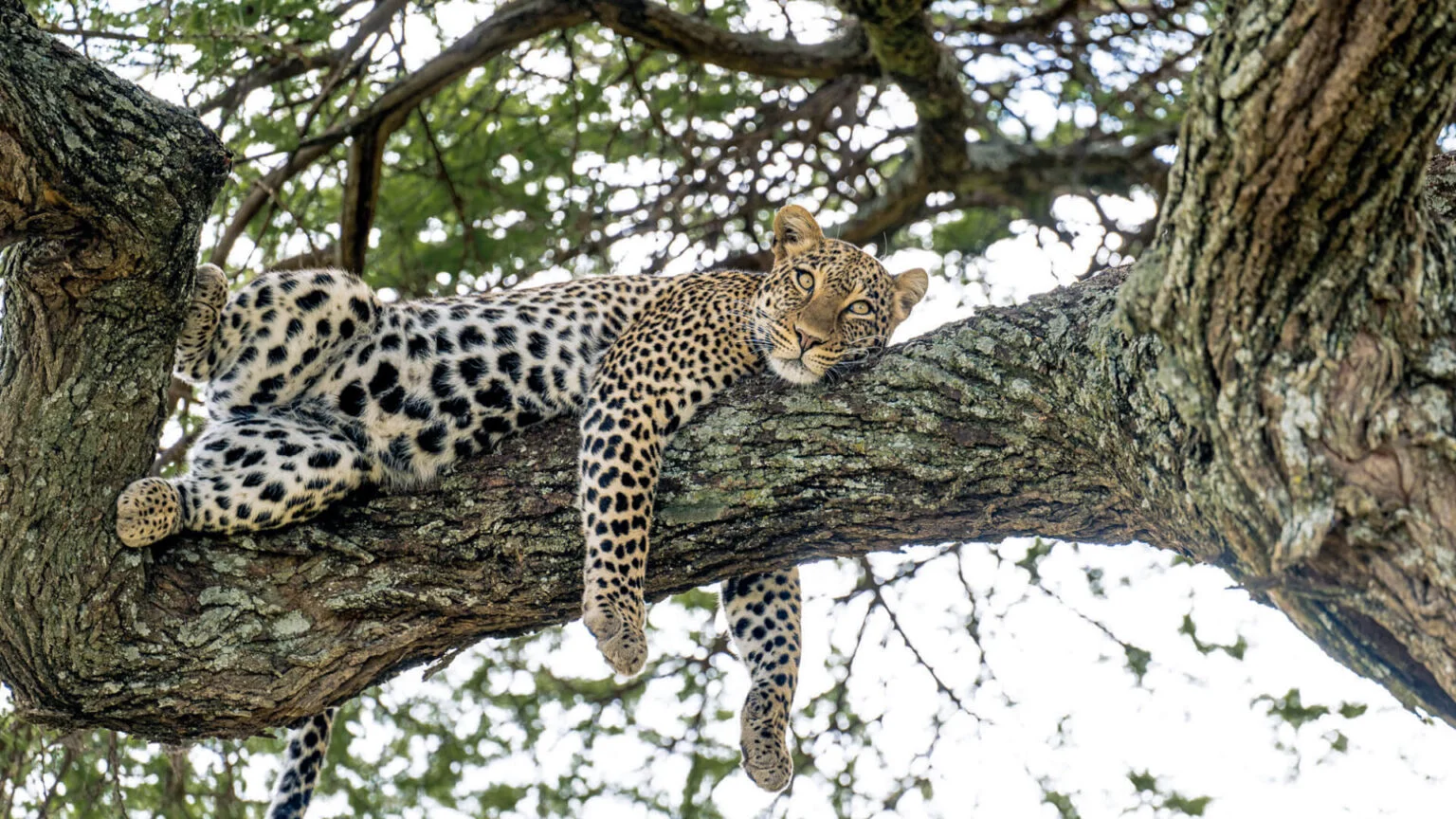
wildlife
The Big Five in the Serengeti: Four You’ll Find, One You’ll Earn
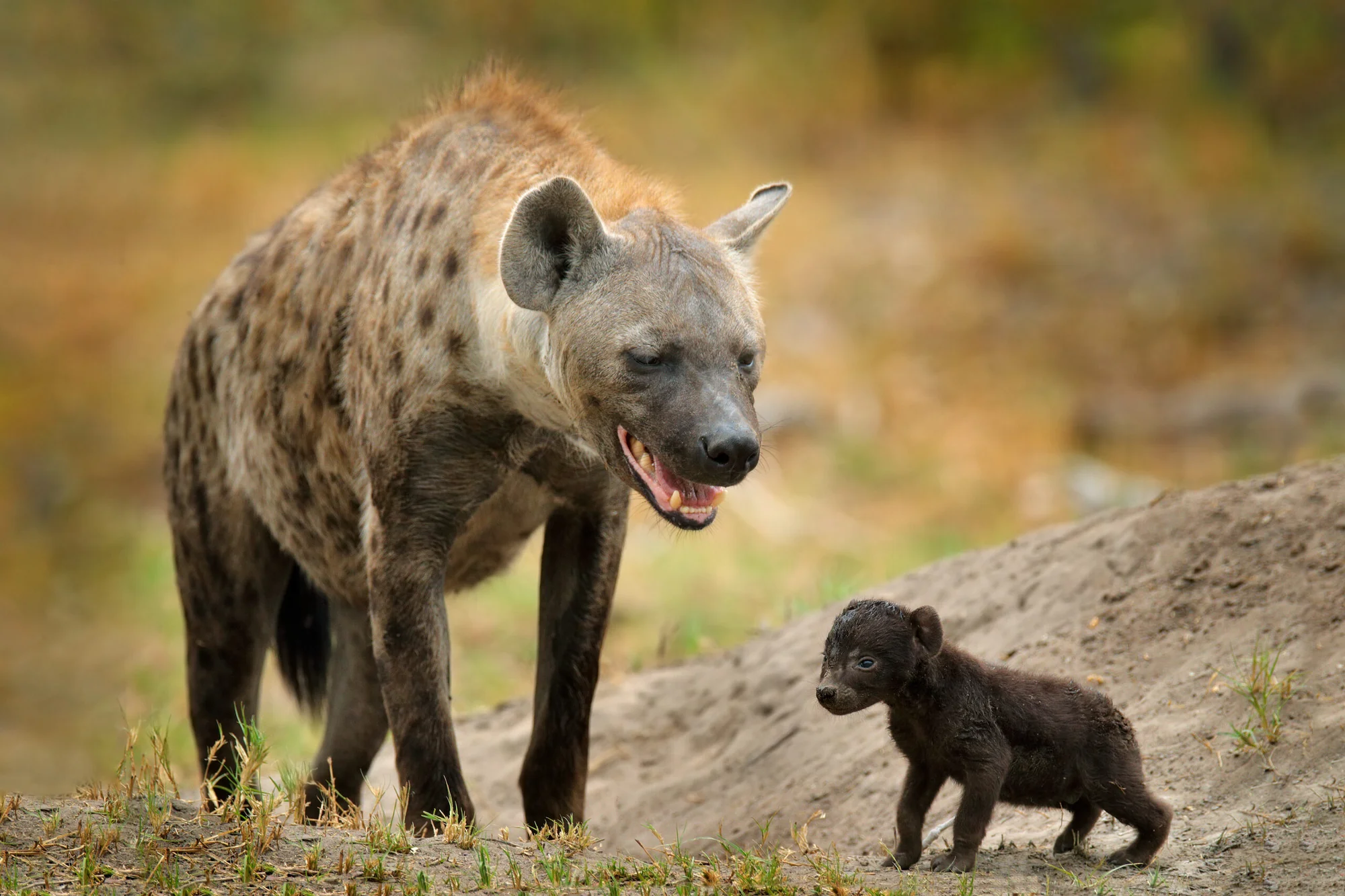
wildlife
Hyenas in Tanzania: Spotted, Striped and Wildly Misunderstood
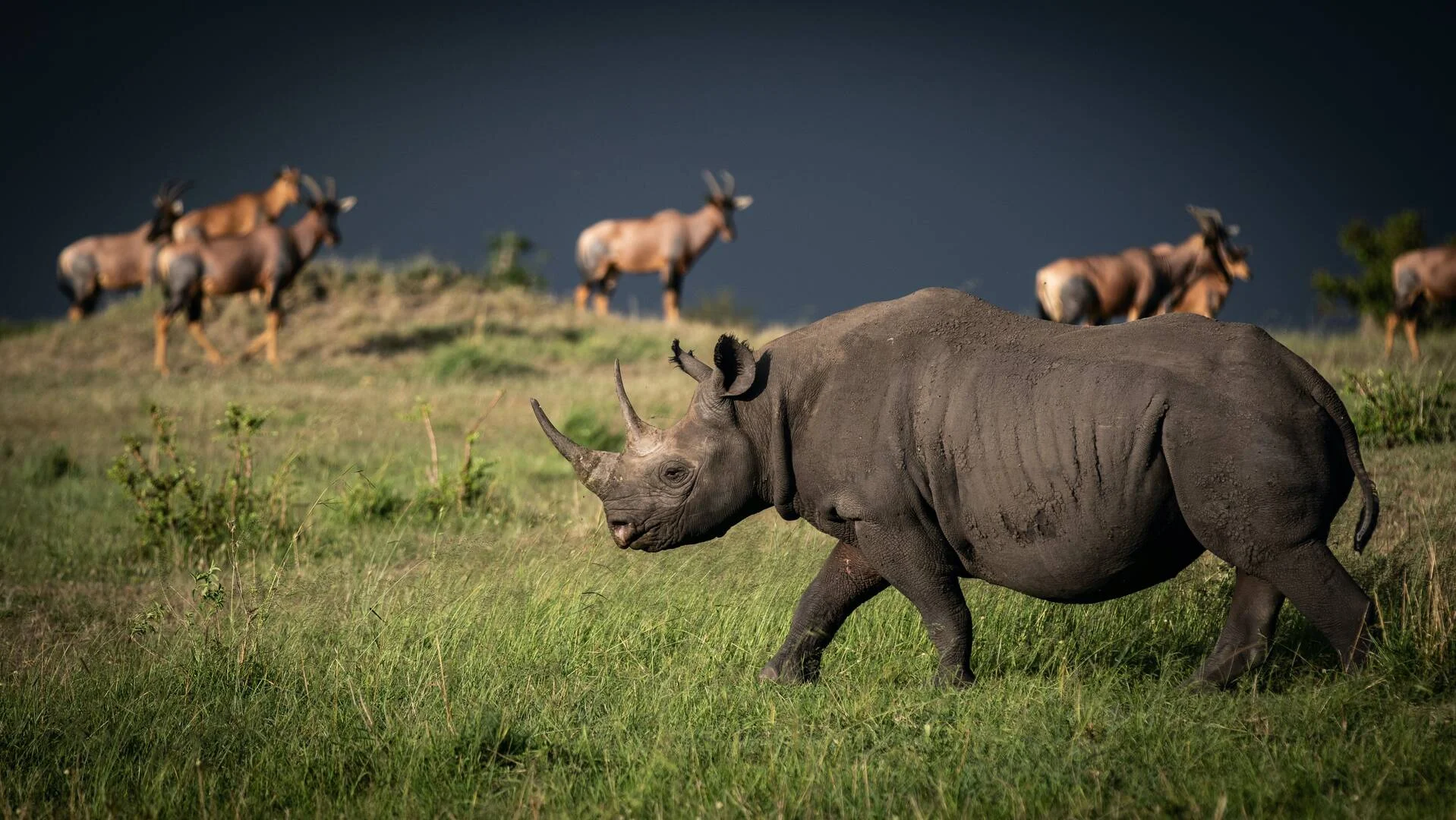
wildlife
Black Rhino in Tanzania: Finding the Rarest of the Five
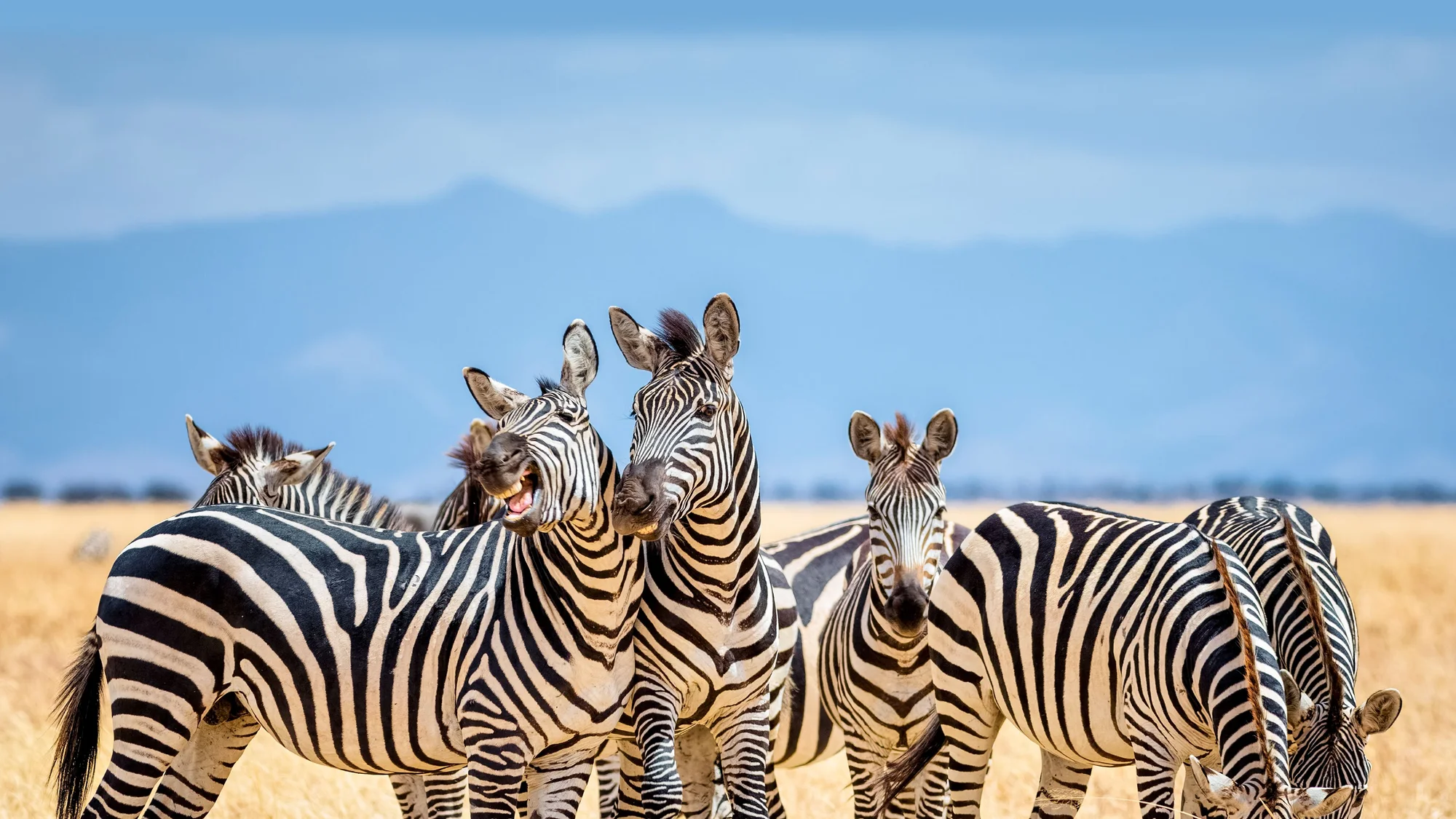
wildlife
The Stripes That Lead the Migration: Zebras in Tanzania
wildlife
River Giants: Where to Meet Tanzania’s Hippos
wildlife
The Dagga Boys: Cape Buffalo in Tanzania