 Tours
Tours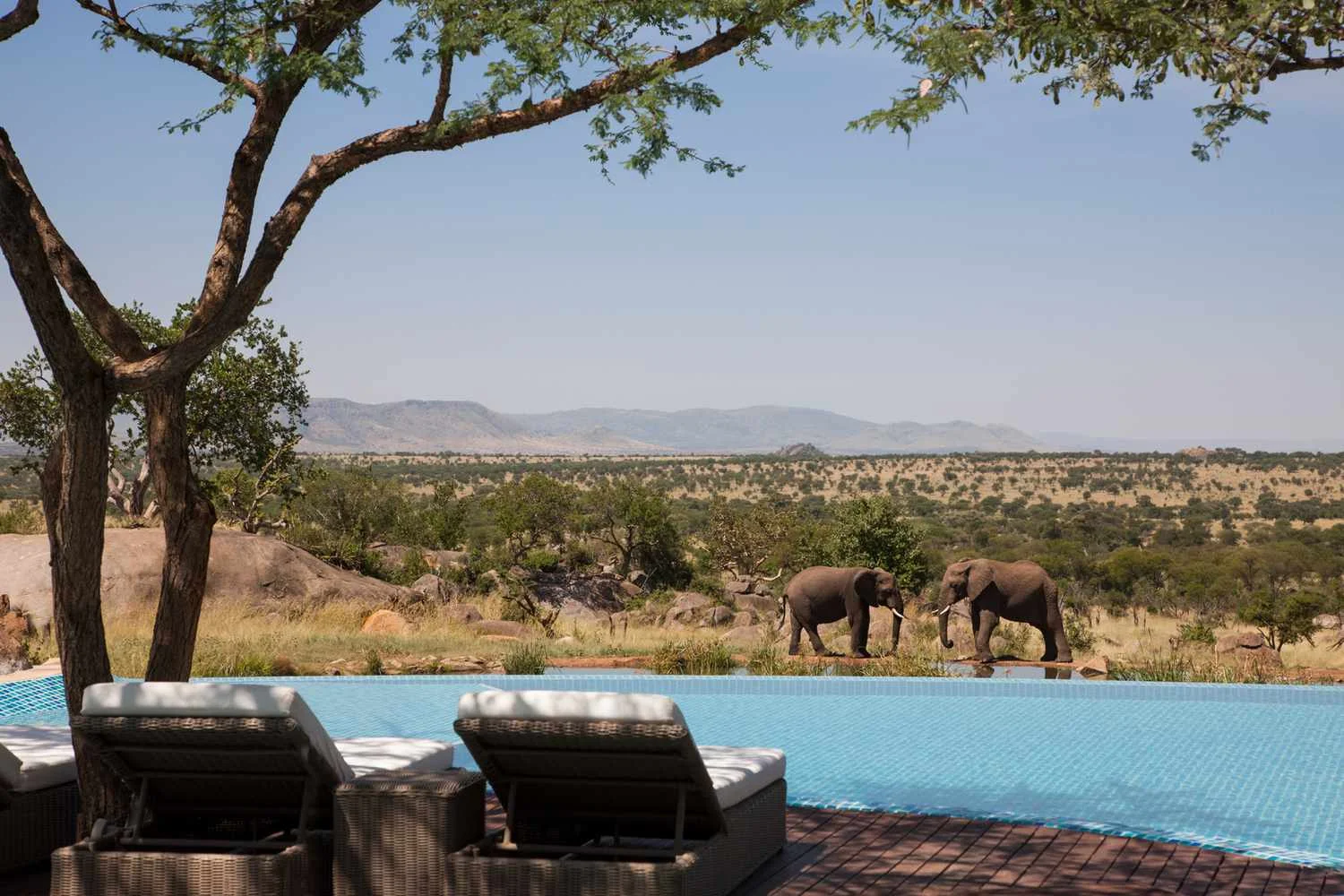
NoMiddleManTours · Jun 22, 2026 · 13 min read
Lodge, permanent tented camp, mobile camp, fly-camp — what each type of safari accommodation in Tanzania actually is, where it sits (in-park, boundary, conservancy or private concession), what every tier buys you, and how to choose the right bed for your route.
The single biggest decision on a Tanzania safari is not which lodge has the prettiest pool — it is what type of accommodation you book and where it sits. Those two choices decide how much of your day you spend driving instead of game-viewing, whether you can do a night drive or a walking safari at all, and whether your camp is even in the right place when the migration passes through. This guide breaks down the four accommodation types you will actually encounter, the three locations they can sit in, and the practical trade-offs that decide which is right for your trip.
 Destination
Serengeti National Park
national_park
The short answer: four types, three locations#
Two separate questions are usually tangled together in brochures. The first is the structure — is it a built lodge, a permanent tented camp, a mobile camp, or a fly-camp? The second is the location — does it sit inside a national park, on the boundary just outside the gate, or on a private conservancy or concession? Get both right for your route and season, and the rest is just choosing a tier.
| Type | What it is | Best for | Watch-out |
|---|---|---|---|
| Permanent lodge | Solid-walled building, electricity, pool, big rooms | First-timers, families, comfort, the crater rim | Can feel like a hotel; least "in the bush" feel |
| Permanent tented camp | Fixed canvas suites on platforms, en-suite, year-round | The classic safari feel with full comfort | Varies hugely in luxury and price |
| Mobile / seasonal camp | Lighter camp that physically moves with the herds | Following the migration to Ndutu or Kogatende | Only open part of the year; book 6–12 months out |
| Fly-camp | Minimalist tents pitched for a night or two in true wilderness | Walking-safari adventurers, one bucket-list night | Concessions/southern parks only; not for everyone |
And the locations:
| Location | Game-drive time | Night drives | Walking | Cost |
|---|---|---|---|---|
| Inside the park | Best — on a sighting at dawn | No (national park) | Rarely | Higher (park + concession fees) |
| Park boundary / gate | Lose the golden first hour | No | No | Cheaper (sleep outside the fees) |
| Conservancy / private concession | Excellent, exclusive | Yes | Yes | Highest (3–5× a park lodge) |
The honest planning rule that runs through everything below: in a Tanzanian national park you cannot drive after the 6 PM gate closing and you generally cannot walk or go off-road, so night drives and walking safaris only exist on private land. Where you sleep is therefore not a comfort question — it is an access question.
Permanent lodge vs permanent tented camp vs mobile camp#
This is the distinction nobody explains clearly, and it is the one that catches travellers out.
Permanent lodge#
A permanent lodge is a built structure — stone or timber walls, a proper roof, mains or generator power, often a pool and a restaurant. Rooms are large, the bathrooms are reliable, and it is the most weatherproof, family-friendly option. The trade-off is atmosphere: a big lodge can feel like a hotel that happens to have giraffes outside. Lodges dominate the Ngorongoro crater rim and the highland farming town of Karatu, where solid walls make sense — Karatu sits at around 1,500 metres, and the crater-rim lodges higher still at roughly 2,200 metres, so nights are genuinely chilly. Gibb's Farm above Karatu and the Ngorongoro Serena on the rim are textbook examples of the well-run permanent lodge.
 Mid Range
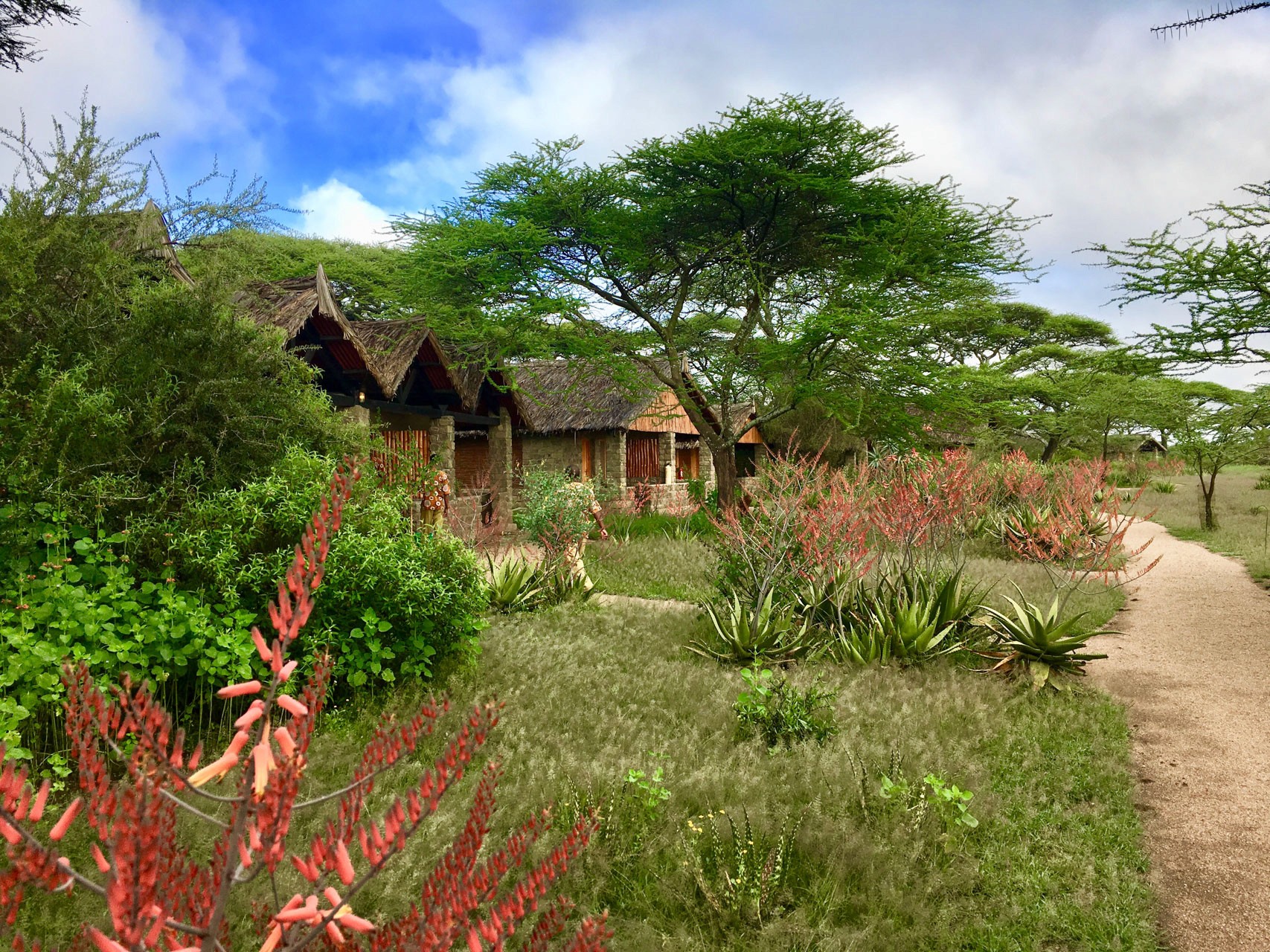
Ndutu Safari Lodge
Mid Range · Serengeti National Park
Permanent tented camp#
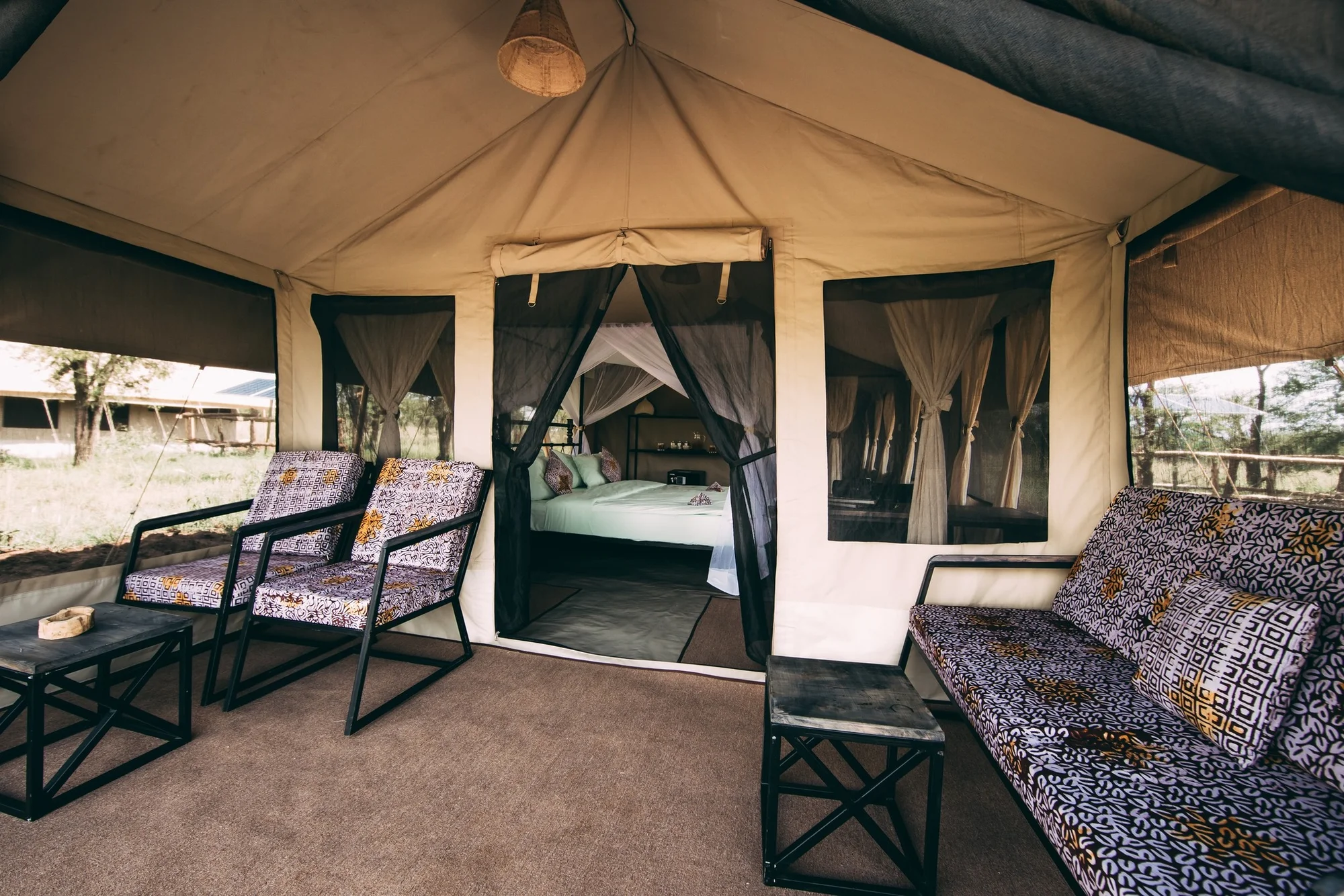
A permanent tented camp is the image most people have of "a safari camp": en-suite canvas rooms on raised platforms or solid bases, full beds, flush loos and hot bucket or plumbed showers, a mess tent for meals — but it stays in one place all year. You get the romance of canvas (you hear the bush at night, the lions are very close) with most of a lodge's comfort. Quality runs the full range, from honest mid-range camps like Kati Kati in central Serengeti up to genuinely luxurious permanent camps. Here is the detail that confuses people: the word "tented" tells you about the walls, not whether the camp moves. A permanent tented camp is rooted to one spot — it is not the same thing as a mobile camp.
 Luxury
Serengeti Tortilis Camp
Luxury · Serengeti National Park
Mobile / seasonal camp — and why it follows the migration#
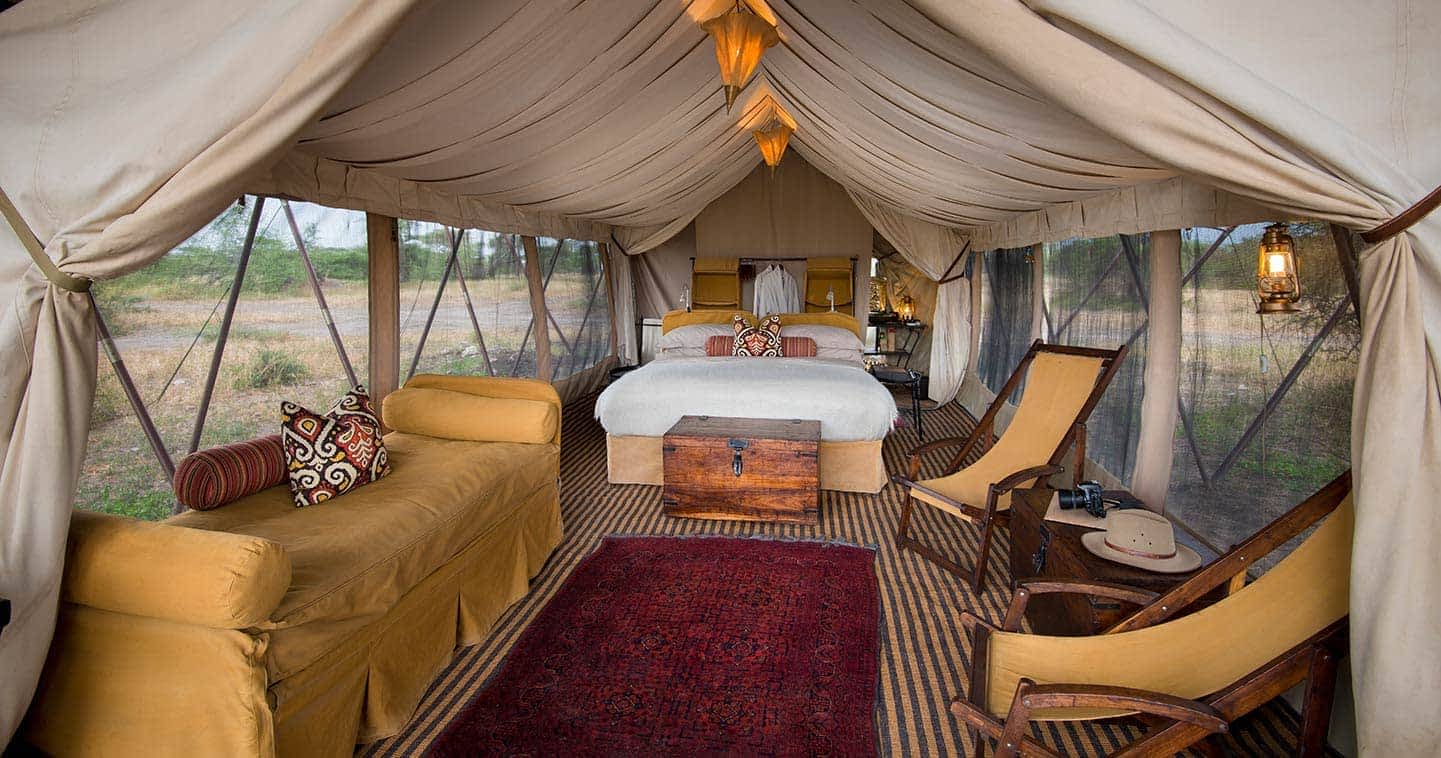
A mobile (or seasonal) camp is the one with the real insider logic. It is a lighter-footprint camp — comfortable canvas suites, but designed to be struck and re-pitched — that physically relocates two or three times a year to stay alongside the Great Migration. The whole point is that the wildebeest do not stay put, so a camp that wants to put you in the middle of the herds cannot stay put either.
In practice that means a single brand runs the same camp from two or three different patches of the Serengeti across the year, chasing the grass and the herds: down on the southern short-grass plains around Ndutu roughly December to March for the calving season, when half a million calves are dropped in a few weeks; then up to the far north around Kogatende roughly July to October for the famous Mara River crossings. This is the key insight for timing a migration trip — a camp advertised as being "in the Serengeti" may be 5 to 6 hours' drive (Seronera to Kogatende) from where the action actually is in your month. Always confirm which of its locations the camp is pitched at for your dates, because most seasonal camps simply close in the in-between months (notably April–May), and the good ones book out 6 to 12 months ahead for the February calving and August crossing peaks.
 Ultra Luxury
andBeyond Serengeti Under Canvas
Ultra Luxury · Serengeti National Park
A permanent Ndutu lodge that stays open year-round is the quiet alternative here: it lets photographers and repeat visitors enjoy the southern plains in the empty off-season months when the mobile camps have packed up, with near-zero other vehicles around.
In-park vs boundary vs conservancy: the location trade-off#
Once you have picked a type, where it sits decides your daily rhythm.
Inside the park. Sleeping inside the gates means you are on a sighting at first light instead of queuing at the gate at 8 AM. With cats most active in the cool first and last ninety minutes of the day, that golden hour is the difference between watching a hunt and watching a pride sleep it off. The cost: you pay the park entry fee (US$82.60 per adult per day in the Serengeti) plus, often, a concession fee baked into the lodge rate. Worth it for serious game-viewing and photography.
On the boundary / at the gate. Camps and lodges just outside the park gate are markedly cheaper because you sleep outside the fee zone. The trade-off is a daily commute: you queue at the gate at opening, lose the first golden hour, and pay re-entry each morning. This is the sensible budget play — the savings are real — but it costs you prime time and adds driving. It is a poor fit for a park like Tarangire if you want to reach the far southern Silale Swamp, which is simply too deep inside the park to attempt from a gate-area bed.
Conservancy / private concession. Private land adjoining the parks (community conservancies, private wildlife reserves and the big private concessions) plays by completely different rules. Because it is not a TANAPA national park, the operator can do what the park forbids: off-road driving to follow a sighting, night drives with a spotlight to find leopard, serval, genets and other nocturnal animals, guided walking safaris, and bush breakfasts and sundowners anywhere. Vehicle numbers are capped — often one to three vehicles at a sighting versus a national park's limit of five — so it feels genuinely exclusive. The catch is price: concession stays are typically three to five times the room rate of an equivalent national-park lodge. It is the right call for honeymooners, photographers, walking enthusiasts and repeat visitors who have "done" the parks — and the wrong call for budget-conscious first-timers, for whom the national parks are still spectacular and far better value.
Public parks vs private land, in one line#
If you remember nothing else: Tanzania's public parks and conservation areas — the Serengeti, Tarangire, Lake Manyara, and the Ngorongoro Conservation Area crater floor — give you the iconic landscapes, the migration river crossings and the best value, but day-only driving, no walking, no off-road. (Note that the Ngorongoro Conservation Area is not a TANAPA national park but a multi-use conservation area managed by the NCAA, where Maasai still live and graze alongside the wildlife; it shares the same day-only driving rules under a different authority and fee structure.) Private conservancies and concessions give you exclusivity and the activities the parks ban — night drives, walking, off-road — at a premium. Most well-built itineraries spend the bulk of the trip in the parks and add one or two nights on private land for the activities, rather than choosing one or the other.
What each tier actually buys you#
"Budget," "mid-range," "luxury" and "ultra-luxury" are not just price labels — they buy specific things.
| Tier | Per room/night (full board, high season) | What you actually get |
|---|---|---|
| Mid-range | $200–$420 | Solid lodges and permanent tented camps, en-suite, good food, mostly inside or near the park; the sweet spot for most first-timers |
| Luxury | $500–$850 | Beautifully designed lodges and camps, prime in-park locations, excellent guiding, larger suites, pools |
| Ultra-luxury | $900–$4,000 | Private concessions, exclusive traversing rights, your own guide and vehicle, walking and night drives, fly-camping, near-zero other vehicles |
Rates are per double room per night. Per-person pricing varies by property, group size and season and is quoted individually.
The single most valuable upgrade is rarely the room — it is location and guiding. A mid-range camp inside the park with a great guide will out-deliver a luxurious lodge an hour from the gate with an average one. Spend on being in the right place at dawn before you spend on thread count.
Fly-camping: one night truly out there#
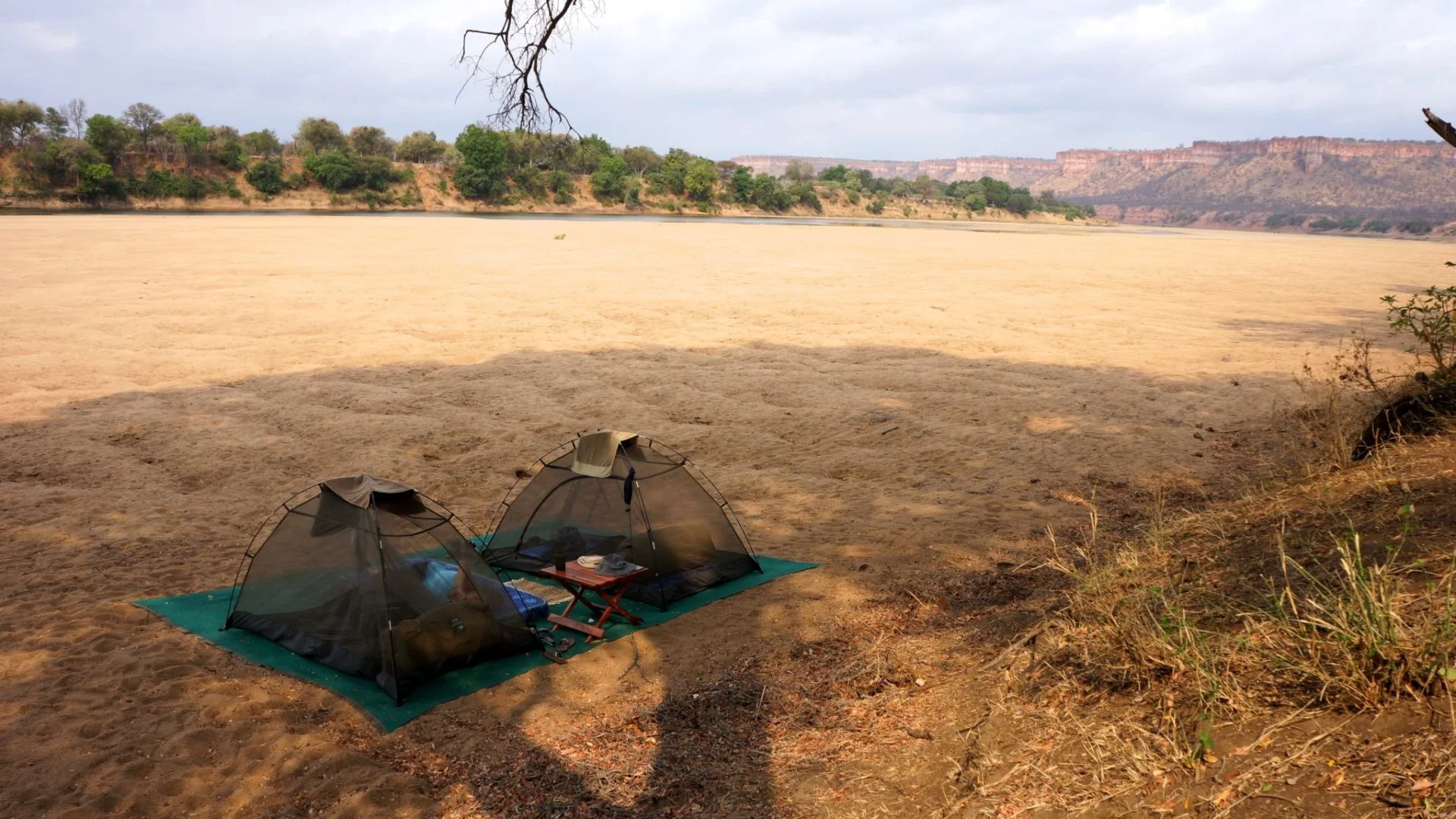
At the adventurous end sits fly-camping — minimalist tents pitched for a night or two in genuinely remote bush, far from any built camp, usually reached on foot. There is a bedroll, a long-drop loo, a fire, and not much else between you and the night sky. It is not for everyone, but for the right traveller it is the most vivid night of the whole trip. Fly-camping is only permitted on private land and in the wilder southern and western parks — think the vast Nyerere ecosystem, where it pairs naturally with the Rufiji River boat safaris, or remote Katavi, famous for its walking-and-fly-camp style. Treat it as a one-night highlight bolted onto a more comfortable base, not as your accommodation for the week.
How to choose: a quick decision path#
Work it in this order and the choice makes itself.
Start with the route and season. If you are chasing the migration, the type is half-decided for you: you want a mobile camp pitched in the right sub-region for your month (Ndutu Dec–Mar, Kogatende Jul–Oct), or a permanent camp you have confirmed is near the herds. For a year-round Big Five trip, a permanent camp in central Seronera is the reliable anchor.
Then decide park vs private. Want night drives, walking or to escape vehicles? Add a conservancy or concession night. Happy with classic day game drives and want the best value and the famous landscapes? Stay in the parks.
Then pick in-park or boundary by budget. If the budget stretches, sleep inside the park for the dawn advantage. If it is tight, a boundary camp saves real money — just accept the morning commute and lost golden hour.
Finally, choose the tier and structure for comfort. Families and the comfort-focused lean to lodges and upper tented camps; couples and romantics lean to tented camps and concessions; adventurers add a fly-camp night.
If you would rather see the camps and concessions that sit at the top of this range — the private, walking-and-night-drive, exclusive end — start here:
Browse luxury safarisFrequently asked questions#
What are the main types of safari accommodation in Tanzania? Four: permanent lodges (built, hotel-like, with pools and solid walls), permanent tented camps (fixed en-suite canvas suites that stay in one place all year), mobile or seasonal camps (lighter camps that relocate with the migration), and fly-camps (minimalist wilderness tents for a night or two on private land or in the southern parks).
What is the difference between a permanent tented camp and a mobile camp? A permanent tented camp has canvas walls but stays in one location year-round. A mobile camp is built to be struck and re-pitched, so it physically moves two or three times a year to follow the Great Migration — typically to Ndutu for calving from December to March and to the northern Kogatende area for the river crossings from July to October.
Why do mobile camps follow the migration? Because the wildebeest do not stay put. A camp that wants to keep you in the middle of the herds has to move with them, so seasonal camps relocate between the southern plains and the far north. The practical takeaway is to always confirm which location a mobile camp is pitched at for your exact dates, since Seronera to Kogatende is a 5 to 6 hour drive.
Is it better to stay inside the park or just outside the gate? Inside the park you are on a sighting at first light and skip the morning gate queue, but you pay park and concession fees. Outside the gate is cheaper because you sleep beyond the fee zone, but you lose the golden first hour to the commute and re-entry. Inside is best for game-viewing; boundary camps are the value play.
Can you do night drives and walking safaris from any safari camp? No. Tanzanian national parks prohibit driving after the 6 PM gate closing and generally ban walking and off-road driving, so night drives and walking safaris are only available on private conservancies and concessions, or in certain southern parks. If those activities matter to you, you must include at least one night on private land.
What does a luxury safari camp give you that a mid-range one does not? Beyond bigger suites and design, the real upgrades are prime in-park or private-concession locations, exclusive traversing rights with very few other vehicles, top-tier guiding, and access to night drives, walking safaris and fly-camping. Location and guiding matter more to your sightings than the room itself.
How far ahead should I book a mobile migration camp? Six to twelve months for the peak windows — February calving at Ndutu and the August to October crossings in the north — because the best seasonal camps have limited tents and sell out early. Most mobile camps also close in the quiet April to May long-rains period, so always confirm operating dates.
What is fly-camping and where can you do it in Tanzania? Fly-camping is spending a night or two in minimalist tents in remote bush, usually reached on foot, with little more than a bedroll, a fire and a long-drop loo. It is only permitted on private land and in the wilder southern and western parks such as Nyerere and Katavi, and works best as a one-night adventure added to a more comfortable base camp.
Ready to plan the real thing?
Compare honest, all-in safari packages with real lodge choices — straight to the local operator, no middleman.
Browse safari packagesKeep reading
planning
What a Tanzania Safari Really Costs, Line by Line

planning
Getting Your Tanzania Visa: The 2025–2026 Playbook

planning
Shots, Pills & the Yellow-Fever Trap: Health Prep for Tanzania & Kenya
planning
Sleeping in the Wild: Fly-Camping & Walking Safaris in Tanzania
planning
Tanzania or Kenya? An Honest Safari, Trek & Beach Showdown
planning
On Foot in East Africa: Walking Safaris in Tanzania & Kenya