 Tours
Tours
NoMiddleManTours · Jun 22, 2026 · 15 min read
Standard travel insurance is not enough for an African safari. This guide breaks down exactly what cover to look for — medical evacuation, bush-flight cancellation, high-altitude trekking, and the Zanzibar mandatory insurance requirement — so you can stop comparing policies that all look the same.
Most travellers book travel insurance the same way they buy a luggage lock: quickly, at the last minute, without reading the small print. For an urban city break, that is a manageable gamble. For an African safari — where your nearest hospital may be a flying-doctor flight away, where your itinerary includes aircraft whose smallest route-segment could cost $1,000 to rebook, and where altitude sickness can develop overnight at 5,895 metres on Kilimanjaro — it is a genuinely expensive mistake.
This guide is not a generic "buy travel insurance" reminder. It is a specific breakdown of what safari travel insurance actually needs to cover, why standard policies frequently fail safari travellers in practice, and what questions to ask your insurer before you pay. It draws on the realities of the East Africa circuit rather than the standard policy wording designed for European package tours.
The one thing that matters most: emergency medical evacuation#
Ask any experienced East Africa guide what single insurance clause they would never travel without, and the answer is the same: medical evacuation, specifically the right kind.
Most standard policies include medical evacuation in their summary documents. What they mean by this, however, is often repatriation — flying you home once you are stable enough to travel. What you need in remote Africa is something different: emergency aeromedical evacuation to the nearest appropriate facility on the same day, regardless of where your vehicle or tent is when the emergency happens.
The Serengeti is 14,763 square kilometres. Ruaha National Park is larger still. The southern parks — Nyerere (Selous) and Katavi — are genuinely remote, with the nearest town hospital hours away on rough roads. If your vehicle is in the middle of any of these parks when a heart attack, serious head injury, or acute appendicitis occurs, the only viable emergency response is a fixed-wing or helicopter evacuation to Nairobi or Arusha.
Flying Doctors and AMREF — the network you need access to#
The gold standard for emergency evacuation in East Africa is the AMREF Flying Doctors network (formerly known as the Flying Doctors Society of Africa), operating out of Nairobi's Wilson Airport. It is the service that experienced operators, most quality lodges, and virtually every reputable East Africa insurer reference when they talk about evacuation cover.
The key distinction is membership versus insurance. AMREF Flying Doctors offers direct individual membership — roughly $25–$30 USD for a single trip (under 30 days) — which grants access to their dedicated air ambulance fleet and transfers to the appropriate facility in Nairobi or Dar es Salaam. Some comprehensive travel insurance policies include this as a named benefit; many do not. If your policy's evacuation clause simply says "emergency evacuation to the nearest appropriate hospital" without specifying the aeromedical service provider, check carefully whether it actually covers a fixed-wing aircraft from a remote airstrip in Ruaha or the Serengeti floor.
The distinction between "nearest hospital" and "appropriate hospital" matters enormously in the field. The nearest government hospital to some remote Tanzanian camps is a several-hour road journey and does not have ICU capacity. An appropriate facility — one that can actually treat serious trauma, cardiac events, or complications from a diving accident off Zanzibar — may require an additional flight to Nairobi or Dar es Salaam, or even repatriation. Your policy must cover the full chain, not just the first leg.
Ground evacuation from remote camps is not the backup plan#
A point that surprises many first-time safari travellers: ground evacuation from remote camps is not a practical alternative to air evacuation in many circumstances, even where a road technically exists.
Camps in the southern circuit — in Nyerere, Ruaha, or in the Ngorongoro highlands at 2,200 metres — are often accessible only via tracks that a standard ambulance cannot use. Seasonally, the roads close entirely. In the Serengeti, the distances are simply prohibitive: from central Seronera to Arusha is seven or more hours by road on a good day; from northern Kogatende it is far longer. For a time-critical emergency, ground evacuation is not a fallback — it is a delay that worsens outcomes. Your policy must cover air evacuation from remote areas, not just from airports or towns.
High-altitude cover for Kilimanjaro climbers#
This is the most commonly overlooked coverage gap for safari-and-trek itineraries, and it catches a significant number of travellers every year.
Many standard travel insurance policies include an altitude limit — often 3,000 to 4,000 metres — above which medical costs and evacuation are excluded. Mount Kilimanjaro reaches 5,895 metres at Uhuru Peak. The Lemosho and Machame routes spend multiple nights above 4,000 metres. Acute mountain sickness (AMS), high-altitude pulmonary oedema (HAPE), and high-altitude cerebral oedema (HACE) are all documented risks above 4,000 metres, and HACE and HAPE are life-threatening conditions that require immediate descent and, in serious cases, evacuation.
A climber who develops HAPE at Barafu Camp (4,673 metres) and needs helicopter evacuation to Moshi — a common enough scenario that the operators running the mountain have dealt with it — may find their travel insurer declines the claim entirely because the altitude exceeds the policy's coverage ceiling.
 Destination
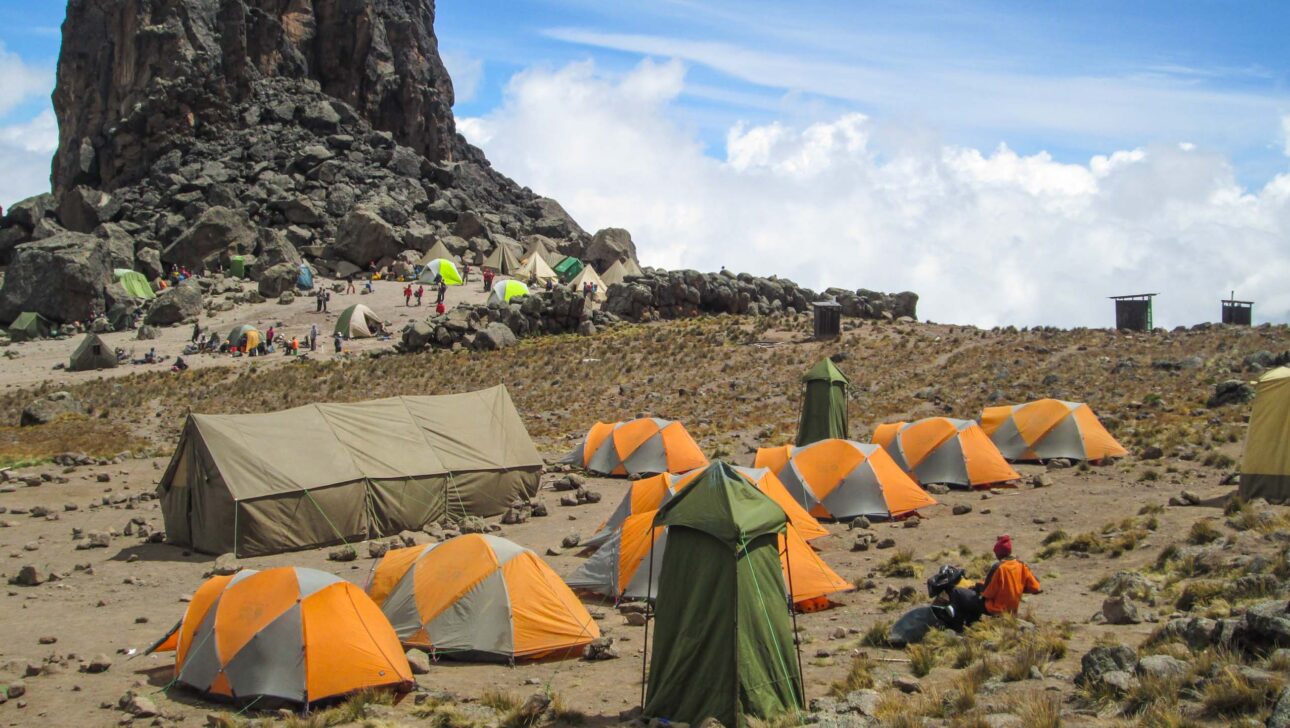
Mount Kilimanjaro
mountain
What to look for if you are climbing Kilimanjaro#
Before purchasing any policy that covers a Kilimanjaro climb, verify three things explicitly:
1. Altitude ceiling. The policy must explicitly cover trekking to 5,895 metres, or state "unlimited altitude" for non-motorised trekking. Anything less is a gap.
2. High-altitude medical conditions. The policy should name AMS, HAPE, and HACE as covered conditions, or include a general "illness at altitude" clause. Some policies treat these as "self-inflicted" risks or pre-existing conditions and exclude them.
3. Helicopter evacuation from altitude. Fixed-wing aircraft cannot land above 4,000 metres on Kilimanjaro. Helicopter evacuation from Barafu or above requires a specialist helicopter operator, and the cost is significant — $5,000 to $15,000 depending on location and weather. Your policy must specifically cover helicopter evacuation from altitude, not just standard aeromedical services.
Some specialist adventure-travel insurers (World Nomads, Battleface, Ripcord, True Traveller, Allianz Partners adventure plans, Campbell Irvine) have been used extensively on Kilimanjaro and specify high-altitude cover clearly. Verify the specific route and altitude with your insurer in writing before departure — the claim denial on descent is not the moment to discover the exclusion.
Kilimanjaro Climbing
Tour package collection
Bush-flight and trip cancellation cover#
Safari itineraries that include internal bush flights — which describe the majority of northern Tanzania itineraries operating beyond a drive-only circuit — carry a specific cancellation-and-delay risk that standard trip-interruption clauses often do not address cleanly.
A bush flight on the East Africa circuit is typically operated by a small-aircraft charter company (Coastal Air, Auric Air, FlightLink, Assalaam), running a schedule that depends on minimum passenger loads and weather. Minimum passenger load requirements mean routes are sometimes cancelled at short notice even when your seat is booked — if the operator does not fill the required two to four passenger minimum on an inducement route, the flight does not go. This is a known operational feature of the network, not a force-majeure event, and some policies exclude it.
What you need from bush-flight cover#
Trip interruption due to carrier cancellation. If your bush flight from Seronera to Zanzibar (a common final-leg route, roughly $370 per person) is cancelled because the operator did not fill the aircraft, your policy should cover the cost of an alternative routing. Standard policies typically require the cancellation to be weather-related or mechanical; load-based cancellations fall into a grey area that some insurers exclude.
Accommodation costs during delays. A cancelled bush flight frequently means an unplanned night at or near the relevant airstrip, at your own expense unless the operator or insurer covers it. Verify your policy covers accommodation costs during flight delays beyond a stated threshold (commonly 12–24 hours).
Missed connections. If a cancelled or delayed bush flight causes you to miss an international departure, your policy needs to cover the costs of rebooking. This is a standard clause in most comprehensive policies, but the trigger event — a charter-aircraft delay — must be a covered cause under the policy wording.
Baggage limits. A secondary point worth noting: Tanzanian bush flights enforce strict baggage limits of 15–20 kilograms in soft bags only. Hard-sided luggage is typically not accepted. This is not an insurance matter, but it is worth checking that your insurer's baggage cover applies to soft-bag-compatible luggage rather than only hard-case items if you are travelling with photography or diving equipment.
The Zanzibar mandatory travel insurance requirement#
Zanzibar-specific requirement — verify currency before travel. As of 2024, Zanzibar (the Zanzibar archipelago, which is an autonomous region within Tanzania) introduced a mandatory travel insurance requirement for all incoming visitors. The policy must cover medical treatment and emergency evacuation up to stated minimum limits.
This requirement can be satisfied by purchasing the government-endorsed insurance scheme at the point of entry — available online pre-arrival and at the airport. As of 2024–2025, the cost was in the range of $44–$85 USD depending on coverage tier and duration. Travellers who already hold a qualifying comprehensive travel insurance policy that meets the minimum medical and evacuation limits may be able to use that policy instead, but must carry documentation at immigration.
The practical implication: if your wider safari insurance policy covers Zanzibar with adequate medical limits, keep the policy summary and schedule of benefits with you. If your existing policy does not meet the Zanzibar limits, budget for the Zanzibar entry-point supplement as a separate cost.
 Destination
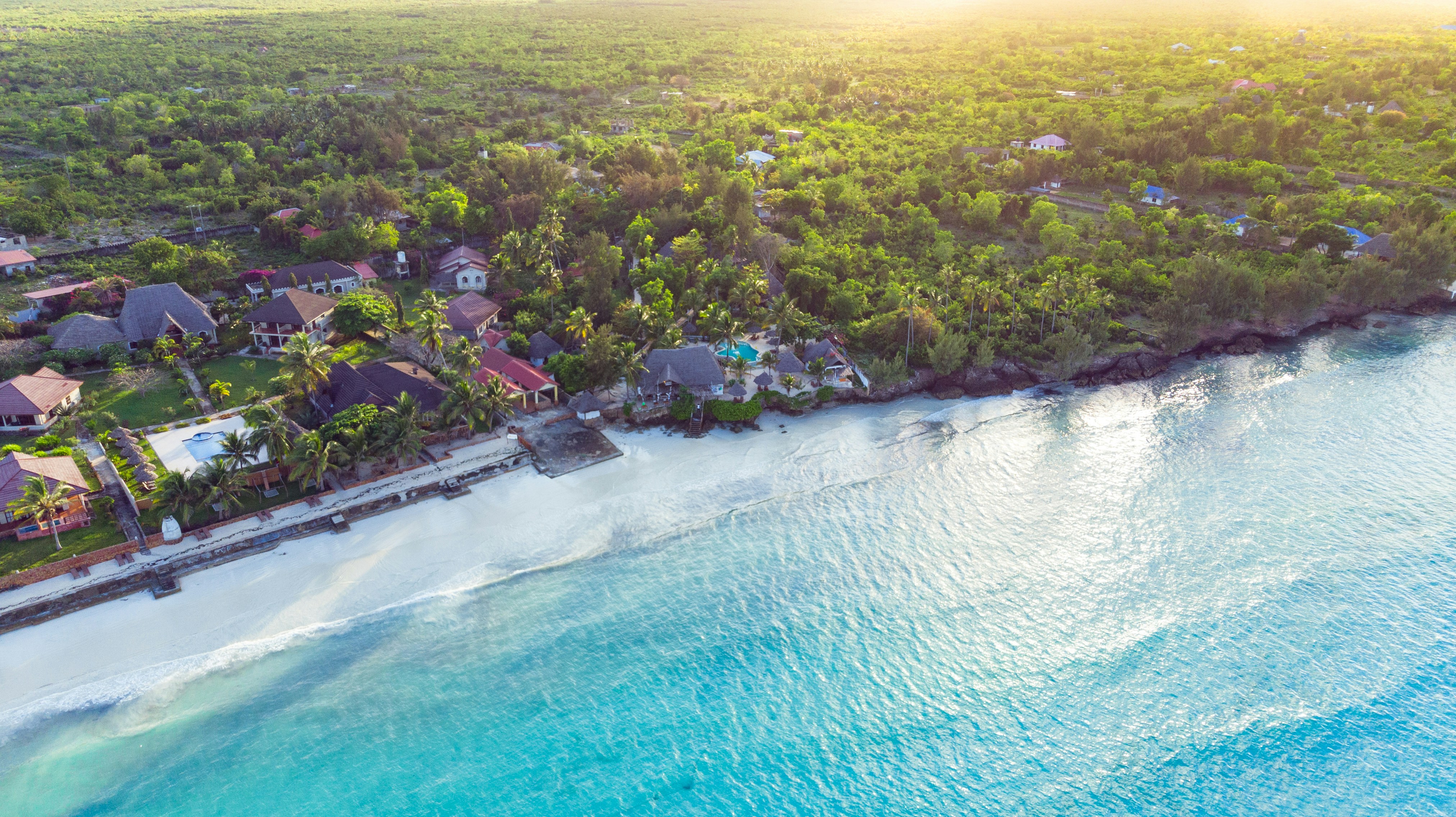
Zanzibar — Beaches
beach
Do not assume that a policy purchased in your home country automatically satisfies the Zanzibar entry requirement. The requirement is enforced at immigration, and the documentation burden is on the traveller. Check the Zanzibar Tourism Commission's current requirements in the 30 days before departure — the policy limits and accepted documentation formats have been updated several times since the scheme launched.
What standard travel policies routinely miss#
Beyond the three major gaps already covered, here are the specific clauses that experienced safari planners check and standard policies often fail on:
Wildlife interaction exclusions. A small number of policies include exclusions for injury caused by wildlife encounters, classifying them as "inherent risks of dangerous activities" alongside skydiving and bungee jumping. This is rare but not unheard of. Read the exclusions section, not just the benefits list.
Safari vehicle incidents. If you are injured in a safari vehicle on a park track — a roll-over on a steep bank, for example, or an impact during a game drive — the standard question is whether the operator's third-party liability insurance covers it, and whether your travel policy covers the gap. Most comprehensive travel policies cover injury from vehicle incidents that are not self-driving; verify this if you are booking a self-drive rental in a park.
Scuba diving in Zanzibar and Mafia Island. Dive-specific cover — decompression illness and hyperbaric chamber treatment — requires either a Divers Alert Network (DAN) policy or a travel policy that explicitly includes diving to the depth you intend. The nearest decompression chamber to Zanzibar is in Dar es Salaam; treatment costs are significant.
Hiking and walking safaris. Walking safaris in Ruaha, Nyerere, or on the rim of Ngorongoro are typically classed as guided trekking by insurers. Verify that your policy includes guided walking in a wildlife area, not just "hiking" in the recreational sense. Most specialist policies cover this; some budget policies do not.
Pre-existing conditions and the Africa-specific clause. Some standard European and North American travel policies include a "remote area" clause that triggers additional conditions — or outright exclusions — for travellers with certain pre-existing conditions who are more than a stated distance (sometimes 150 miles) from a hospital. The Serengeti and Ruaha both trigger this clause routinely. If you have a pre-existing cardiac, respiratory, or neurological condition, obtain written confirmation from your insurer that the remote-area clause does not reduce your evacuation cover.
How to compare safari travel insurance policies#
The market for travel insurance is large and the product names are deliberately opaque. Here is a structured comparison checklist for safari-specific cover:
| Coverage item | What to look for | Red flag |
|---|---|---|
| Medical limit | USD $500,000 minimum; USD $1M+ recommended | Under $100,000 |
| Emergency evacuation | Named air-ambulance cover; no "nearest hospital" limit | "Nearest appropriate facility" only |
| AMREF Flying Doctors | Stated as covered or included, or standalone membership | No mention of East Africa networks |
| Altitude limit | 5,895m or "unlimited trekking altitude" | Any altitude cap below 5,000m |
| Altitude illnesses | AMS, HAPE, HACE named or "altitude illness" included | Silence on altitude conditions |
| Helicopter evac | Covered from altitude, not just from airports | "Fixed-wing only" wording |
| Bush-flight delay | Carrier cancellation triggers trip interruption | Only "common carrier" or scheduled airlines |
| Zanzibar requirement | Medical limit meets Zanzibar minimum; documentation available | No regional breakdown of limits |
| Dive cover | DAN-equivalent; decompression illness included | "Recreational diving" only / depth limits |
| Wildlife incident | Injury from wildlife not excluded | "Dangerous animal" exclusion clause |
| Cancellation cover | Safari-trip deposits (often non-refundable from 90 days out) | Standard cancellation only, no deposit clause |
Timing: when to buy and what to insure#
The single biggest financial protection a travel insurance policy provides — beyond the medical clauses — is trip cancellation cover from the date of purchase. Safari bookings routinely require non-refundable deposits of 20–30% of trip value at the time of booking, sometimes nine to twelve months before departure, and final payment 60–90 days before travel.
If you purchase insurance only at the time of final payment, you are uninsured during the deposit period. Buy your policy within 14–21 days of paying your first deposit; many policies also have a "cancel for any reason" upgrade that must be purchased within this initial window. For a $15,000 safari for two people, the deposit alone at 25% is $3,750 — losing that before the policy is in place is an avoidable outcome.
Total trip cost insured should include international and domestic airfare (which is almost always non-refundable 24 hours after booking), safari package costs, trekking permits (Kilimanjaro permits are fully non-refundable once issued), and any pre-paid diving or day-excursion bookings.
The one-line summary#
A comprehensive adventure-travel policy from a specialist insurer with explicit high-altitude cover, named aeromedical evacuation to an appropriate facility, and trip interruption coverage for charter-aircraft delays is the only policy that reliably covers a Tanzania safari. The premium difference between this and a standard travel policy is usually $80–$200 per person. The cost of a single helicopter evacuation from altitude on Kilimanjaro without cover is $5,000–$15,000. The maths is straightforward.
Browse Tanzania safarisFrequently asked questions#
Is standard travel insurance enough for an African safari? No. Standard policies frequently exclude or underinsure three critical safari risks: emergency medical evacuation from remote areas to an appropriate facility (not just the nearest hospital), high-altitude illness and helicopter evacuation above 3,000–4,000 metres, and trip cancellation triggered by bush-flight carrier cancellations. You need a specialist adventure-travel policy with explicit cover for all three.
What is AMREF Flying Doctors and do I need it? AMREF Flying Doctors (formerly the Flying Doctors Society of Africa) operates the primary air-ambulance network across East Africa, based at Nairobi Wilson Airport. It is the evacuation service most quality lodges and operators reference in emergencies. A standalone AMREF membership costs around $25–$30 USD for a trip under 30 days and covers air evacuation to Nairobi or Dar es Salaam. Some comprehensive travel policies include AMREF cover; many do not. Buy it separately as a supplement if yours does not.
Does travel insurance cover Kilimanjaro at full altitude? Only if the policy explicitly states a high-altitude limit of 5,895 metres or higher, or uses "unlimited altitude" language for non-motorised trekking. Many standard policies cap medical cover at 3,000 to 4,000 metres. Verify this in writing with your insurer before departure, and confirm that helicopter evacuation from altitude and altitude-specific illnesses (AMS, HAPE, HACE) are all included.
What is the Zanzibar mandatory travel insurance requirement? As of 2024, Zanzibar introduced a mandatory travel insurance requirement for all visitors, covering minimum medical and evacuation limits. Travellers can purchase the government-endorsed policy online before arrival or at the airport (roughly $44–$85 USD depending on tier and duration). An existing comprehensive travel policy that meets the minimum limits may also satisfy the requirement with supporting documentation. Check the current rules from the Zanzibar Tourism Commission within 30 days of departure, as the details have been updated since launch.
Does travel insurance cover cancelled bush flights in Tanzania? It depends on the cause. Mechanical failure and weather delays are covered by most policies. Cancellations because the operator did not fill the required minimum passenger load — an operational reality on inducement routes — fall into a grey area some insurers exclude. Read the "covered causes" for trip interruption carefully and ask your insurer directly whether charter-flight load-based cancellations are included.
When should I buy safari travel insurance? Within 14 to 21 days of paying your first deposit. This protects you during the full booking window, including the deposit period — often nine to twelve months before departure — and keeps you eligible for any "cancel for any reason" upgrades the policy offers. Waiting until final payment leaves the deposit period uninsured.
Are walking safaris covered by travel insurance? Most specialist adventure-travel policies cover guided walking in wildlife areas. Some budget policies class it as "dangerous activities" or limit cover to "recreational hiking" rather than wildlife-area walks. Verify with your insurer that guided walking safaris in African national parks are explicitly included, particularly if you are planning walks in Ruaha, Nyerere, or the Ngorongoro highlands.
Does travel insurance cover diving accidents near Zanzibar? Standard travel policies typically cover recreational scuba diving to a shallow depth (often 18–30 metres) but may not cover decompression illness or hyperbaric chamber treatment. For diving in Zanzibar or off Mafia Island, either purchase a dedicated DAN (Divers Alert Network) policy or confirm that your travel policy explicitly covers decompression illness and the cost of hyperbaric treatment. The nearest chamber to Zanzibar is in Dar es Salaam.
Ready to plan the real thing?
Compare honest, all-in safari packages with real lodge choices — straight to the local operator, no middleman.
Browse safari packagesKeep reading
planning
What a Tanzania Safari Really Costs, Line by Line
planning
Lodge, Tented Camp or Mobile? Safari Stays in Tanzania, Explained

planning
Getting Your Tanzania Visa: The 2025–2026 Playbook

planning
Shots, Pills & the Yellow-Fever Trap: Health Prep for Tanzania & Kenya
planning
Sleeping in the Wild: Fly-Camping & Walking Safaris in Tanzania
planning
Tanzania or Kenya? An Honest Safari, Trek & Beach Showdown