 Tours
Tours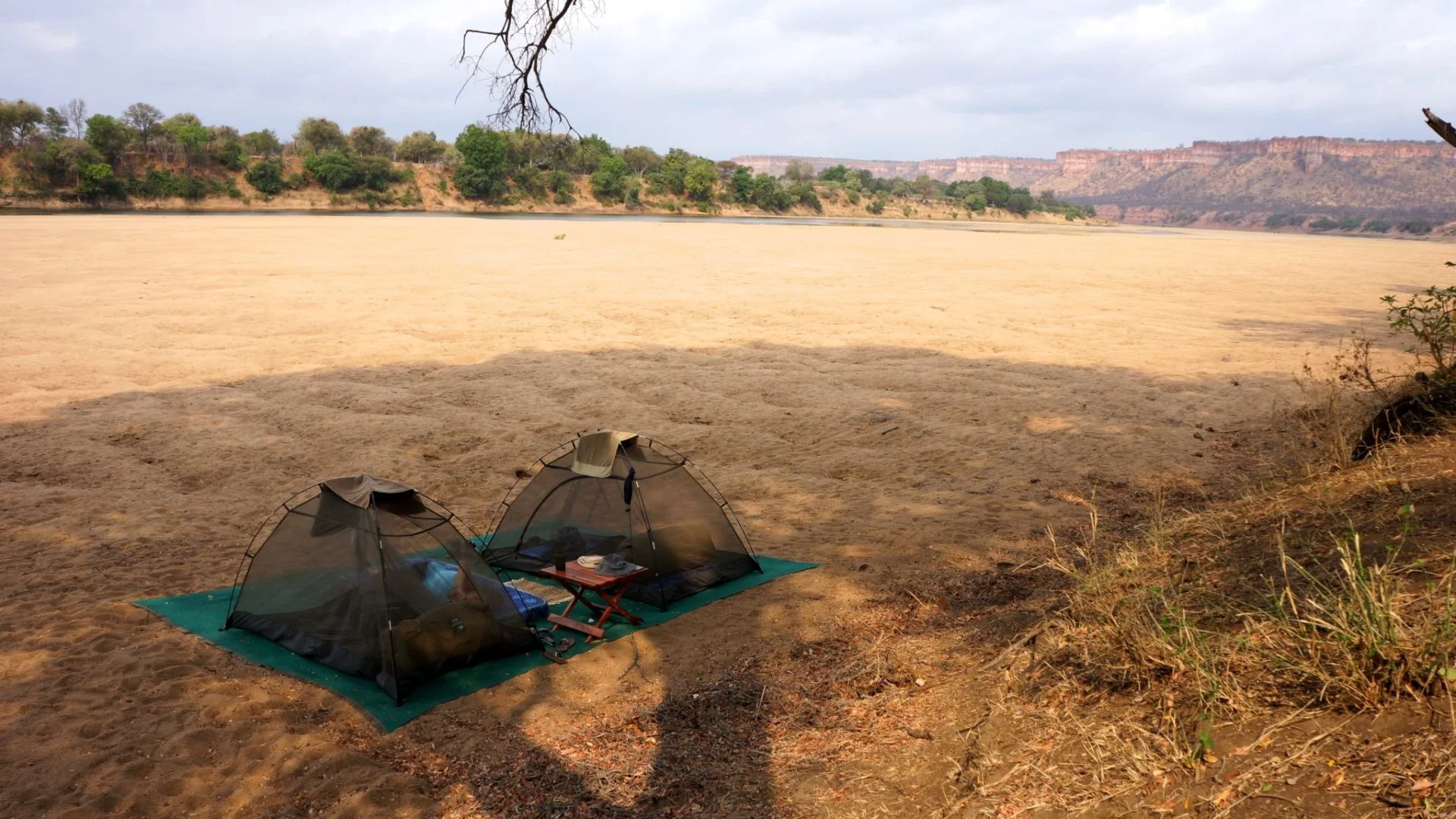
NoMiddleManTours · Jun 22, 2026 · 12 min read
What fly-camping actually is, where it is genuinely offered in Tanzania, the armed-ranger rules behind every walking safari, who it suits and who should skip it — with the exact southern-circuit camps and seasons that deliver it.
Fly-camping is the most stripped-back night you can spend on a Tanzanian safari: a lightweight bush camp — usually a bedroll under a mosquito-net dome or a small walk-in tent, a bucket shower, a long-drop loo dug that afternoon — pitched in a remote spot reached on foot, slept in once, and packed away the next morning. The "fly" has nothing to do with insects or aircraft. It is old safari shorthand for a fast, minimal camp thrown up for a single night, as opposed to the permanent lodge you drove out from. It is almost always paired with a walking safari: you walk to the camp, sleep in the bush, and walk back. This guide tells you exactly what that night involves, where in Tanzania it is genuinely offered (the southern circuit does it best), the armed-ranger rules that govern every step on foot, who should do it, who should not, and the months it is even possible.
The short answer: what fly-camping is, and where to do it#
Fly-camping is a guided overnight in a temporary bush camp, almost always built around walking rather than driving. A handful of guests, a professional walking guide, an armed ranger or scout, and a small support team move out from the main camp on foot in the afternoon, reach a fly-camp the staff have set up ahead of you, eat dinner around a fire, sleep under the stars with the bush at ear level, and walk out at first light. It is the opposite of a game-drive lodge holiday — no vehicle between you and the animals, no walls, no power.
| Where | Park / area | Fly-camp standard | Entry fee/day | Season |
|---|---|---|---|---|
| Ruaha | Ruaha National Park (southern circuit) | Sand-river fly-camps, 1–2 nights | US$35.40 | Jun–Nov; closed Mar–May |
| Nyerere (Selous) | Nyerere National Park (southern circuit) | Walking fly-camps + boat access | US$82.60 | Jun–Oct; closed Mar–May |
| Katavi | Katavi National Park (far west) | Classic Nomad-style fly-camp | US$35.40 | Jun–Oct only |
| Southern Tarangire | Tarangire / private concession (north) | Pioneer walking + fly-camp | US$59.10 | Jun–Oct best, year-round access |
The honest planning takeaway: if fly-camping is the reason for your trip, build it into the southern circuit — Ruaha and Nyerere — not the northern crowd-pullers. The great northern parks largely forbid both walking and overnight camping inside their boundaries, which is why a fly-camping safari and a classic Serengeti game-drive safari are really two different trips.
 Destination
Ruaha National Park
national_park
What a fly-camping night actually involves#
Strip away the brochure language and a fly-camp is deliberately spartan. Expect a low dome tent or an open-fronted bedroll with a mosquito net, a canvas bucket shower filled with water warmed on the fire, a short-drop toilet dug behind a screen, paraffin lanterns, and dinner cooked over coals. There is no generator, no Wi-Fi, no plug. The staff carry in only what fits — which is the point. Most camps run fly-camping as a one- or two-night add-on from a permanent base, so you are not roughing it for a week; you trade one or two nights of lodge comfort for the single most immersive experience on the trip.
The night is the part nobody can prepare you for. With nothing but netting between you and the dark, the bush becomes audible in a way it never is behind a lodge wall: hyenas whooping a ridge away, lions calling to locate one another across kilometres, the close abrupt crunch of a hippo cropping grass past midnight, the bark of a baboon picking up a leopard. Your guide will brief you before you turn in — stay inside the net, do not walk off alone, call quietly if you need the ranger. A staff member keeps the fire alive and a watch through the night. The discomfort is mild; the intensity is the whole product.
Where it is offered — and why the southern circuit owns it#
Fly-camping lives or dies on two permissions: are you allowed to walk, and are you allowed to sleep in the bush? In Tanzania's marquee northern national parks the answer to both is largely no. Serengeti is a national park where game driving is the sanctioned activity, walking is restricted to a few designated areas and concessions, and overnight bush camping is not part of the standard product. That is why the experience clusters in the south and far west, where the parks and adjoining management areas permit walking and remote overnighting as core activities.
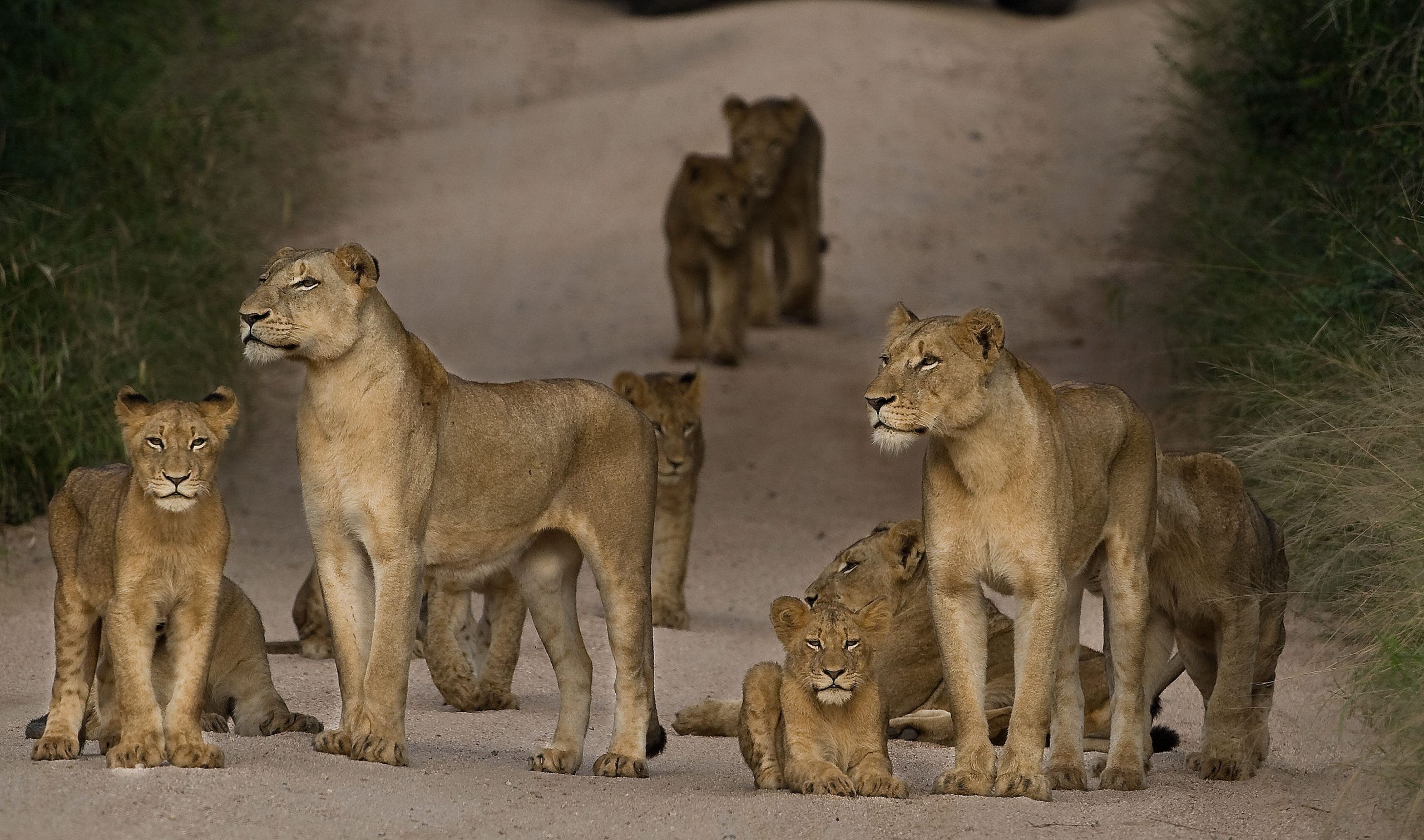
Ruaha is the best all-round fly-camping park in the country: Tanzania's largest national park at over 20,000 square kilometres, holding an estimated tenth of the world's remaining lions, with so few vehicles that you can walk for hours and never hear an engine. Its dry sand rivers make natural fly-camp sites — flat, open, with a sightline in every direction. Park entry is only US$35.40 a day, the lowest of any premier safari park, because Ruaha is a standard-tier park rather than a premium one.
 Mid Range
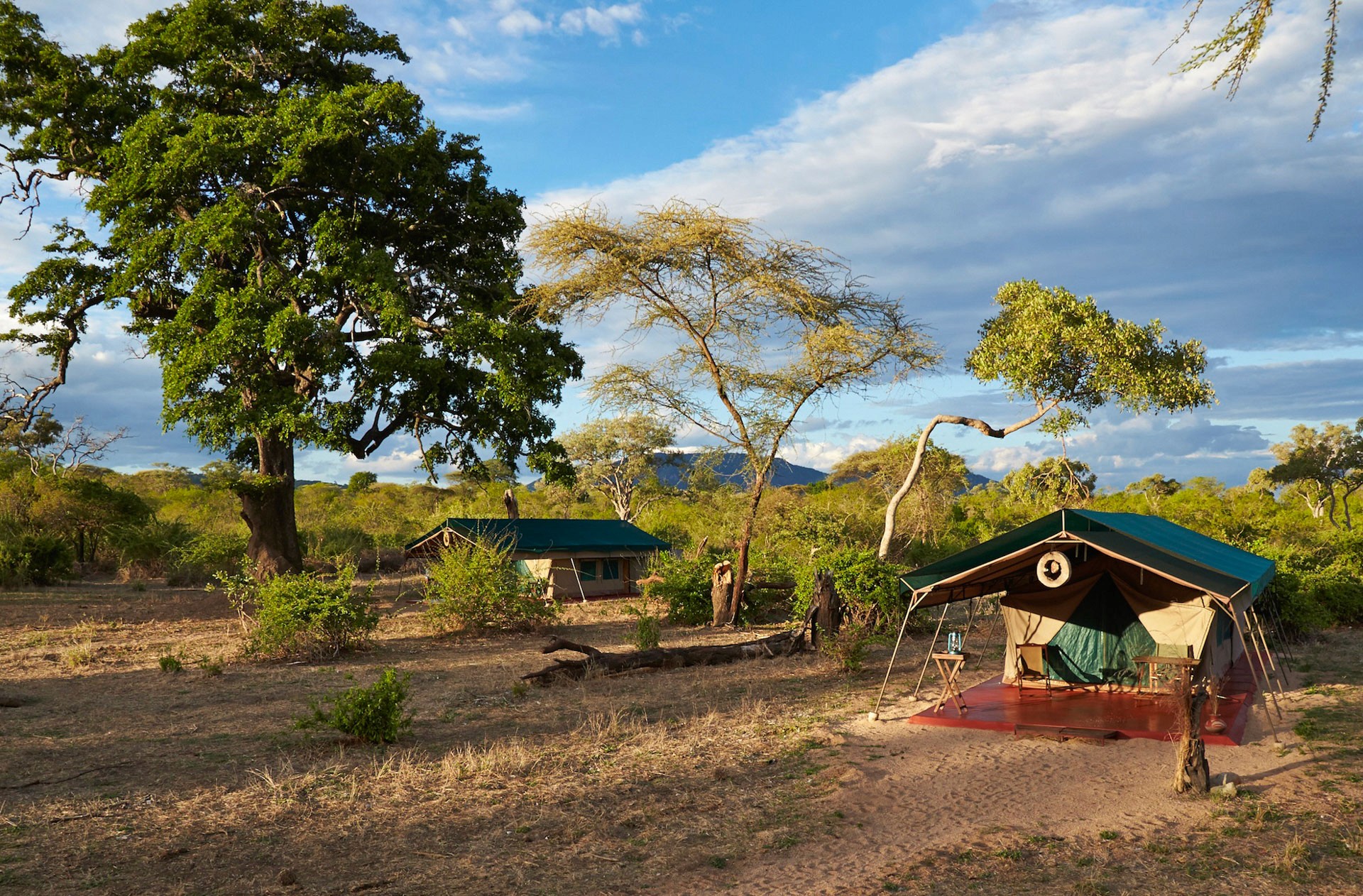
Mdonya Old River Camp
Mid Range · Ruaha National Park
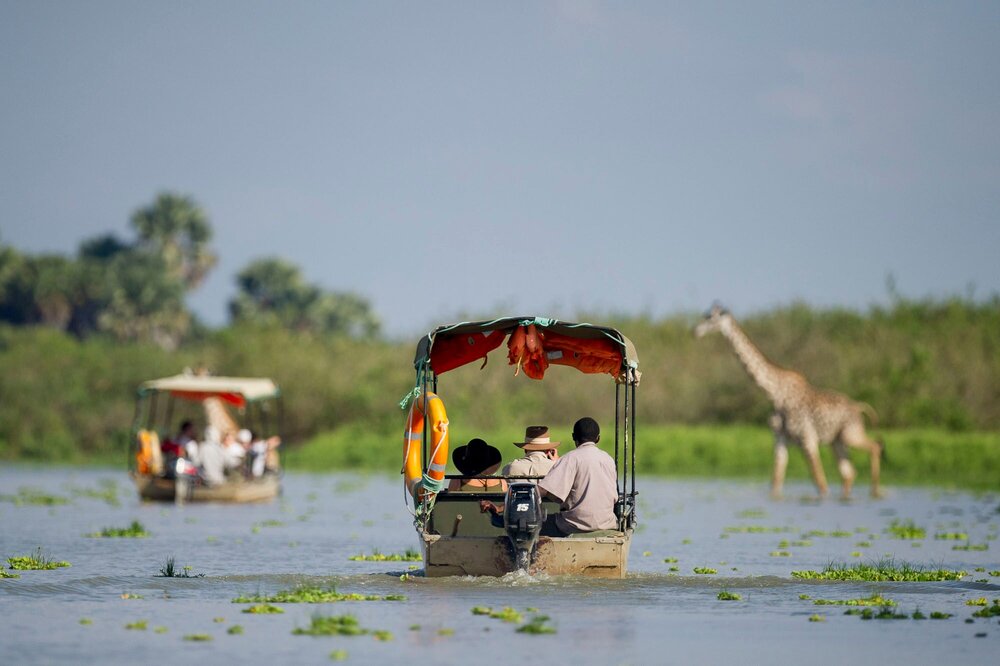
Nyerere — the reclassified Selous Game Reserve and the largest protected area in Africa, with the photographic tourist sector in its northern reaches — is the other heartland, adding a twist no other fly-camp region offers: you can arrive or depart by boat on the Rufiji River as well as on foot. Walking here threads woodland and thicket above the river where the park's famous wild dogs den, and the fly-camps sit out in genuine wilderness with hippo grunting from the channels below. Nyerere is a premium-tier park, so entry is US$82.60 per adult per day — worth knowing when you compare it with Ruaha on cost.
 Destination
Nyerere National Park
national_park
Two more places do it well. Katavi, in the remote far west, is the spiritual home of the classic minimalist fly-camp and pairs it with some of the densest dry-season buffalo and hippo gatherings anywhere — but it is a serious, expensive journey to reach. And in the north there is one genuine exception worth naming: the southern reaches of Tarangire and its adjoining concessions, where the walking-safari tradition was pioneered decades ago and a fly-camp night under the acacias is still on offer. If you want a taste of walking and a wild night without committing to the full southern circuit, that is where to find it up north.
The armed-ranger rule: how a walking safari really works#
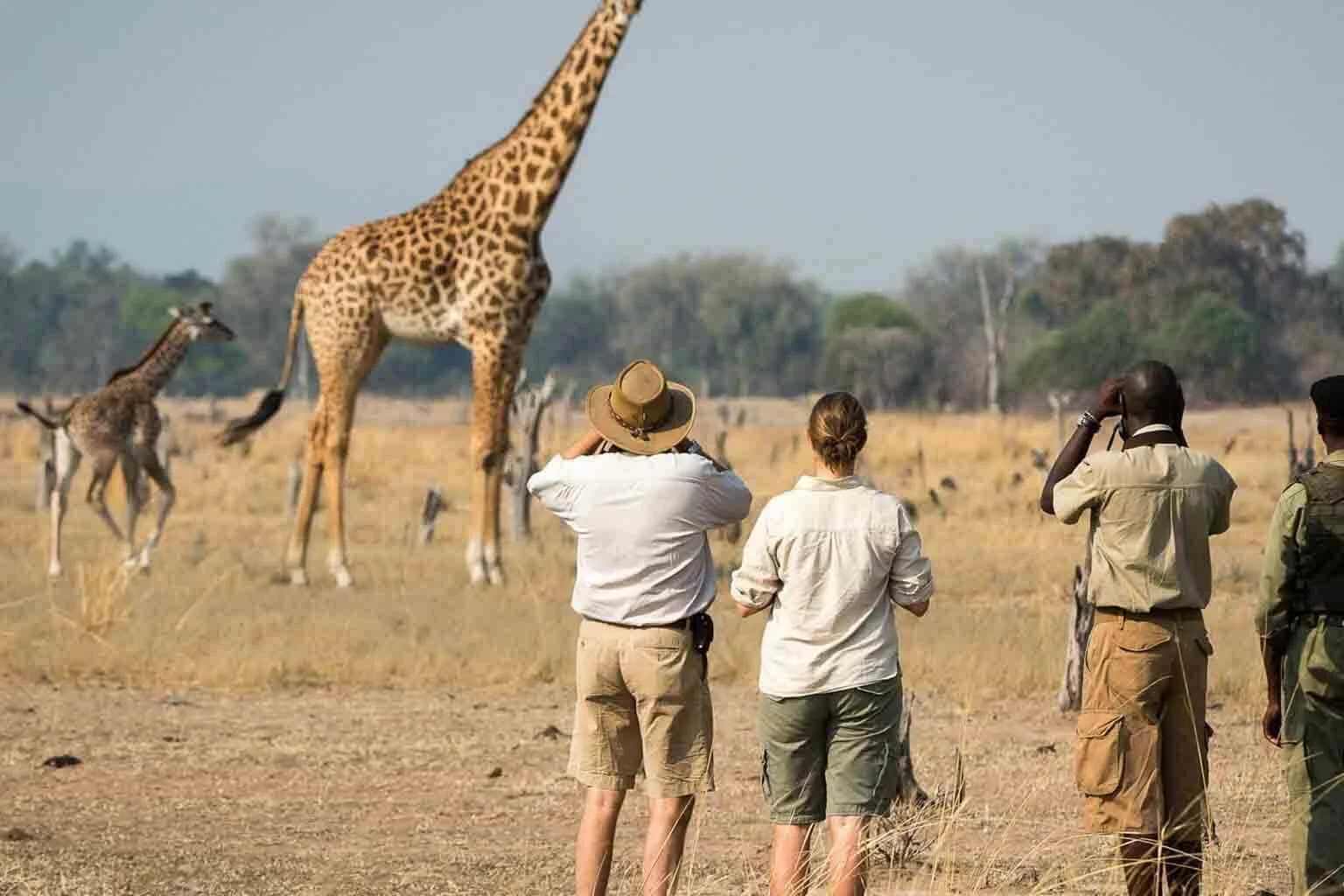
Every legitimate walking safari in Tanzania goes out with an armed ranger or scout — this is not optional and not negotiable, and any operator who waves it away is one to avoid. The standard formation is a professional walking guide in front, guests in a single tight file behind, and an armed government-licensed ranger or TAWA scout bringing up the rear or walking point alongside the guide. Group sizes are small — typically capped at six or eight walkers — because a large line is impossible to keep quiet and impossible to protect.
The rules exist because you are on the menu, and good guides drill them before you take a step. You walk in single file and stay in it. You walk into the wind, not with it, so your scent does not travel ahead and announce you to animals you have not yet seen. You speak in whispers or hand signals. You never run — running triggers a chase response in predators, and almost nothing on foot can outrun what lives here. If the guide stops and raises a fist, you freeze. The rifle is a last resort that a good guide expects to retire without ever firing; the real safety tool is reading the bush, giving dangerous animals room, and never surprising anything at close quarters. The reward is a wholly different register of safari — tracking spoor, reading dung and broken grass, watching a herd at eye level, learning the small things a vehicle blows straight past.
A detail most first-timers miss: walking is best early, not all day. Guides put you on foot in the cool first hours after dawn or the last hours before dusk, when animals are active and the light is kind, and you are usually back before the heat. A "walking safari" rarely means walking from breakfast to dinner — it means a focused two- to three-hour walk built into a day that still includes drives, boats and rest. Fly-camping simply extends one of those walks into the night.
Who fly-camping suits — and who should skip it#
Fly-camping is not for everyone, and pretending otherwise leads to a miserable night for the wrong person. It suits the second- or third-time safari-goer who has done the game drives and wants something rawer; the traveller who values immersion over comfort and is genuinely relaxed about a long-drop loo and a bucket shower; the reasonably fit walker who can manage a few kilometres on uneven ground in the heat; and anyone who finds the idea of falling asleep to lions calling thrilling rather than terrifying. Couples and small groups of friends do it best.
It is the wrong choice for several people, and the kind operator tells you so. Skip it on a first-ever safari — do the drives, learn the animals, then come back for the walking. Skip it with young children, who cannot reliably stay silent or still and for whom most camps set a minimum age of twelve to sixteen for walking. Skip it if you have limited mobility, a back that hates bedrolls, or a real fear of the dark and close wildlife sounds. And skip the fly-camp itself if you are short on time — Ruaha alone wants three to four nights and Nyerere at least two before you add a wilderness night on top. There is no shame in choosing a walking safari by day and a comfortable bed by night; the walk is most of the magic, and the overnight is the optional summit.
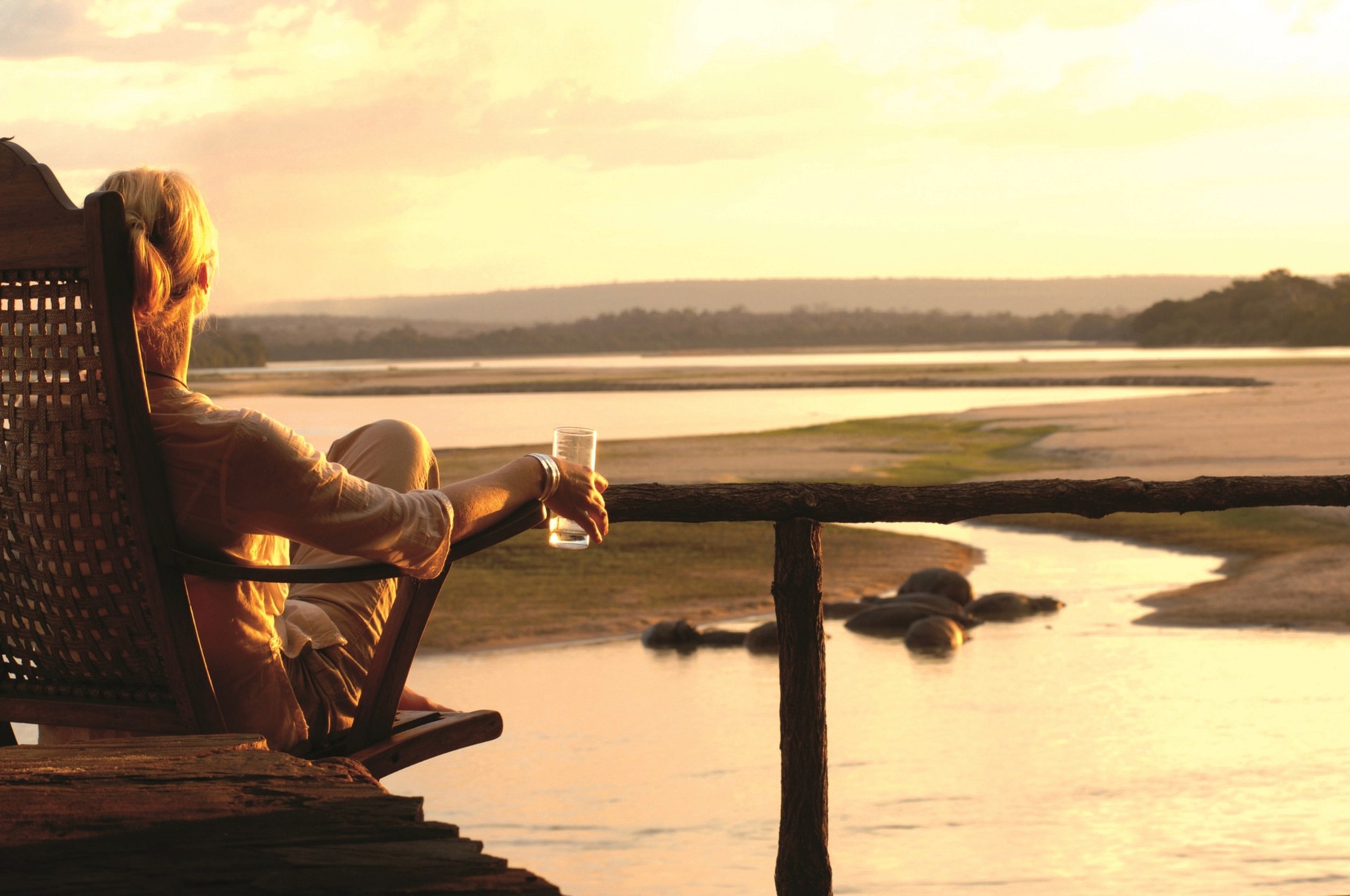 Ultra Luxury
Sand Rivers Selous
Ultra Luxury · Nyerere National Park
When you can actually do it: the season is short#
This is the single most important planning fact, and it surprises people: the southern circuit is largely shut for a quarter of the year. From mid-March through May the long rains flood the southern parks, roads become impassable, bush flights are cancelled, and most camps in Ruaha, Nyerere and Katavi simply close — it is not that the game viewing dips, it is that the infrastructure shuts down. You cannot fly-camp in a camp that is not open.
The window is the dry season. June through October is peak — thinning vegetation, animals concentrated at shrinking water, firm ground for walking, and clear nights for sleeping out. June and November are good shoulder months at better value, with November bringing the short rains and the first camp closures of the wet. December to February is variable green season, fine for birding but with patchier walking conditions and some camps already shut. If a wilderness walking night is the heart of your trip, aim squarely at June to October and confirm each individual camp's opening dates before you commit — they vary by a few weeks either side.
| Period | Southern circuit conditions | Fly-camping verdict |
|---|---|---|
| Jun–Oct | Dry, firm ground, game at water | Prime — book this window |
| Nov | Short rains start, first closures | Good value, check camp dates |
| Dec–Feb | Green season, variable | Patchy; some camps shut |
| Mid-Mar–May | Long rains, roads flood | Closed — most camps shut entirely |
How to build a fly-camping trip#
A fly-camping safari is a southern-circuit trip, and it flies rather than drives. The standard shape is Dar es Salaam to Nyerere by light aircraft (30 to 45 minutes), two to three nights of drives, boats and walking there, then a one-hour bush flight on to Ruaha for three to four nights with the wilderness walking night folded in — never the brutal ten-hour Dar-to-Ruaha drive, which burns a whole day and breaks the six-hour transfer rule twice over. Mikumi, the accessible "mini-Serengeti" near the Dar road, sometimes opens or closes such a trip as a transit stop. Budget the fly-camp as one or two nights inside a longer southern itinerary, not as a standalone.
Because fly-camping sits firmly in remote, low-traffic country, the off-the-beaten-path routes are where you will find it. Compare the southern and western options — the parks, the camps, the durations — side by side here:
Explore off-the-beaten-path safarisFrequently asked questions#
What is a fly-camping safari? A fly-camping safari is a guided overnight in a lightweight, temporary bush camp — a bedroll or small tent under a mosquito net, a bucket shower and a dug toilet — usually reached on foot and packed away the next morning. The "fly" is old safari shorthand for a fast minimal camp, not aircraft or insects, and it is almost always combined with a walking safari out from a permanent base.
Where in Tanzania can you go fly-camping? The southern circuit does it best: Ruaha and Nyerere National Park (the reclassified Selous Game Reserve) both offer walking-based fly-camps. Katavi in the far west is the classic fly-camp home, and southern Tarangire and its concessions are the main northern exception. The big northern parks like the Serengeti largely prohibit walking and overnight bush camping inside their boundaries.
Is a walking safari safe, and do you have an armed guard? Yes, every legitimate walking safari goes out with a professional walking guide plus an armed government-licensed ranger or TAWA scout — it is mandatory. Groups are small, you walk in single file into the wind, keep quiet, and never run. The rifle is a last resort; the real safety comes from a skilled guide reading the bush and giving animals room.
When is the best time for a fly-camping safari in Tanzania? June to October is prime — dry, firm underfoot, with game concentrated at water and clear nights for sleeping out. The southern circuit is largely closed from mid-March through May when the long rains flood the parks and most camps shut, so avoid that window entirely and confirm each camp's exact opening dates.
Who should not do a fly-camping safari? Skip it on a first-ever safari, with young children (most camps require ages twelve to sixteen for walking), with limited mobility or a back that struggles with bedrolls, or if close wildlife sounds in the dark would distress rather than thrill you. A daytime walking safari with a comfortable lodge bed at night is a sensible alternative.
How much does park entry cost on a fly-camping safari? Ruaha is US$35.40 per adult per day as a standard-tier park, while Nyerere is US$82.60 per adult per day as a premium park. These are park fees only; the fly-camp itself, guiding, ranger and bush flights are charged separately by the camp and operator.
How many nights do you need for a fly-camping trip? Build it into a longer southern itinerary: Nyerere wants at least two nights and Ruaha three to four, with the fly-camp added as one or two wilderness nights on top. A standalone single fly-camp night is not worth the journey south — the remoteness only pays off over several days.
Can you go fly-camping in the Serengeti? Not in the conventional sense. The Serengeti is a national park where game driving is the sanctioned activity, walking is restricted to a few designated areas and concessions, and overnight bush camping is not part of the standard offering. For genuine walking-led fly-camping, head to the southern circuit or a private concession.
Ready to plan the real thing?
Compare honest, all-in safari packages with real lodge choices — straight to the local operator, no middleman.
Browse safari packagesKeep reading
planning
What a Tanzania Safari Really Costs, Line by Line
planning
Lodge, Tented Camp or Mobile? Safari Stays in Tanzania, Explained

planning
Getting Your Tanzania Visa: The 2025–2026 Playbook

planning
Shots, Pills & the Yellow-Fever Trap: Health Prep for Tanzania & Kenya
planning
Tanzania or Kenya? An Honest Safari, Trek & Beach Showdown
planning
On Foot in East Africa: Walking Safaris in Tanzania & Kenya