 Tours
Tours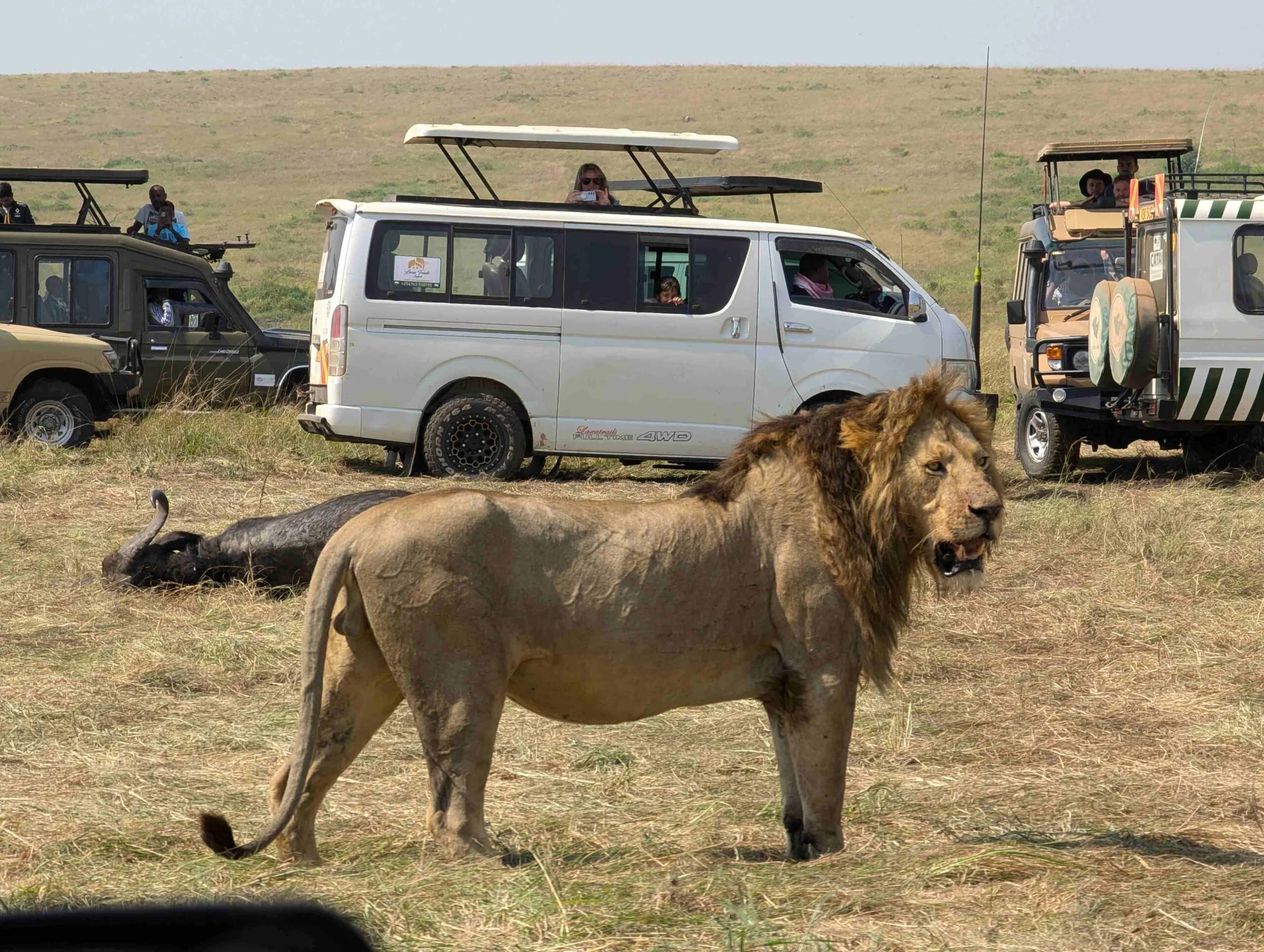 Ultra luxePartagé
11-Day Highlights of Kenya Ultra-Luxury Fly-In Safari
11 days·10 nights
Spa
Lodges bien-être chaque nuit
$34,535 par personne pour 2 voyageurs
Tour packages
The Masai Mara and its private conservancies, Amboseli with Kilimanjaro behind the elephants, and Samburu's northern dry-country specials — Kenya's safari circuit is Africa's most accessible.
Ultra luxePartagéLodges bien-être chaque nuit
 Ultra luxePartagé
Camps de la même enseigne tout au long du séjour
 Ultra luxePartagé
Plunge pools, plutôt adultes
 LuxePartagé
Confortables lodges safari permanents
 Ultra luxePartagé
Plunge pools, plutôt adultes
 Ultra luxePartagé
Plunge pools, plutôt adultes
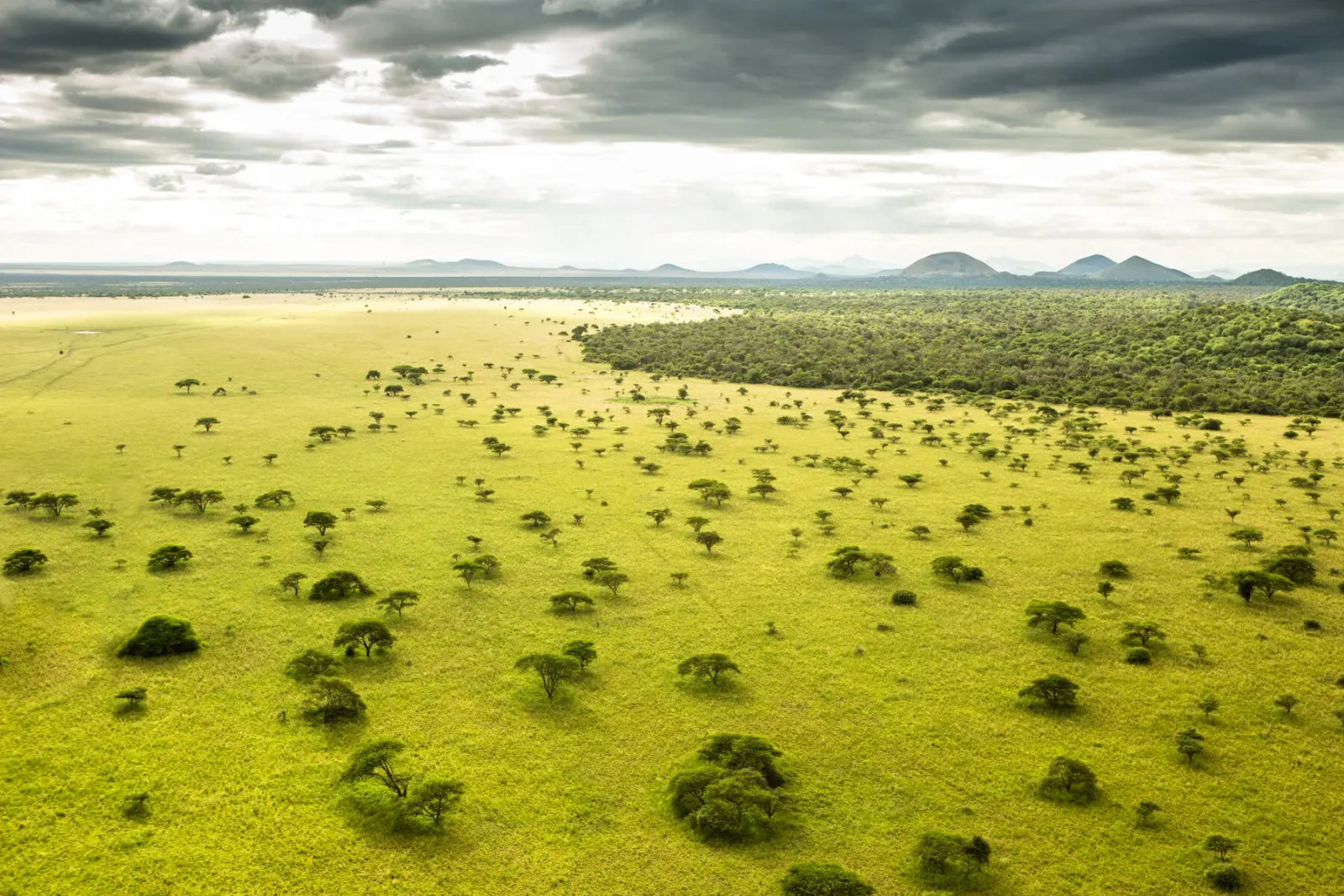
The Chyulu Hills sit between Tsavo and Amboseli on a volcanic ridge young enough that lava fields are still cooling — and on the 275,000-acre Mbirikani Group Ranch that surrounds them, the only horseback safari in southern Kenya moves at walking pace through a wildlife corridor that elephants, lions, and buffalo share with Maasai cattle herds. Four nights at ol Donyo Lodge, a Relais & Châteaux property with Kilimanjaro on the horizon and a plunge pool on every suite, deliver the southern Kenya counterpoint to everything the Mara and Amboseli are famous for: fewer vehicles, deeper conservation, and a landscape that rewards slow travel — on horseback, on foot, and from a sunken waterhole hide at first light.
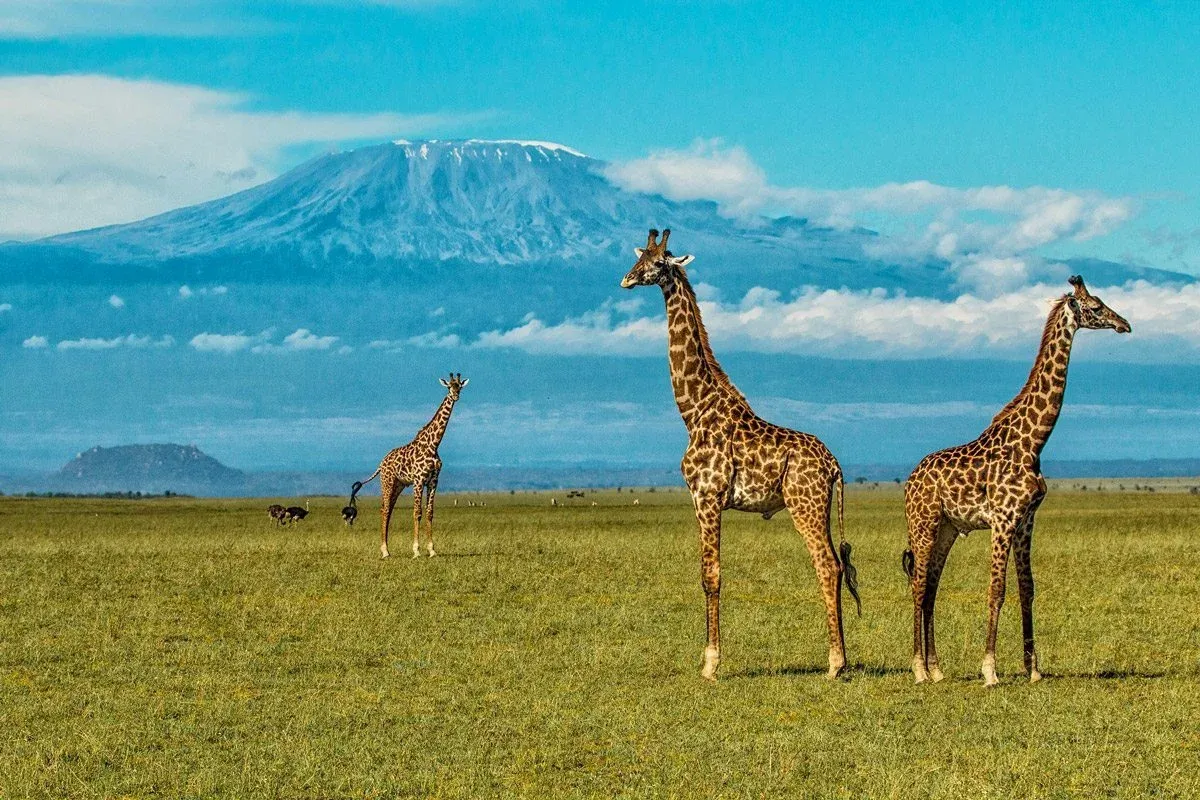
Six nights in one of Kenya's most singular landscapes: the Chyulu Hills volcanic range, where lava tubes run beneath open savannah and Kilimanjaro fills the horizon every dawn. This extended stay at ol Donyo Lodge — Great Plains Conservation's Relais & Châteaux property on Mbirikani Group Ranch — is built for depth, not breadth. Five full activity days rotate through horseback safaris across open plains, a multi-day mountain-biking expedition through ancient lava field country, deep walking with Maasai guides on the volcanic ridge, and unhurried hours in the hide watching elephants at the waterhole beneath a sky that turns pink over the summit of Kilimanjaro. This is what a week in the bush looks like when you don't move camps.
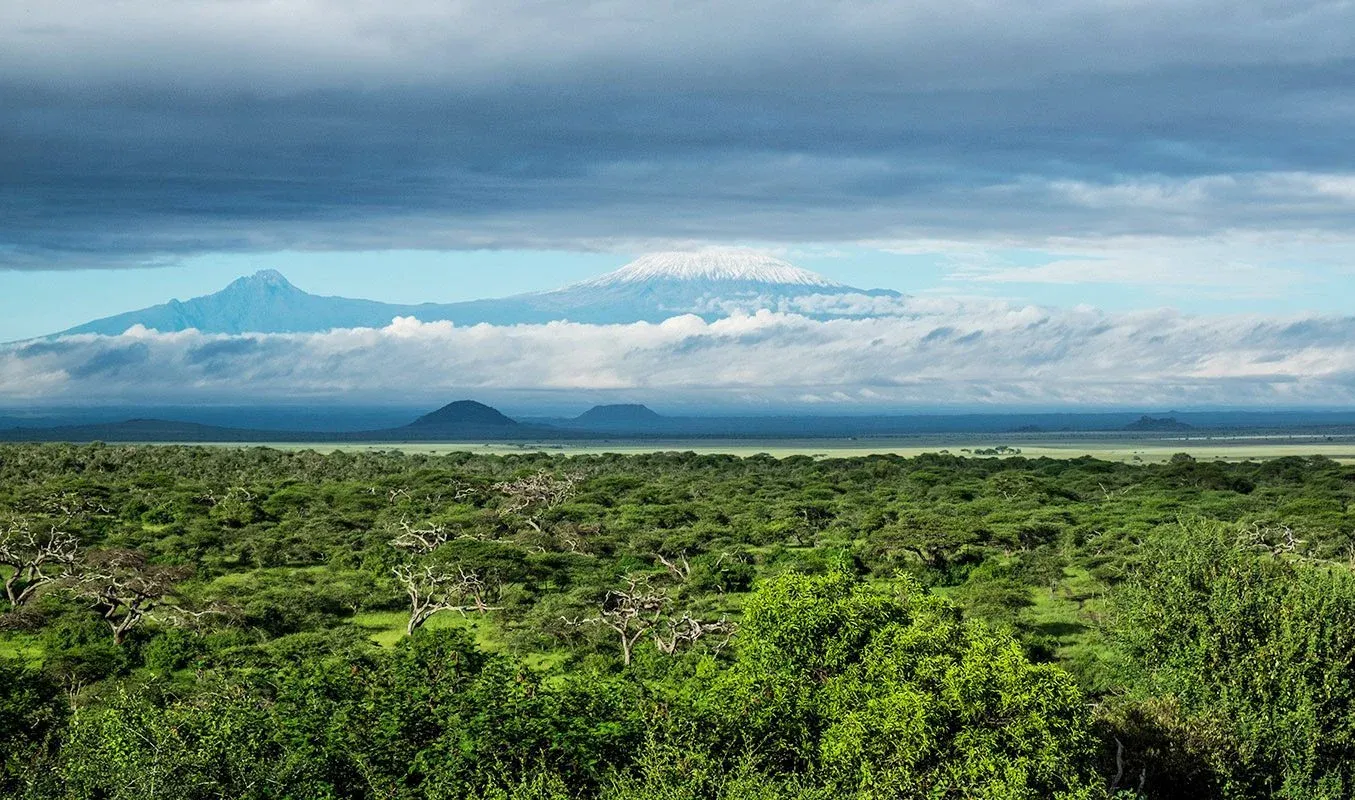
The longest single-lodge Chyulu Hills programme available — eight nights at ol Donyo Lodge on the 275,000-acre Mbirikani Group Ranch, long enough to ride out on horseback across three different circuits, track Kilimanjaro's summit light from multiple vantages at different hours, and develop a genuine working relationship with the waterhole hide's resident elephant families and lion prides. This is not a safari that visits the Chyulu Hills. It is a nine-day residency in one of the most distinctive wildlife landscapes in southern Kenya, where Maasai-conserved ranchland connects the Tsavo and Amboseli ecosystems, big-tusker bulls move through on predictable dry-season schedules, and Africa's highest mountain provides the backdrop for every dawn and dusk that the stay produces.
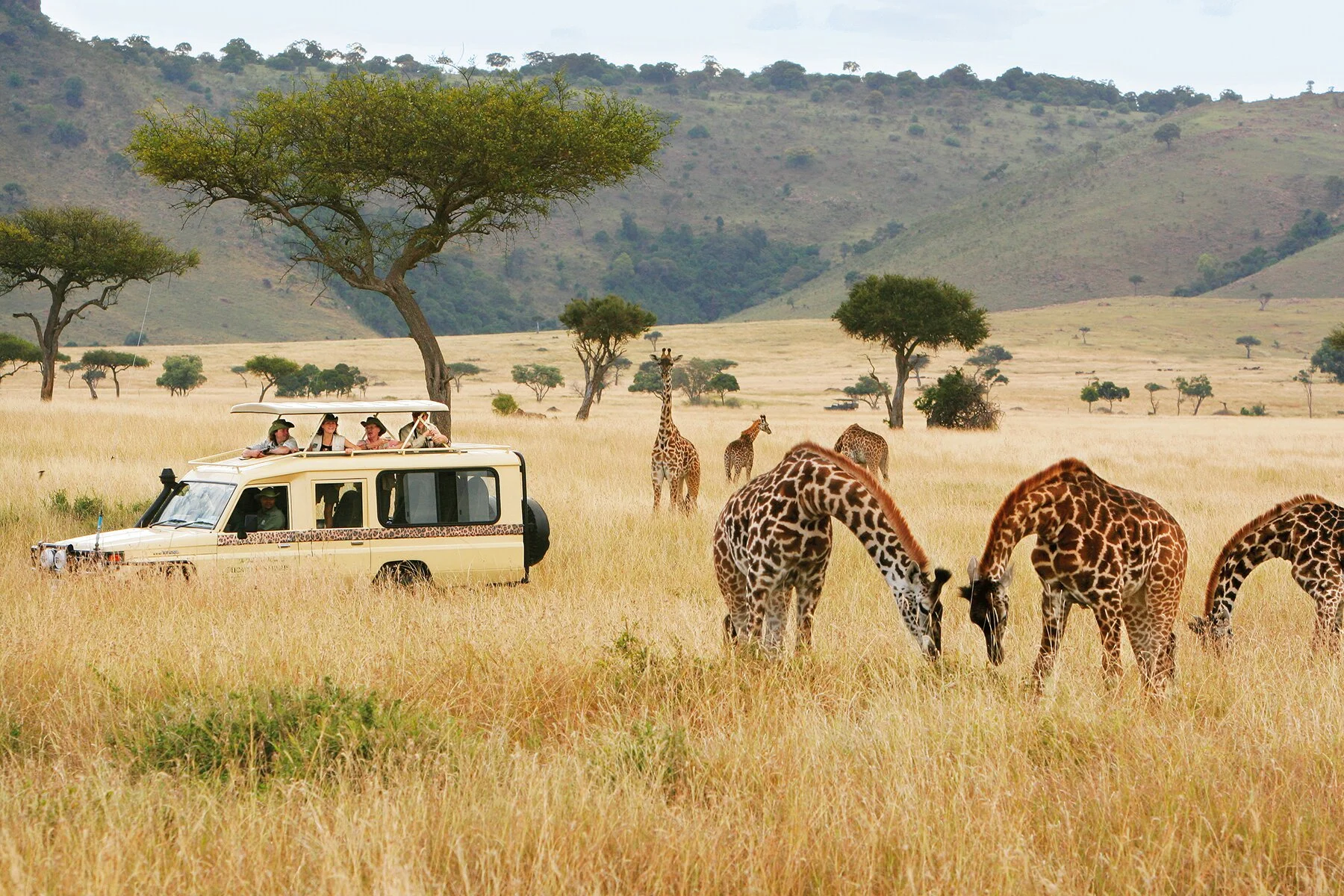
Two ecosystems, ten days, and nothing left unfinished. The Chyulu Hills' volcanic ridge and the Masai Mara's private conservancies are the most complementary pairing in Kenya's safari landscape — one defined by silence, horseback, and a mountain on the horizon; the other by the highest concentration of big cats on the continent. Four nights on Mbirikani Group Ranch at ol Donyo Lodge covers the full horseback programme, the waterhole hide system, and the star beds that point toward Kilimanjaro. Five nights in the Mara conservancies — Olare Motorogi, Mara North, or Naboisho — deliver the night drives, walking safaris, and off-road access that the national reserve cannot offer. A single bush flight connects the two. The rest is uninterrupted wilderness.
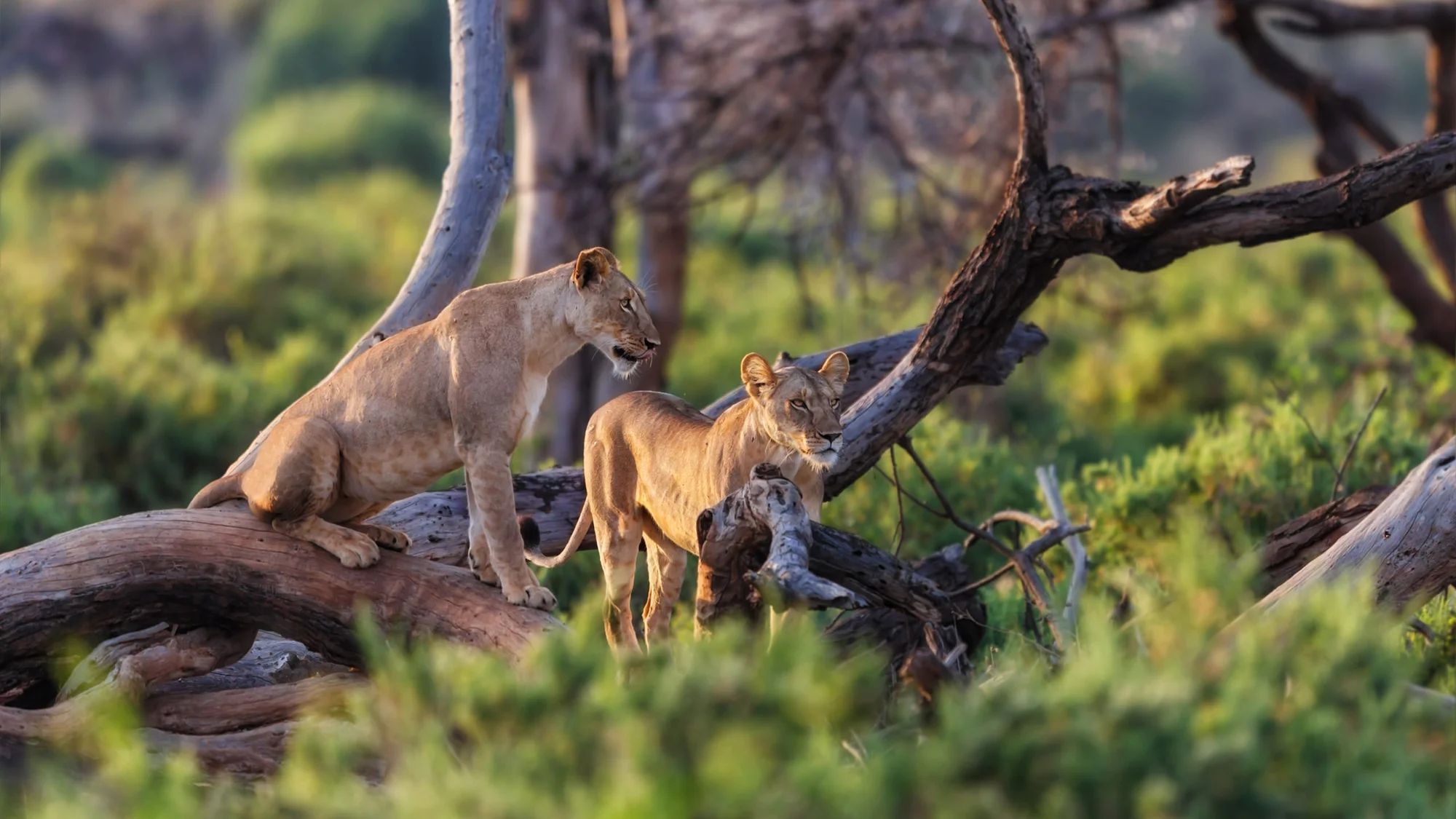
Ten days, three entirely different Kenyas. In the south, a volcanic ridge between Tsavo and Amboseli — Kilimanjaro filling the horizon at 35 miles, horseback across a 275,000-acre Maasai ranch, a sunken waterhole hide where lion visit before dawn. Then the Masai Mara conservancies: night game drives, walking safaris, and the world's highest big cat density with zero vehicle limits per sighting. Finally, the Northern Frontier — the semi-arid riverine world along the Ewaso Ng'iro where five species found nowhere else in Kenya define every game drive. Three bush flights make it possible. No Nairobi rest night. Every night at the ecosystem itself.
Kenya's safari circuit centres on the Masai Mara national reserve — note: a national reserve, not a national park, managed by Narok County rather than Kenya Wildlife Service. That distinction matters: unlike Tanzania's national parks where rules are set by TANAPA, the conservancies that surround the Mara operate under their own agreements with Maasai landowners, and those conservancies unlock experiences unavailable in the main reserve. Nairobi is Africa's best-connected safari gateway, with direct flights from London, Amsterdam, Dubai, Doha, Mumbai and a dozen other hubs — which makes Kenya the natural choice for travellers without extra days to burn on connections.
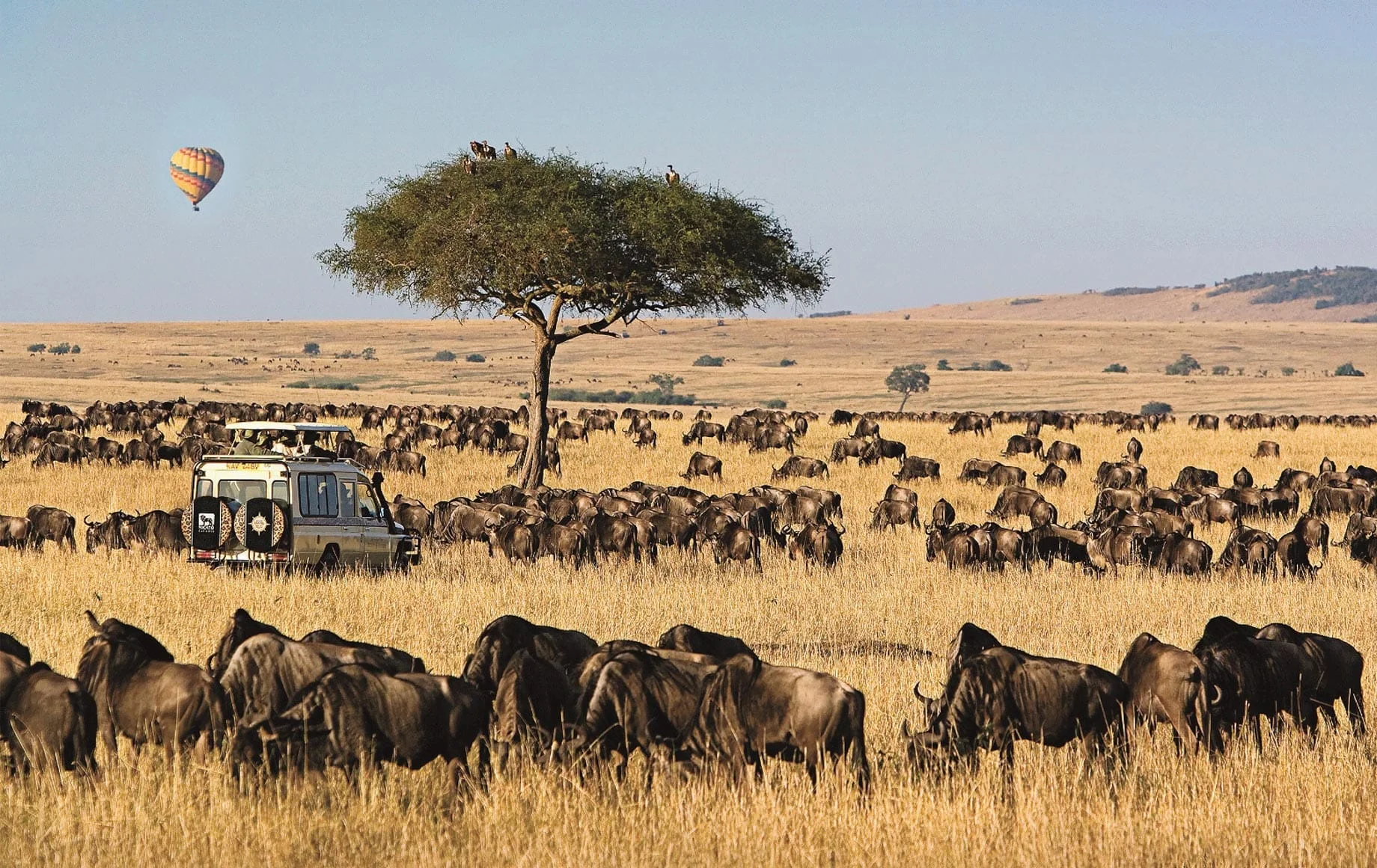
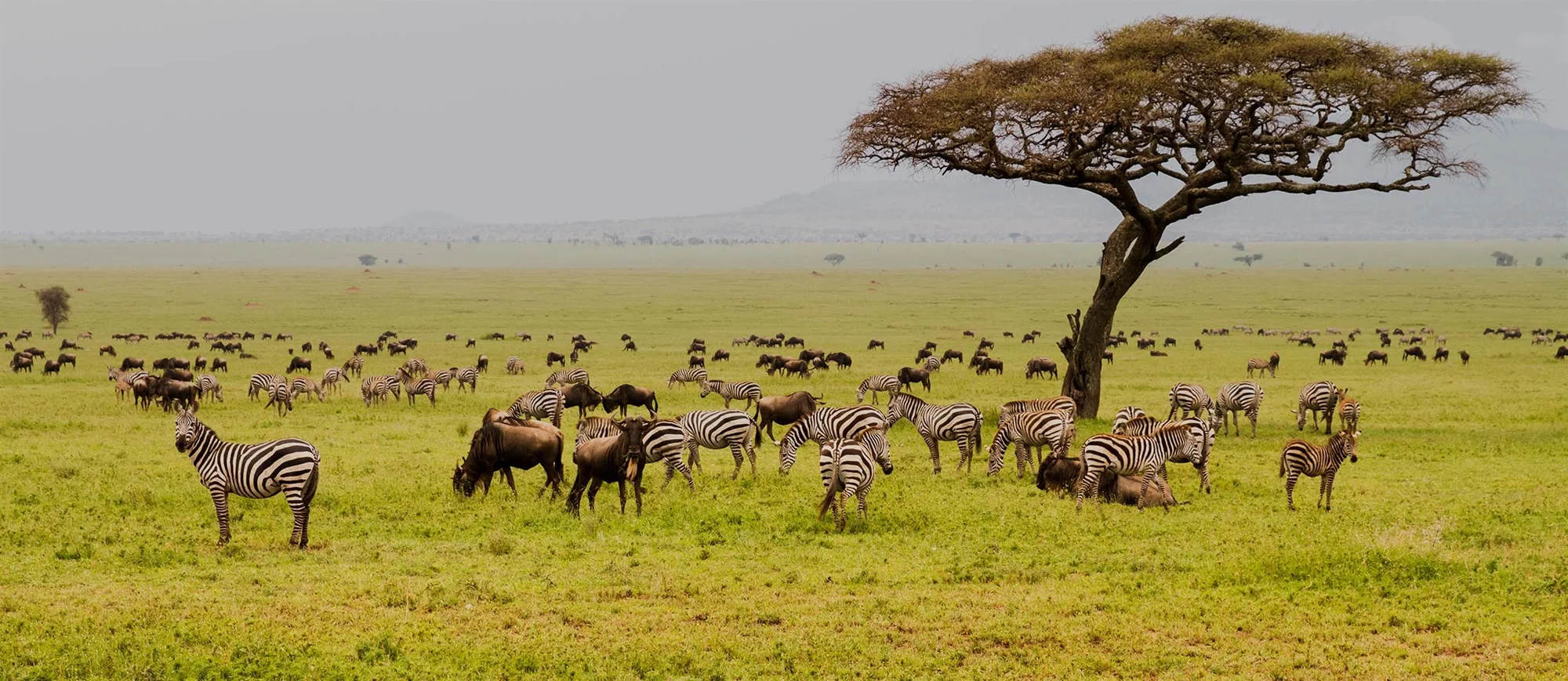
The Masai Mara national reserve covers approximately 1,510 sq km of open savanna and riverine forest along the Mara River. It holds all of the Big Five and the highest lion density of any reserve in Africa. Reserve fee: $80/adult/day (main reserve). The surrounding private conservancies — Olare Motorogi, Naboisho, Mara North — add roughly 200,000 acres of Maasai-leased land. Inside the conservancies, the rules change entirely: off-road driving to follow animals, night drives (7–9 PM), walking safaris, and private bush dinners are all permitted. Vehicle numbers are strictly capped, so encounters unfold without the minivan crowds that can gather at a lion kill inside the main reserve. Conservancy fees run roughly $80–150/person/night, usually included in the camp rate.
From Nairobi, the Mara is 45 minutes by light aircraft from Wilson Airport (not JKIA, which is on the other side of the city), or a 5–6 hour drive via Narok. For anyone spending three or more nights in the Mara, flying in is strongly recommended.
Cross-links: Great Migration crossings (Jul–Oct) · honeymoon conservancy stays · Big Five safaris
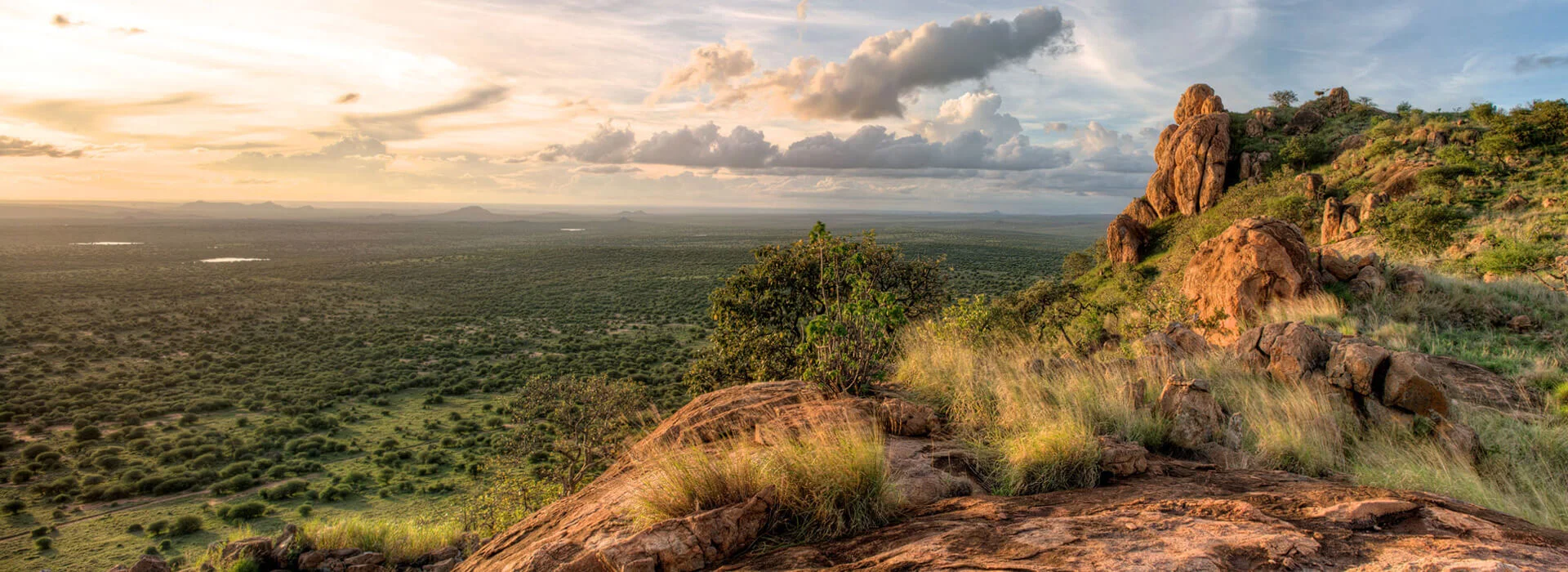
Samburu National Reserve is Kenya's most compelling reason to go north. The draw is the Samburu Special Five — five dry-country species found in northern Kenya and nowhere in the south: Grevy's zebra, reticulated giraffe, Somali ostrich, gerenuk, and beisa oryx. The Ewaso Ng'iro River bisects the reserve, keeping wildlife visible along its banks all year. Reserve fee: $70/adult/day. Access: 5–6 hours by road from Nairobi via Isiolo, or 1–1.5 hours by bush flight from Wilson Airport.
The Laikipia plateau sits at 5,500–7,000 feet — cool nights, a significantly lower malaria risk than low-lying parks, and a pioneering community conservancy model that has rewarded conservation with some of the highest wildlife densities in Kenya outside the Mara. Laikipia is home to the largest population of black rhino in Kenya, Grevy's zebra, wild dog, and the last two Northern White Rhinos on Earth at Ol Pejeta Conservancy. The activity palette here goes well beyond a standard game drive: horseback safaris, camel treks, walking with an armed guide, fly camping, and mountain biking are all available. Drive time from Nairobi is 3.5–4.5 hours to Nanyuki, or 35–60 minutes by bush flight from Wilson.
Cross-links: Kenya's off-the-beaten-path reserves · family safaris
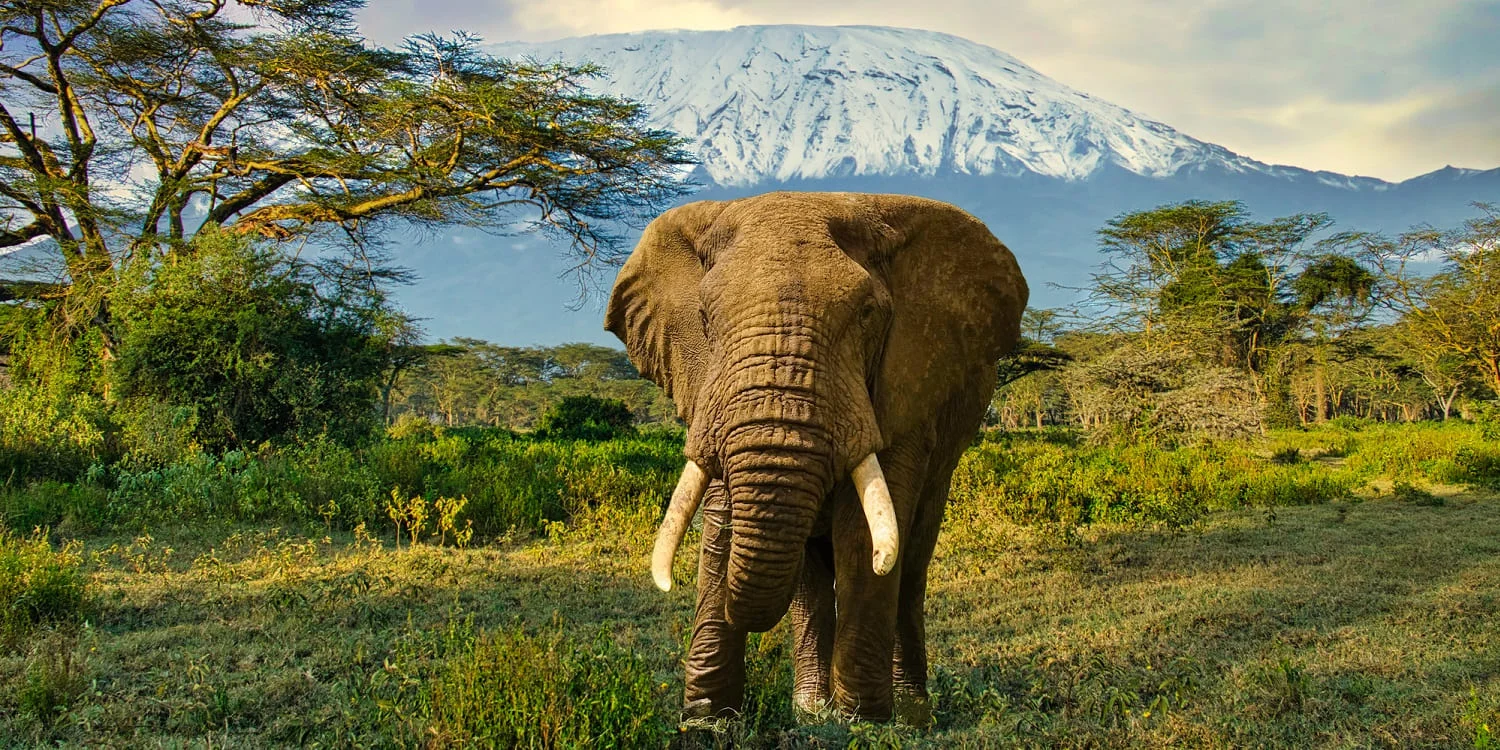
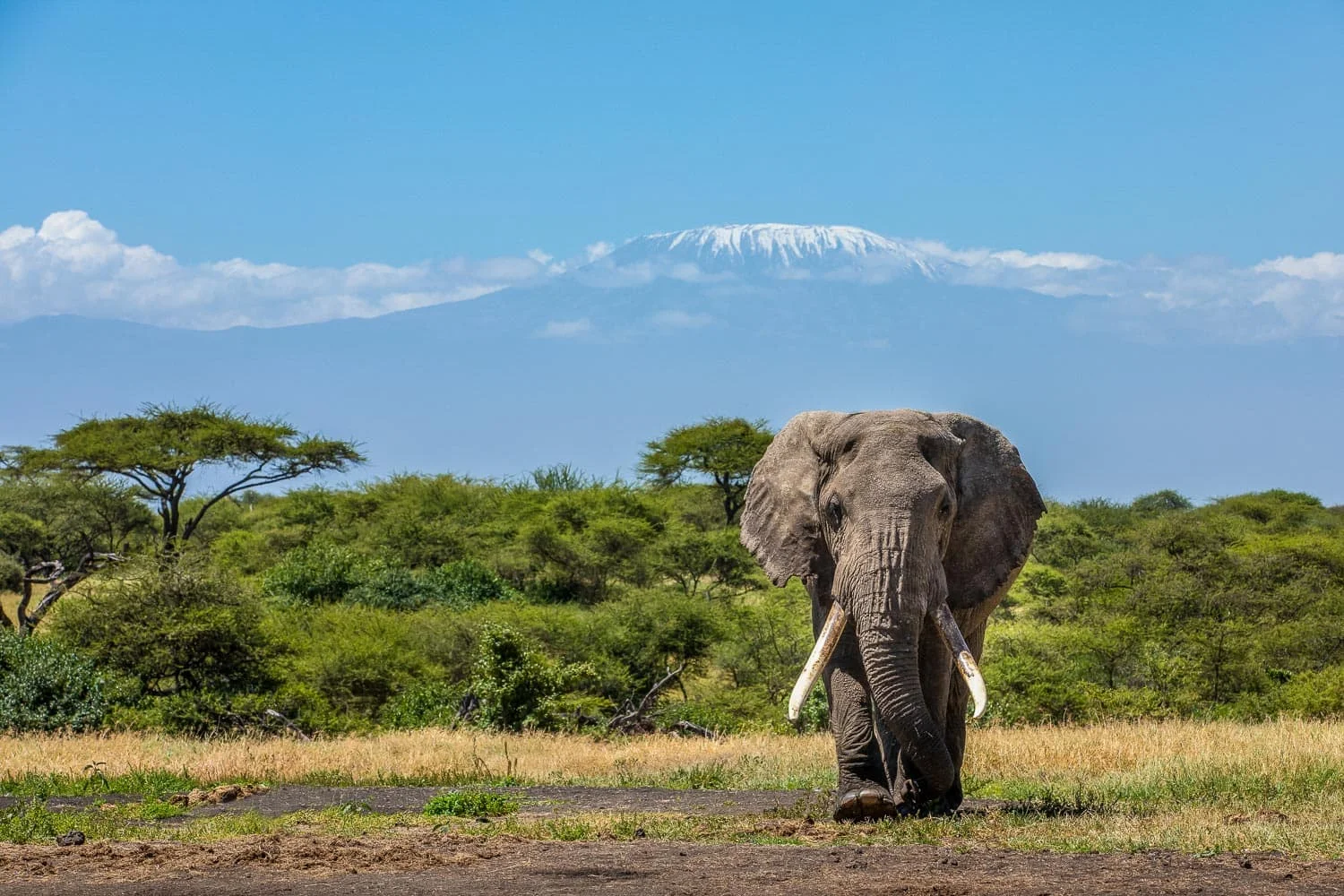
Amboseli National Park (392 sq km) is Kenya's most iconic backdrop: large elephant herds with big-tusked bulls moving across open swamp, with Kilimanjaro filling the horizon behind them. The mountain is most visible early morning before cloud builds by midday, so an early game drive is essential. Park fee: $43/adult/day. Drive time from Nairobi: 4–5 hours via the Namanga road. Bush flight from Wilson: approximately 45 minutes. Amboseli works naturally as a two-night stop on a Kenya circuit, paired with the Mara or extended into Tsavo for a longer journey.
| Month | Best area | Notes |
|---|---|---|
| Jan–Feb | Amboseli, Laikipia | Short dry; clearest Kilimanjaro views in Amboseli; calving in Amboseli |
| Jun–Oct | Masai Mara | Dry season; Great Migration arrives from Tanzania Jul–Oct |
| Jul–Oct | Mara River crossings | Peak season — book 6–12 months ahead for the best conservancy camps |
| Jun–Oct | Samburu, Laikipia | Best dry-season game viewing across northern Kenya |
| Apr–May | Anywhere | Long rains; some roads difficult; fewer visitors; discounts available |
| Nov | Any | Short rains begin; lush green landscape; fewer crowds; some deals |
Verified Kenya pricing benchmarks (per person, based on double occupancy): a 4-day Masai Mara fly-in runs mid-range $1,500–$2,200 pp, luxury $2,500–$4,000 pp. A 7-day circuit (Mara plus Amboseli or Samburu) runs mid-range $2,500–$3,500 pp, luxury $4,000–$6,000 pp. Reserve and conservancy fees are typically included in these figures. Prices on this site are per person, direct from the operator.
For budget options see value-tier Kenya safaris. For the top tier, see Kenya's top conservancy camps.
Nairobi's Jomo Kenyatta International Airport (JKIA) is Africa's best-connected aviation hub, with direct services from London, Amsterdam, Paris, Dubai, Doha, Abu Dhabi, Mumbai, and many others. All bush flights depart from Wilson Airport — a separate domestic terminal 6 km southwest of the CBD, about 30 minutes from JKIA in light traffic. Budget a 60–90 minute buffer for Nairobi traffic on any morning departure.
For cross-border trips combining Kenya with Tanzania, see Tanzania safaris starting from Nairobi.