NoMiddleManTours

Tour packages

Tanzania Safari

The northern circuit — Tarangire, Ngorongoro and the Serengeti — is Africa's most complete safari destination. The Great Migration, the Big Five, Kilimanjaro, and Zanzibar all within one country.

1326 viajes encontrados
10-Day Northern Safari and Mahale Chimpanzee Trek

10-Day Northern Safari and Mahale Chimpanzee Trek

10 days·9 nights

Ten days, two entirely different Tanzanias. The northern half visits Tarangire for two nights — sleeping inside the park so you have a full, unhurried day in the deep south before the push west — then two days in the Serengeti, a crater descent that ends the day in Arusha instead of looping back to Karatu, and a morning flight that drops you on the shore of Lake Tanganyika. The Mahale half has no roads, no vehicles, and no noise beyond the water and the forest — and, from somewhere up the mountain, the pant-hoot of a wild chimpanzee that has never left.

Presupuesto a consultar
Ver itinerario
10-Day Nairobi to Arusha Extended

10-Day Nairobi to Arusha Extended

10 days·9 nights
5.0(4)

Five parks, two countries, no road driven twice — and every park given the time it deserves. This cross-border safari opens in Nairobi, crosses into the Masai Mara for two nights of off-road drives, walking safaris, and night drives, then crosses into Tanzania at Isebania for the Serengeti, a night on the Ngorongoro Crater rim followed by a full crater descent, and then two proper days in Tarangire during the dry-season elephant convergence before the drive to Arusha. The crater pivot is the structural breakthrough: sleeping on the rim the night before descent means the crater floor gets a full six-hour morning with no afternoon transfer pressure.

Presupuesto a consultar
Ver itinerario
10-Day Northern Circuit + Nyerere & Ruaha Safari

10-Day Northern Circuit + Nyerere & Ruaha Safari

10 days·9 nights
Route  ArushaTarangire National ParkSerengeti National ParkRuaha National ParkDar es Salaam (+2 more)

The only itinerary that covers both of Tanzania's great safari circuits in a single trip. Start with the northern icons — Tarangire's elephant herds, two full days in the Serengeti's predator-rich plains, a night sleeping on the Ngorongoro Crater rim — then descend at dawn as the grand finale before flying south to a completely different world: Nyerere's Rufiji River boat safaris among hippos and crocodiles, and Ruaha's wild dog territory along the Great Ruaha River. Six parks, two ecosystems, two gateways, ten days. Nobody else does this route. Note: Southern parks (Nyerere and Ruaha) close mid-March through end-May — this itinerary operates June through October only.

Presupuesto a consultar
Ver itinerario
10-Day Tanzania + Kenya Migration Safari

10-Day Tanzania + Kenya Migration Safari

10 days·9 nights

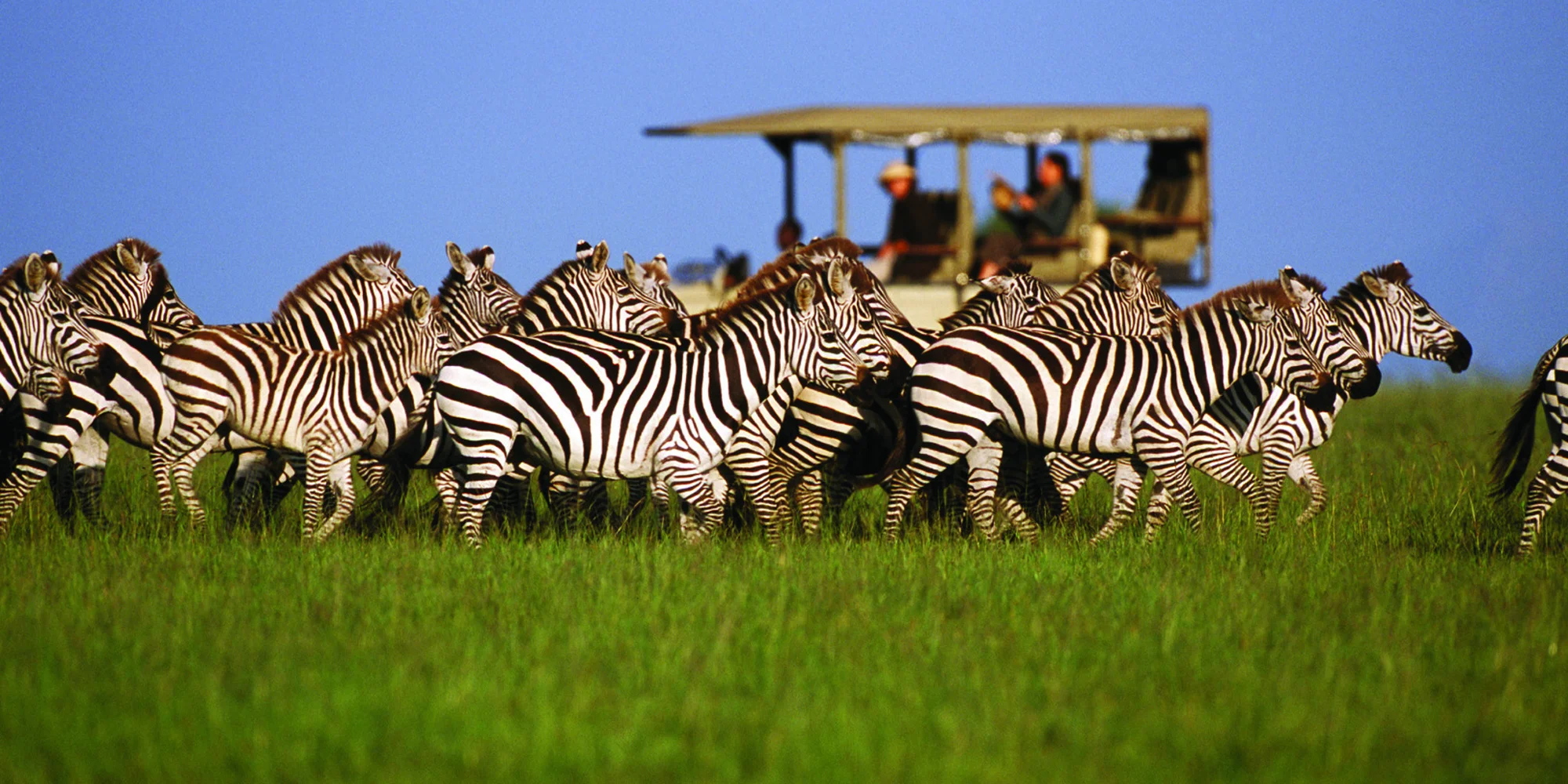
The Great Migration does not ask permission from either government. This ten-day safari follows the wildebeest across the border — two days in Tarangire among the largest elephant herds in Tanzania, a dawn descent into Ngorongoro Crater, a night in the Central Serengeti, then two full days at Kogatende watching river crossings from the Tanzanian bank of the Mara. Then across into Kenya, where three nights in a private Mara conservancy unlock off-road driving, walking safaris, and spotlight night drives — activities no Tanzania national park permits. July through October only. Both banks. The full migration.

Presupuesto a consultar
Ver itinerario
10-Day Serengeti & Katavi Wilderness Combo

10-Day Serengeti & Katavi Wilderness Combo

10 days·9 nights
5.0(1)
Route  ArushaTarangire National ParkKaratuKatavi National ParkDar es Salaam (+2 more)

Tanzania has two faces. The first is the one that appears on every wildlife documentary: Ngorongoro's dense crater floor, the Serengeti's rolling plains with their famous predator density, the northern circuit's orchestrated grandeur that draws ninety percent of the country's visitors. The second face belongs to a different Tanzania — remote, roadless, receiving fewer than a thousand tourists a year — and it looks like Katavi in the dry season: a shrinking river surrounded by four hundred hippos, buffalo herds a thousand strong, lion prides moving at dawn through grass that no other vehicle has driven through this week. This ten-day itinerary visits both faces in sequence, using a single bush flight on Day 7 to move you from one world to the other. Nothing about the transition is gradual.

Presupuesto a consultar
Ver itinerario
10-Day Northern Circuit & Mafia Island — Big Five Country to Whale Shark Territory

10-Day Northern Circuit & Mafia Island — Big Five Country to Whale Shark Territory

10 days·9 nights
5.0(2)

Two unhurried days in Tarangire among elephant herds and baobabs, three days in the Central Serengeti chasing lions and leopards, a dawn descent into Ngorongoro Crater — and then a short flight to one of the Indian Ocean's least-visited islands. Mafia receives a fraction of Zanzibar's tourists and delivers some of the world's most reliable whale shark encounters between October and February. From dust and acacia to warm reef-filtered water: ten days, two completely different Tanzanias.

Presupuesto a consultar
Ver itinerario
10-Day Northern Safari + Mnemba Island

10-Day Northern Safari + Mnemba Island

10 days·9 nights
5.0(11)

Two nights among Tarangire's elephant herds and ancient baobabs, two full days tracking lion prides and cheetah across the Serengeti's Seronera Valley, then a night on the Ngorongoro Crater rim for a dawn descent at first light — the crater as the grand finale, not a mid-trip stopover. Then a bush flight to Zanzibar, a boat to the most exclusive private island in the Indian Ocean, and three nights at andBeyond Mnemba Island where 24 guests maximum share a marine reserve thick with green turtles, humpback dolphins, and 600 species of reef fish. This is the northern circuit safari that ends not on a shared beach but on your own island, where the only footprints in the sand are yours and the only agenda is the tide.

Presupuesto a consultar
Ver itinerario
10-Day Migration Drive-In Safari to Kogatende

10-Day Migration Drive-In Safari to Kogatende

10 days·9 nights

The overland migration safari, now fully drive-in and crater-finale. You drive the full northern circuit — Tarangire elephant herds, the Seronera predator heartland, the five-hour game drive north to Kogatende — three nights at the Mara River for crossing probability. Then the all-drive return south: back through the Serengeti, a night on the Ngorongoro Crater rim, and a dawn descent into the caldera as the week's closing chapter. No bush flights. The vehicle is your safari.

Presupuesto a consultar
Ver itinerario
10-Day Northern Safari + Gombe Chimps

10-Day Northern Safari + Gombe Chimps

10 days·9 nights
5.0(2)

Somewhere between the Serengeti and Gombe Stream, the nature of the encounter changes completely. For six days the northern circuit delivers what it is famous for: elephant herds, crater descents, lion territories, the dry-season choreography of Africa's most concentrated wildlife. On Day 7 a bush flight takes you northwest, and by the time a wooden boat delivers you to a beach at the base of a forested escarpment above Lake Tanganyika, the landscape has become something different — smaller, quieter, and more intimate. Gombe Stream National Park covers fifty-two square kilometres, making it Tanzania's smallest, and it exists for one reason: wild chimpanzees, studied continuously since Jane Goodall arrived here in 1960. Three nights in the forest gives you two trekking mornings with a community of primates that have been observed for over sixty years, making them the most scientifically documented wild chimpanzees on Earth. This ten-day itinerary is structured for travellers who want the full northern experience and something that lies beyond it.

Presupuesto a consultar
Ver itinerario
10-Day Classic Safari & Zanzibar

10-Day Classic Safari & Zanzibar

10 days·9 nights
5.0(1)
Route  ArushaTarangire National ParkSerengeti National ParkZanzibar — BeachesZanzibar (+2 more)

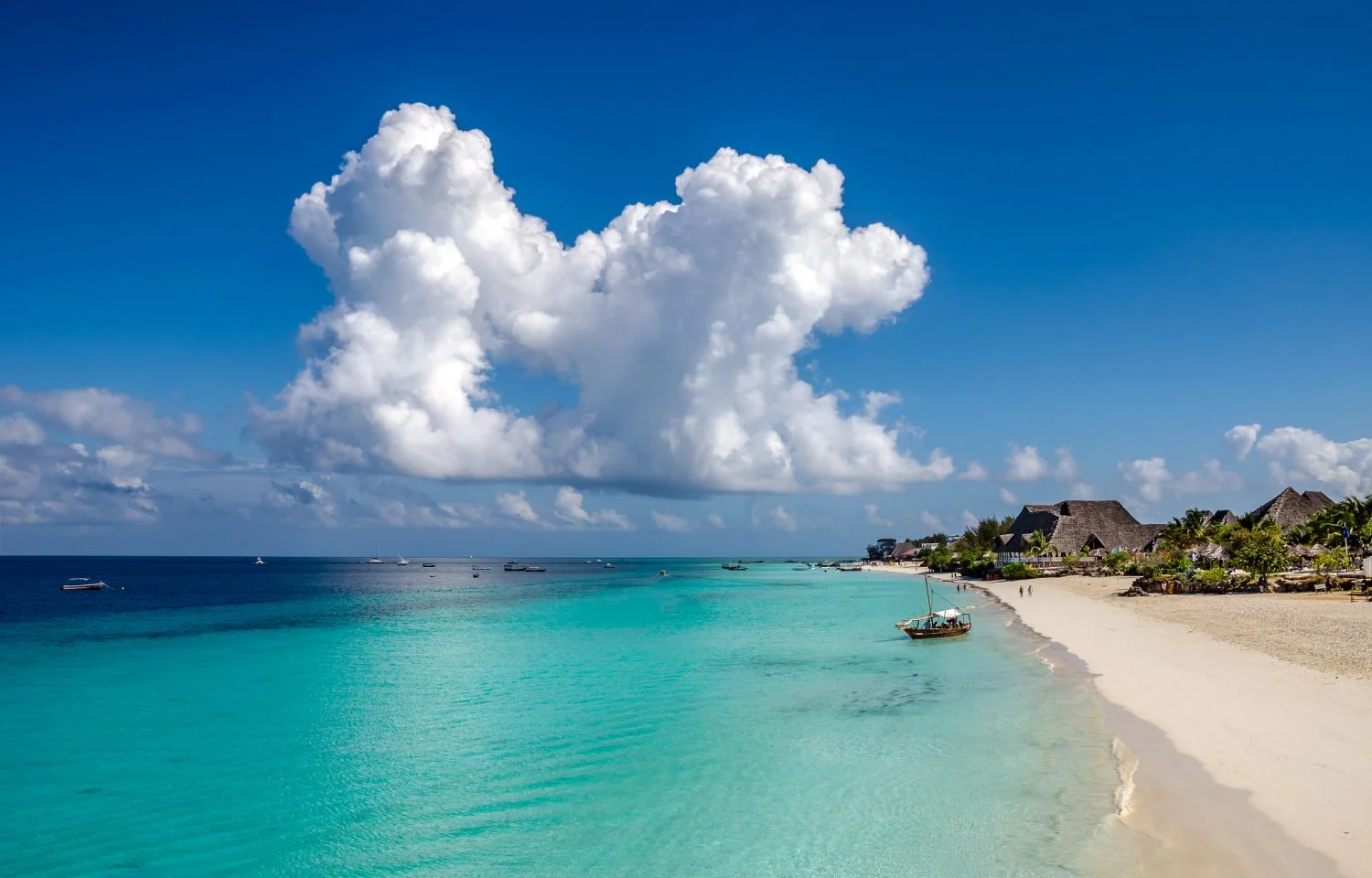
Five days of dust, big cats, and the Serengeti dawn — with the Ngorongoro Crater as the finale rather than an opener. Five days of turquoise water, Stone Town spice markets, and doing absolutely nothing on a white sand beach. The new routing puts the crater on Day 5 as the safari's closing chapter: sleep on the rim, descend at dawn ahead of the Karatu convoy, then drive to Arusha and catch the afternoon bush flight to Zanzibar. Tarangire-north on Day 1 for elephants in the baobabs. Two full Serengeti nights in the predator heartland. Then the crater. Then the ocean. Tanzania's most popular combo, sequenced the right way.

Presupuesto a consultar
Ver itinerario
10-Day Northern Safari + Bawe Island

10-Day Northern Safari + Bawe Island

10 days·9 nights
5.0(3)

Seven safari days through Tanzania's northern circuit — Tarangire's dry-season elephant river, the Serengeti's big-cat kopje landscape, and Ngorongoro Crater as the grand finale on the return leg — followed by three nights on Bawe Island, Tanzania's newest private island retreat fifteen minutes by speedboat from Stone Town's waterfront. The routing is deliberate: the crater sits last, not mid-trip, so you descend at dawn after sleeping on the rim, the week's most spectacular destination closing the safari on its highest note. Then the bush flight east and the channel crossing to Bawe, where the Indian Ocean replaces the savannah within the same afternoon.

Presupuesto a consultar
Ver itinerario
10-Day Arusha to Nairobi Extended Safari

10-Day Arusha to Nairobi Extended Safari

10 days·9 nights

Four parks in rising order of scale — Tarangire, Ngorongoro Crater, Serengeti, and Masai Mara — routed as a one-way arc from Arusha to Nairobi with no backtracking and no wasted days. You open in Tarangire's baobab river valley, sleep on the crater rim at 2,300 metres, descend into the caldera at dawn, push west into the Serengeti for two full predator days, exit through the Ikoma gate into Kenya, and spend three days in a Masai Mara conservancy where the rules that govern Tanzanian parks no longer apply. Off-road drives, guided bush walks, and night game drives in the Mara close the arc that Arusha opened.

Presupuesto a consultar
Ver itinerario

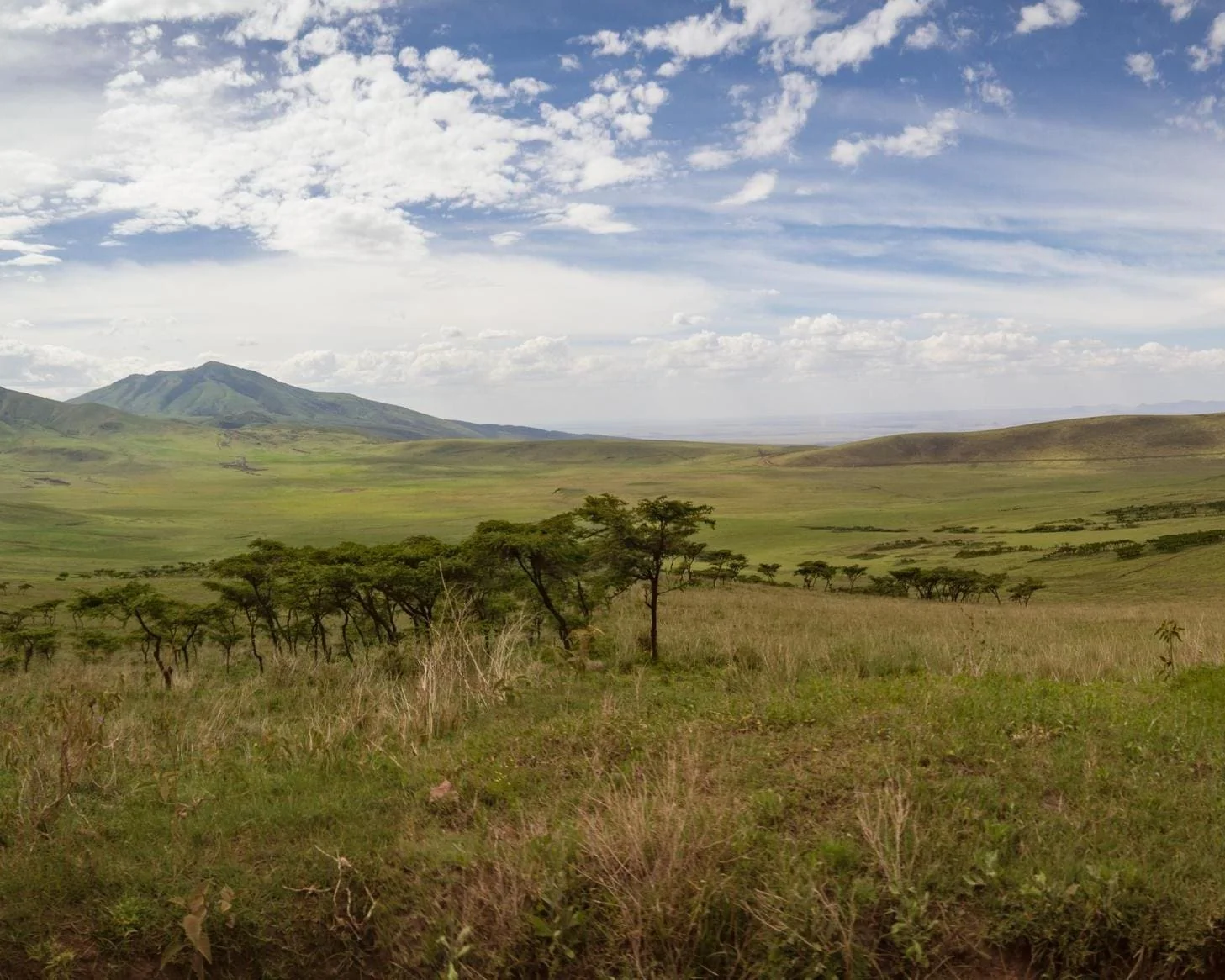
Tanzania is Africa's premier safari destination, drawing more than 90% of its visitors to the northern circuit — a sequence of parks that runs from the elephant country of Tarangire through the volcanic Ngorongoro highlands and into the vast grasslands of the Serengeti. For those with more time or a taste for solitude, the southern parks of Ruaha and Nyerere and the remote western wilderness of Mahale and Katavi offer fly-in alternatives where you may go entire game drives without seeing another vehicle.

The northern circuit#

The standard northern circuit runs in a single direction: Arusha → Tarangire → Lake Manyara → Karatu/Ngorongoro → Serengeti. Each leg follows a well-maintained road and there are no backtrack days, so the route works efficiently even on tighter schedules.

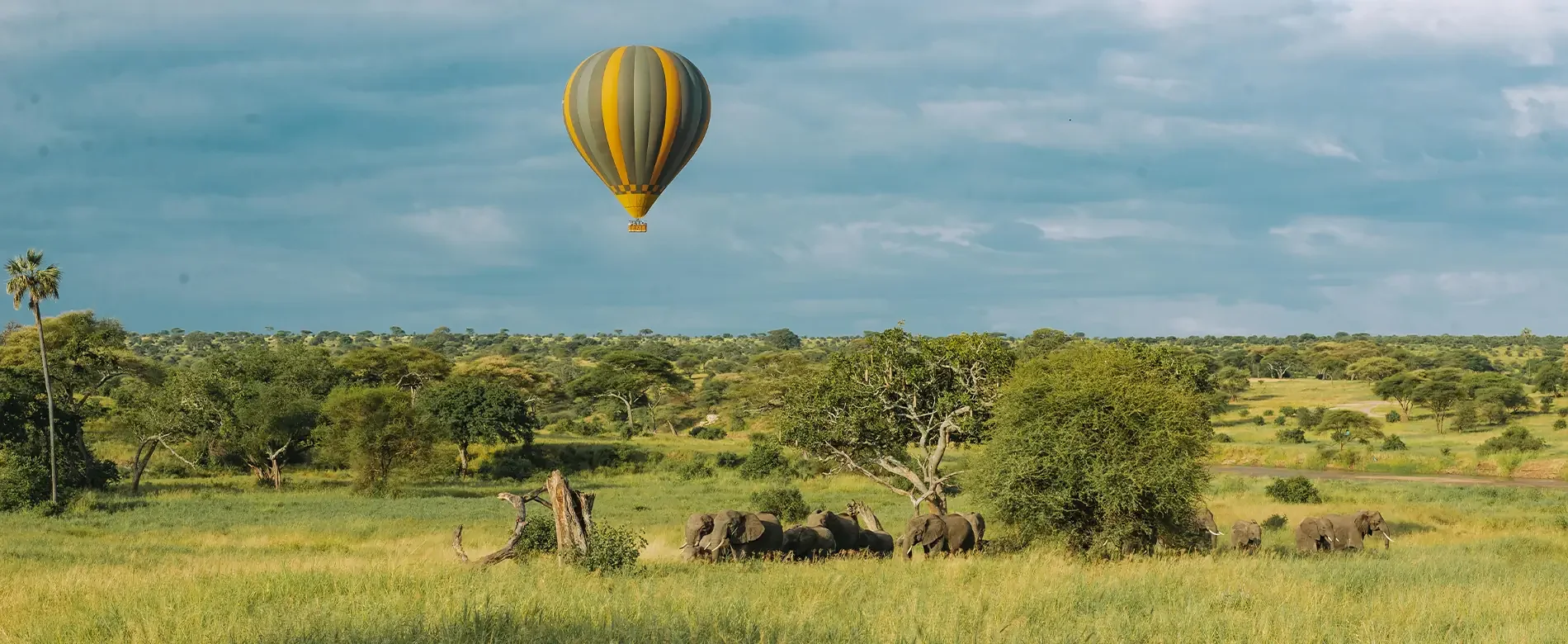
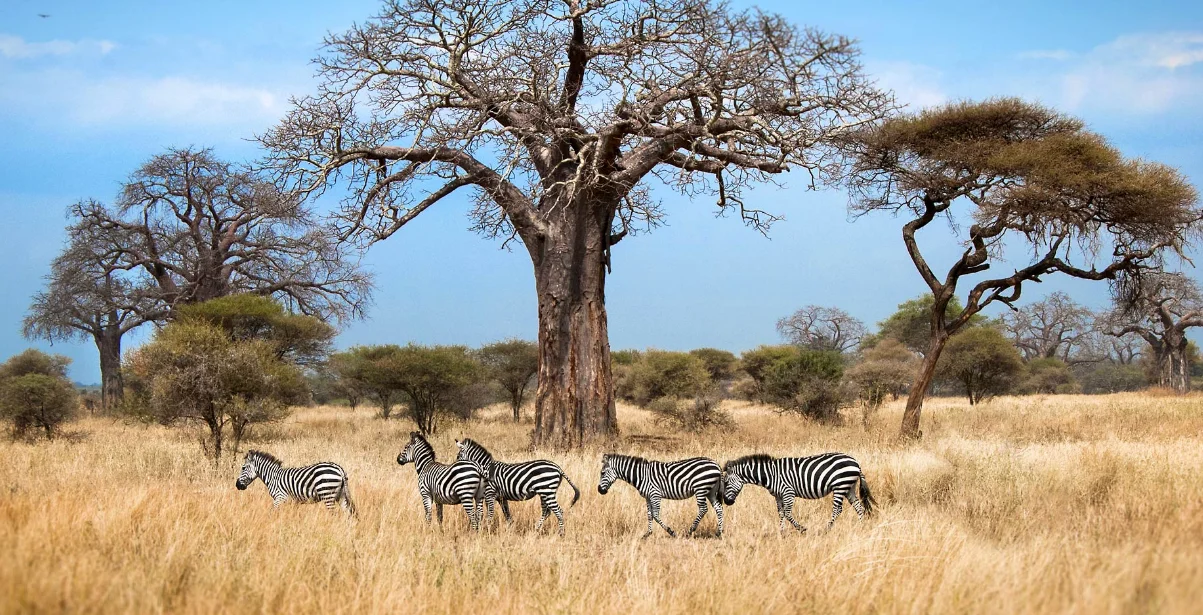
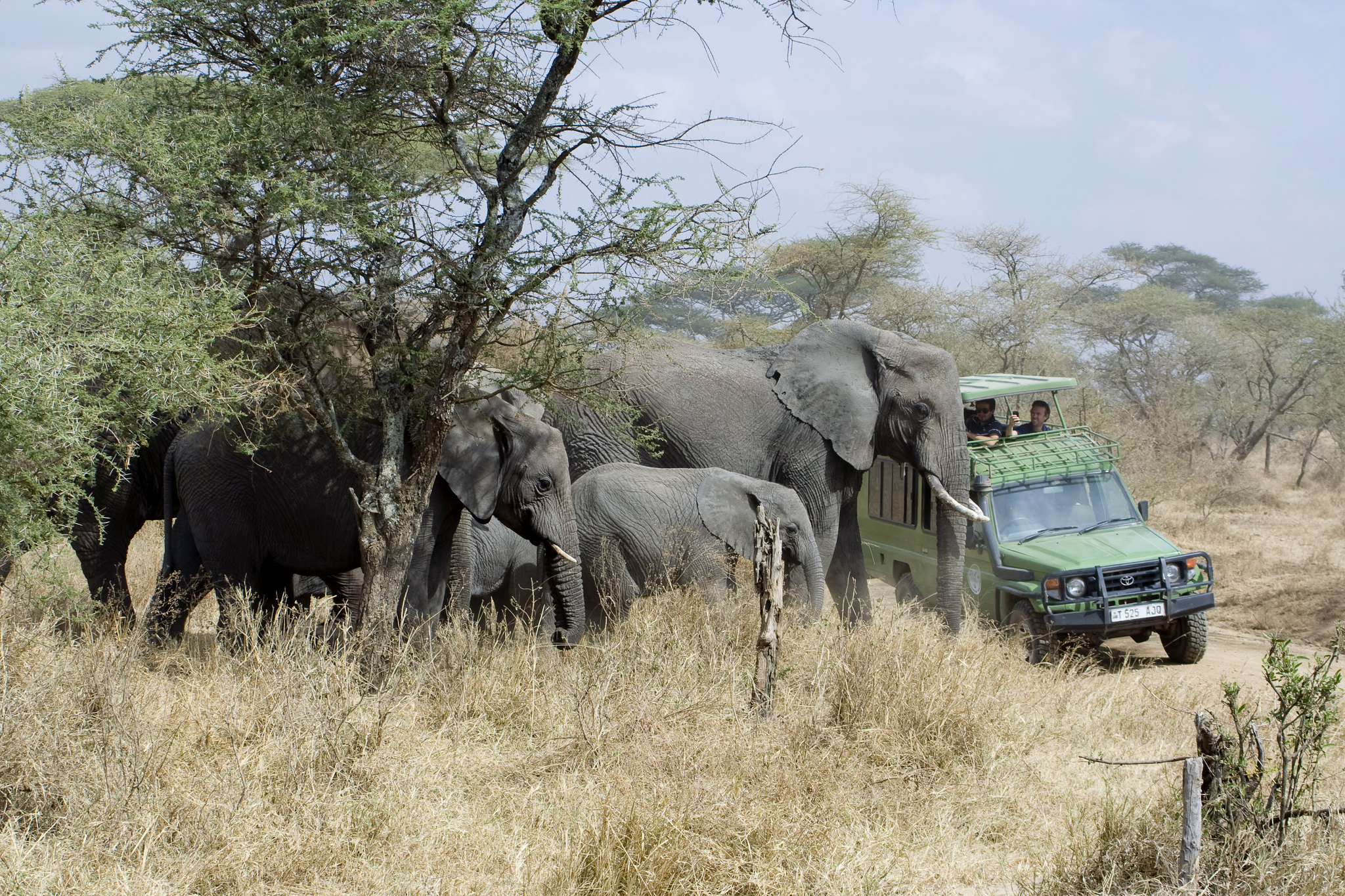
  • Tarangire National Park (2–2.5 hrs from Arusha): Africa's highest elephant densities in the dry season, ancient baobab forests, and 550+ bird species. Park fee: $59.10/adult/day. Best June–October when the Tarangire River acts as the only water source for miles around and animals converge in thousands.

  • Lake Manyara National Park (1.5–2 hrs from Tarangire gate): Famous for its tree-climbing lions, groundwater forest, and flamingo-ringed alkaline lake. A half-day here pairs well with a stay in Karatu, 30–45 minutes away. Park fee: $59.10/adult/day.

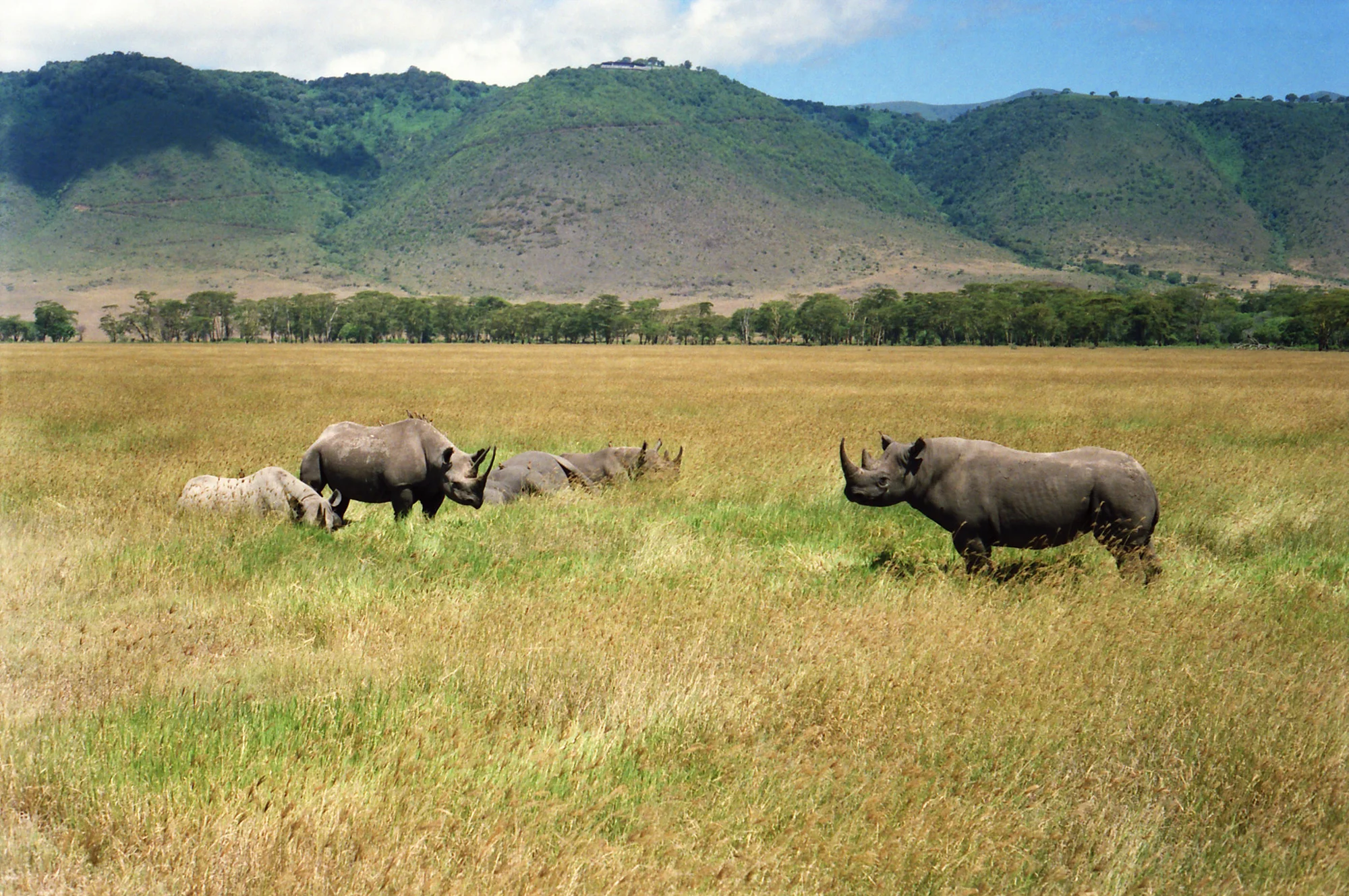
  • Ngorongoro Conservation Area (20–30 min from Karatu): The crater — 264 sq km on its floor — holds one of Africa's densest wildlife populations: black rhino, lion, elephant, buffalo, and cheetah compressed into a world-heritage caldera. Karatu is the standard overnight base (45 min to the crater rim), though rim lodges are available for those who want the crater at their doorstep. NCA conservation fee: $82.60/adult/day. The crater floor has a strict 6-hour maximum stay per visit.

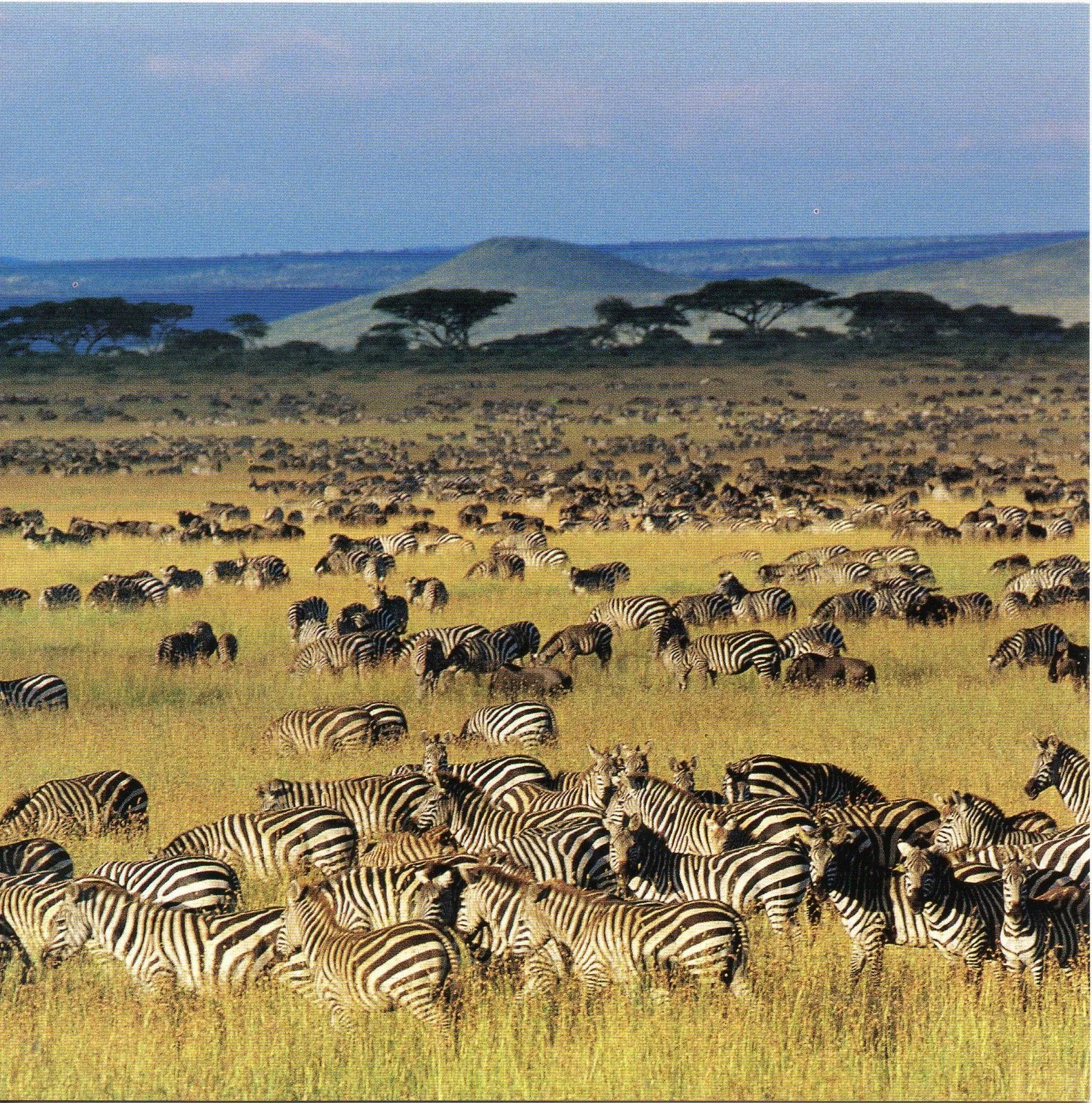
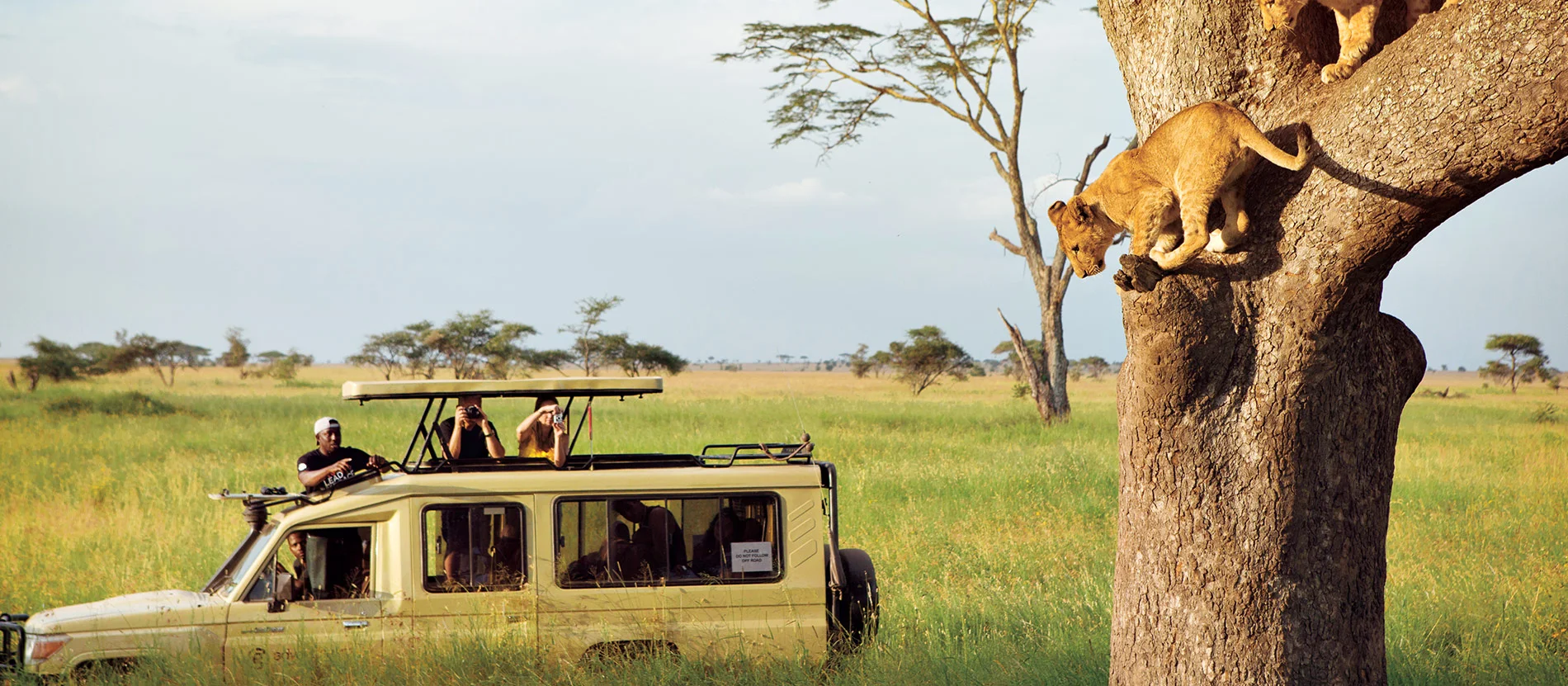
  • Serengeti National Park (3–4 hrs from Karatu via Ngorongoro): Africa's most iconic savanna. Park fee: $82.60/adult/day. The Serengeti has four distinct areas — central Seronera (year-round predators, the standard base), southern plains/Ndutu (calving December–March), western corridor (Grumeti River crossings in June), and northern Kogatende (Mara River crossings July–October). Which part you visit should depend on your travel dates.

Cross-links: great migration timing · Kilimanjaro climbing · Zanzibar safari and beach combos

The southern circuit#

Tanzania's southern parks sit in a different league from the north: more remote, with fewer visitors, a longer immersion required, and experiences not possible in the national parks — boat safaris, walking safaris, fly-camping.

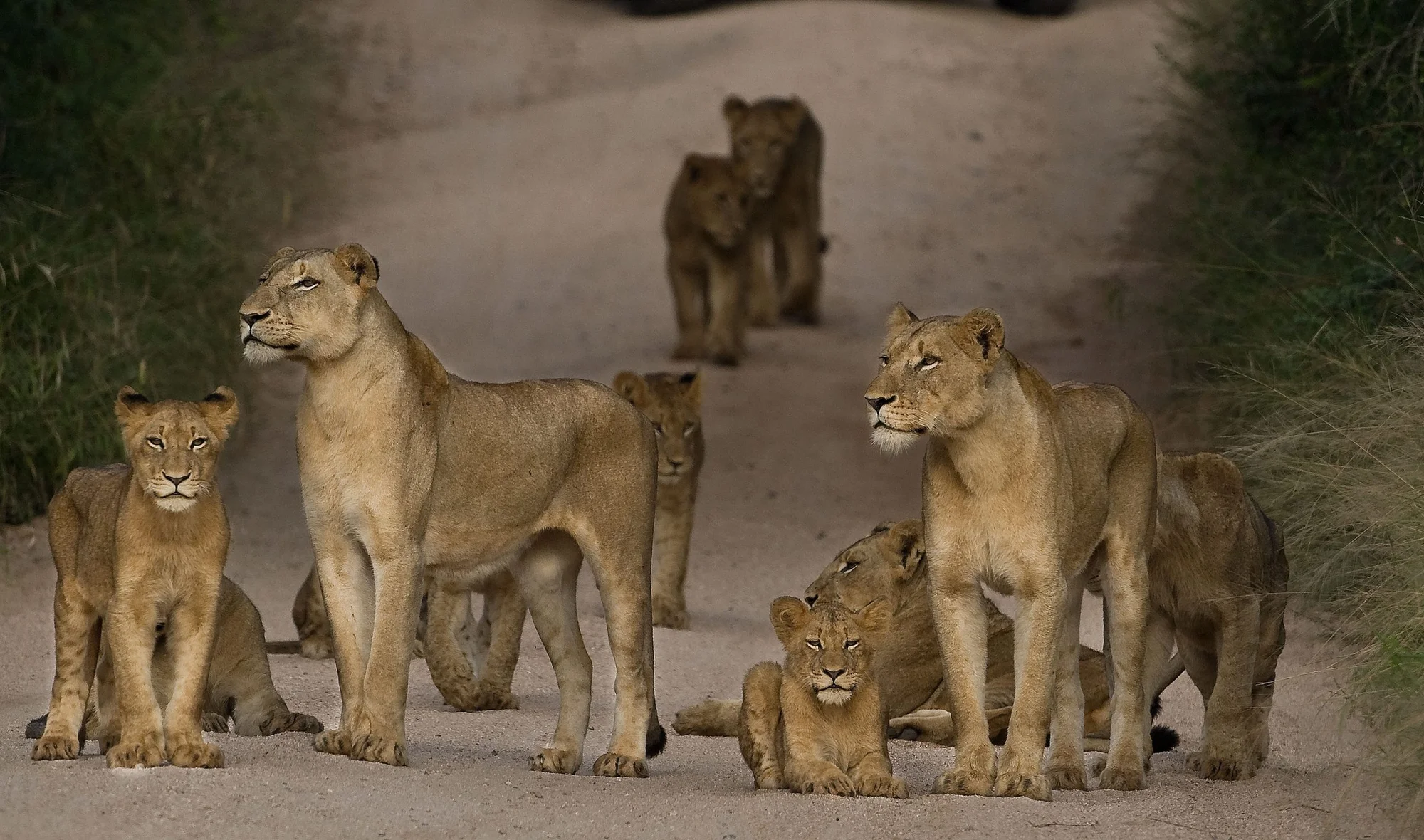
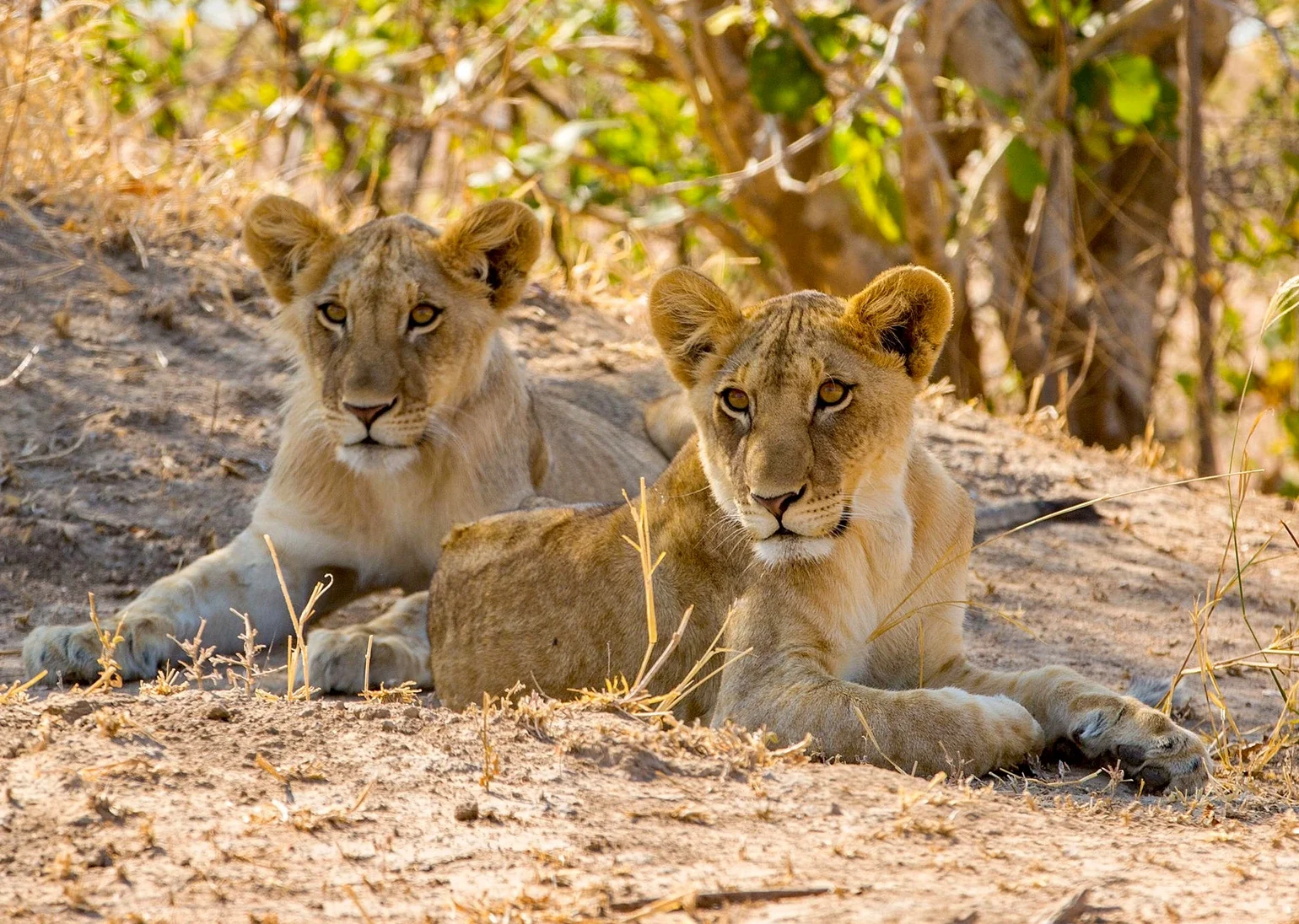
Ruaha National Park covers 20,226 sq km, making it Tanzania's largest national park. It holds an estimated 10% of the world's remaining lions, the largest elephant population in East Africa, and is one of very few places where both greater and lesser kudu coexist. The relative quiet is matched by a relative bargain on fees: $35.40/adult/day, less than half the Serengeti rate. Flying from Dar es Salaam takes roughly two hours.

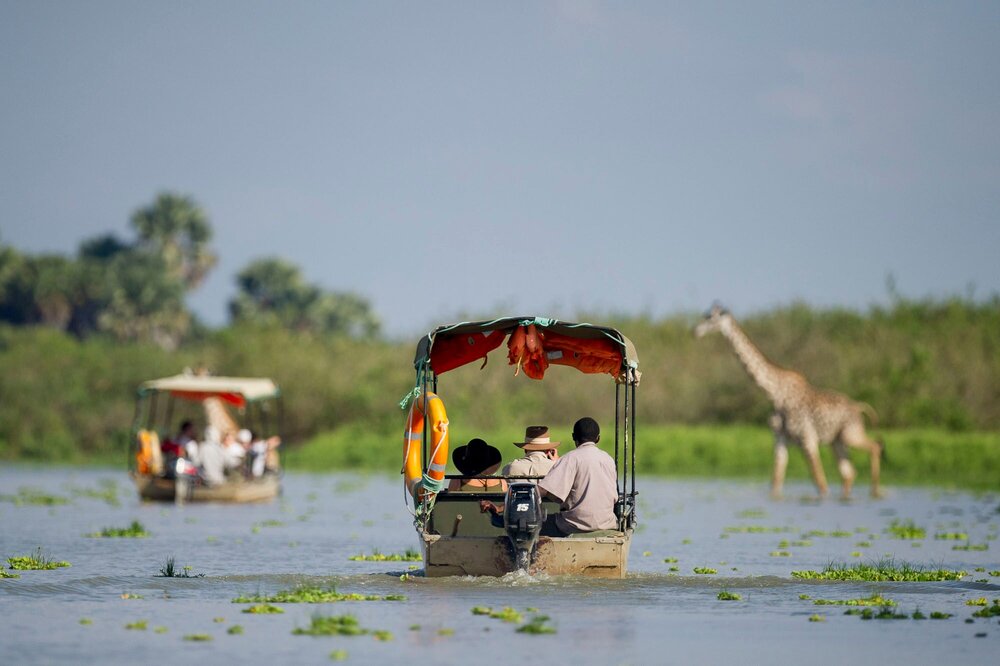
Nyerere National Park (formerly the Selous Game Reserve) is Africa's largest protected area and the only park in Tanzania offering Rufiji River boat safaris — the hippos and crocodiles come to you rather than the other way round. Walking safaris and fly-camping are also permitted. Park fee: $82.60/adult/day. Gateway: Dar es Salaam, 30–45 minutes by air or 4–5 hours by road. Most camps close March–May during the long rains.

For true remote wilderness, the western circuit adds Katavi (vast dry-season hippo and crocodile spectacles, June–October only) and Mahale (chimpanzee trekking on the shore of Lake Tanganyika). Both are fly-in only destinations requiring at minimum three to four nights each.

Cross-links: Tanzania's remote southern parks

Best time to visit Tanzania#

MonthBest areaNotes
Dec–MarSouthern Serengeti (Ndutu)Calving season — 500,000 wildebeest born; intense predator action
JunWestern Corridor (Grumeti)Grumeti River crossings; far fewer vehicles than the north
Jul–OctNorthern Serengeti (Kogatende)Mara River crossings; peak season — book well ahead
Jun–OctTarangireDry season: elephant herds at Tarangire River
Jun–OctNgorongoro, Ruaha, NyererePeak dry across all parks — reliable game viewing
Apr–MayAnywhereLong rains; most southern camps close; not recommended

How much does a Tanzania safari cost?#

The largest variable is lodge tier. Verified accommodation rack rates for Tanzania mainland (per double room per night, high season, full-board including game drives) run: mid-range $200–$420, luxury $500–$850, and ultra-luxury $900–$4,000. Park fees add to this: Serengeti and Ngorongoro are $82.60/adult/day; Tarangire and Lake Manyara are $59.10/adult/day; Ruaha and Mikumi are $35.40/adult/day.

The prices on this site are per person, direct from the operator — no middleman markup layered on. For comparison between budget and luxury options, see value-tier Tanzania safaris and Tanzania's top luxury lodges.

Getting there#

The international gateway for Tanzania's northern circuit is Kilimanjaro International Airport (JRO), about 45 km east of Arusha. Most international visitors fly via Nairobi, Addis Ababa, Dubai or Doha. Arusha is 2–2.5 hours from Tarangire gate. For the southern circuit the gateway is Dar es Salaam Julius Nyerere International Airport (DAR).

Bush flights from Arusha connect to all northern-circuit airstrips: Seronera (central Serengeti) in approximately 1 hour, Ndutu in approximately 1 hour, and Kogatende (northern Serengeti) in approximately 1.5 hours. If you start or finish in Nairobi, see Tanzania safari from Nairobi.

Tanzania or Kenya?#

Tanzania for the Great Migration's full arc — three of its four seasonal phases happen on the Tanzanian side of the border, in the Serengeti. Also Tanzania for Kilimanjaro, Zanzibar, and the southern wilderness parks that have no Kenyan equivalent. Kenya for conservancy experiences (night drives, walking safaris, horseback) that are not permitted in Tanzania's national parks, easier access from Nairobi, and northern dry-country specials in Samburu that you won't find in the south. Many itineraries combine both countries. See Kenya safari itineraries.

Frequently asked questions

How much does a Tanzania safari cost?
Lodge accommodation is the main cost driver. Verified Tanzania mainland rack rates (per double room per night, high season, full-board) run: mid-range $200–$420, luxury $500–$850, ultra-luxury $900–$4,000. Park fees are on top: Serengeti and Ngorongoro charge $82.60 per adult per day, Tarangire $59.10 per adult per day. Prices on this site are per person, direct from the operator — no middleman margin.
What is the best time to go on a Tanzania safari?
It depends on what you most want to see. For calving season and dense predator action, go to the southern Serengeti (Ndutu) in February. For Mara River crossings, target the northern Serengeti (Kogatende) or Kenya's Masai Mara between July and October. For the northern circuit in general, June to October (dry season) is the most reliable window. April and May should be avoided — long rains close most southern camps and make roads difficult.
How many days do I need for a Tanzania safari?
Six to eight days is the sweet spot for a first northern circuit: enough time for Tarangire, Ngorongoro, and two to three nights in the Serengeti. Add two to three nights for Zanzibar or a specific migration event. The southern circuit (Ruaha and Nyerere) works well as a five to seven day fly-in trip from Dar es Salaam.
Do I need a visa for Tanzania?
Most nationalities require one. Tanzania offers an e-visa online at evisa.go.tz — allow five to ten business days for processing. Citizens of a handful of countries can obtain a visa on arrival, while some East African Community members enter visa-free. Always verify current requirements from official sources before travel.
Is Tanzania safe for tourists?
The main safari areas — the northern circuit and Zanzibar — are well-established tourist destinations with a strong local operator infrastructure and no significant security concerns for visitors. Standard travel-safety precautions apply. Check your government's current travel advisory before departure.