 Tours
Tours MittelklassePrivat
6-Day Calving Season — Ndutu & Crater Finale
6 days·5 nights·Best Jan–Mar
5.0(2)Zeltcamp
Im Zeltcamp schlafen, klassische Safari
$2,882 pro Person bei 2 Reisenden
Tour packages
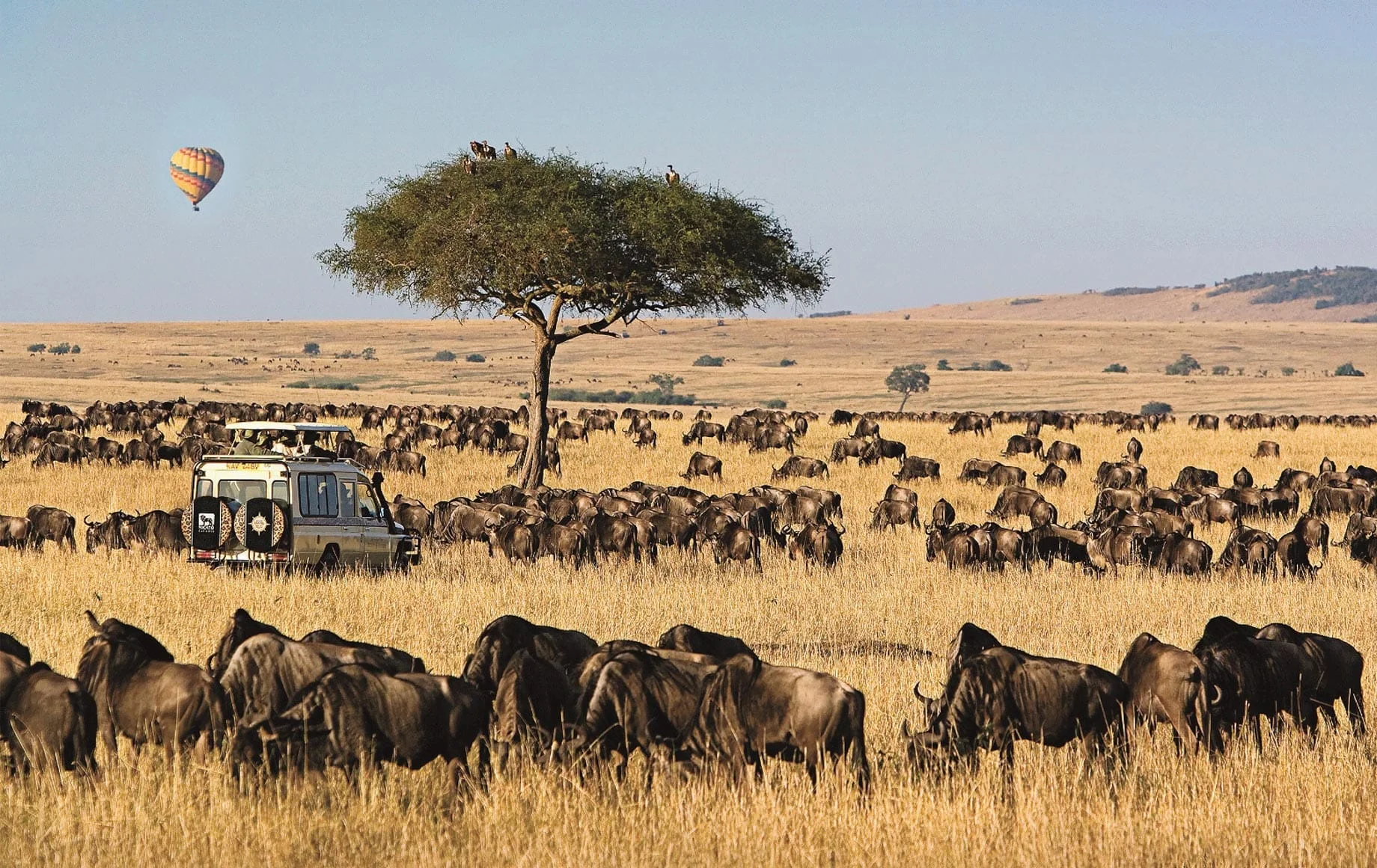
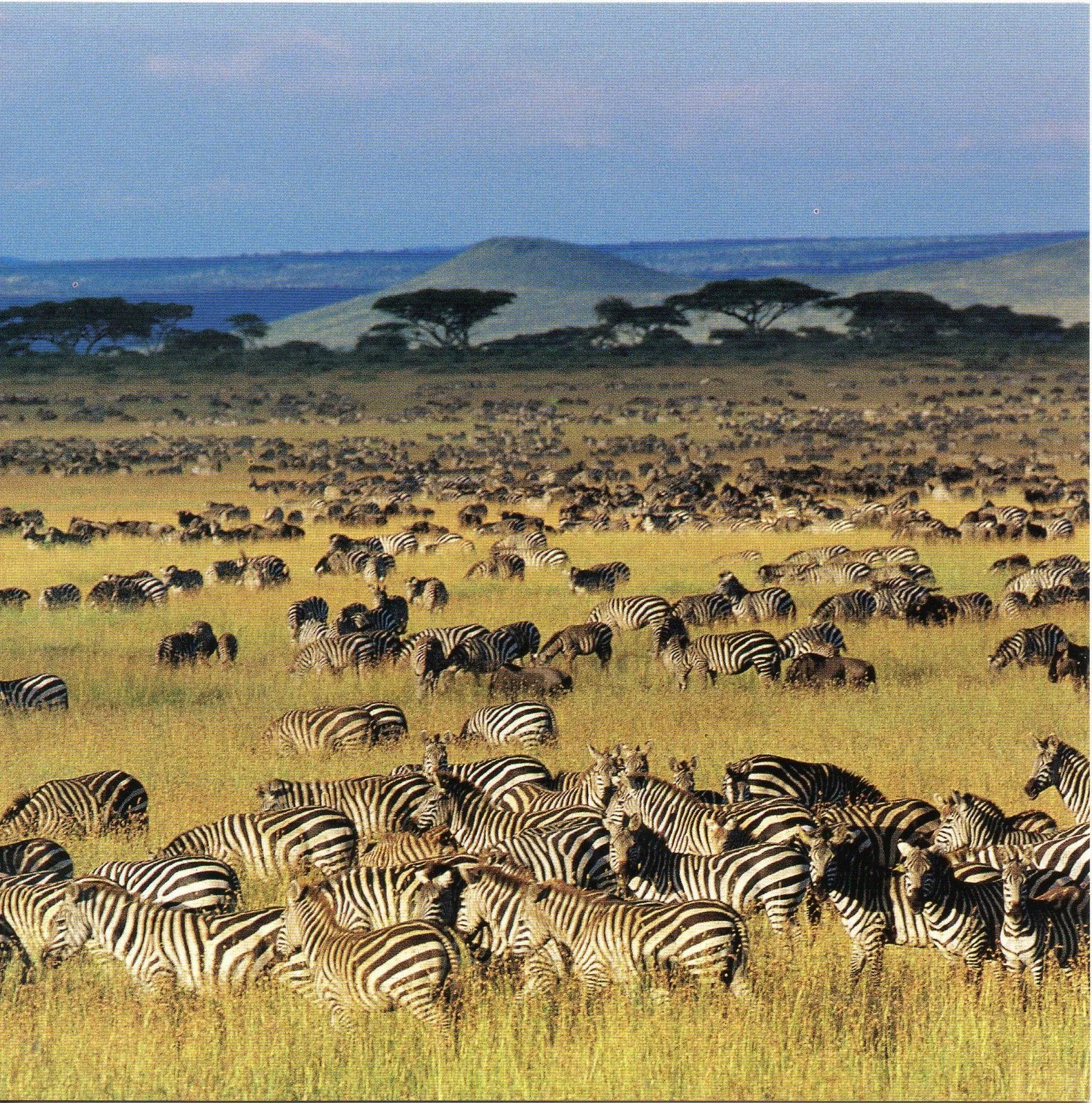
Two million wildebeest and zebra move in a continuous loop — calving on the Ndutu plains in February, crossing the Grumeti River in June, and the famous Mara River crossings from July to October.
MittelklassePrivatIm Zeltcamp schlafen, klassische Safari
 MittelklassePrivat
Camps, die den Herden folgen
 LuxusGeteilt
Plunge-Pools, eher für Erwachsene
 MittelklasseGeteilt
Günstiges Reisepaket für diese Route
 Preis-LeistungPrivat
Günstiges Reisepaket für diese Route
 MittelklassePrivat
Im Zeltcamp schlafen, klassische Safari
 Ultra-LuxusGeteilt
Wellness-Lodges jede Nacht
 LuxusGeteilt
Camps, die den Herden folgen
 Ultra-LuxusGeteilt
Im Zeltcamp schlafen, klassische Safari
 MittelklassePrivat
Komfortable, feste Safari-Lodges
 MittelklasseGeteilt
Private Conservancy — exklusiv und weitläufig
 Ultra-LuxusGeteilt
Plunge-Pools, eher für Erwachsene
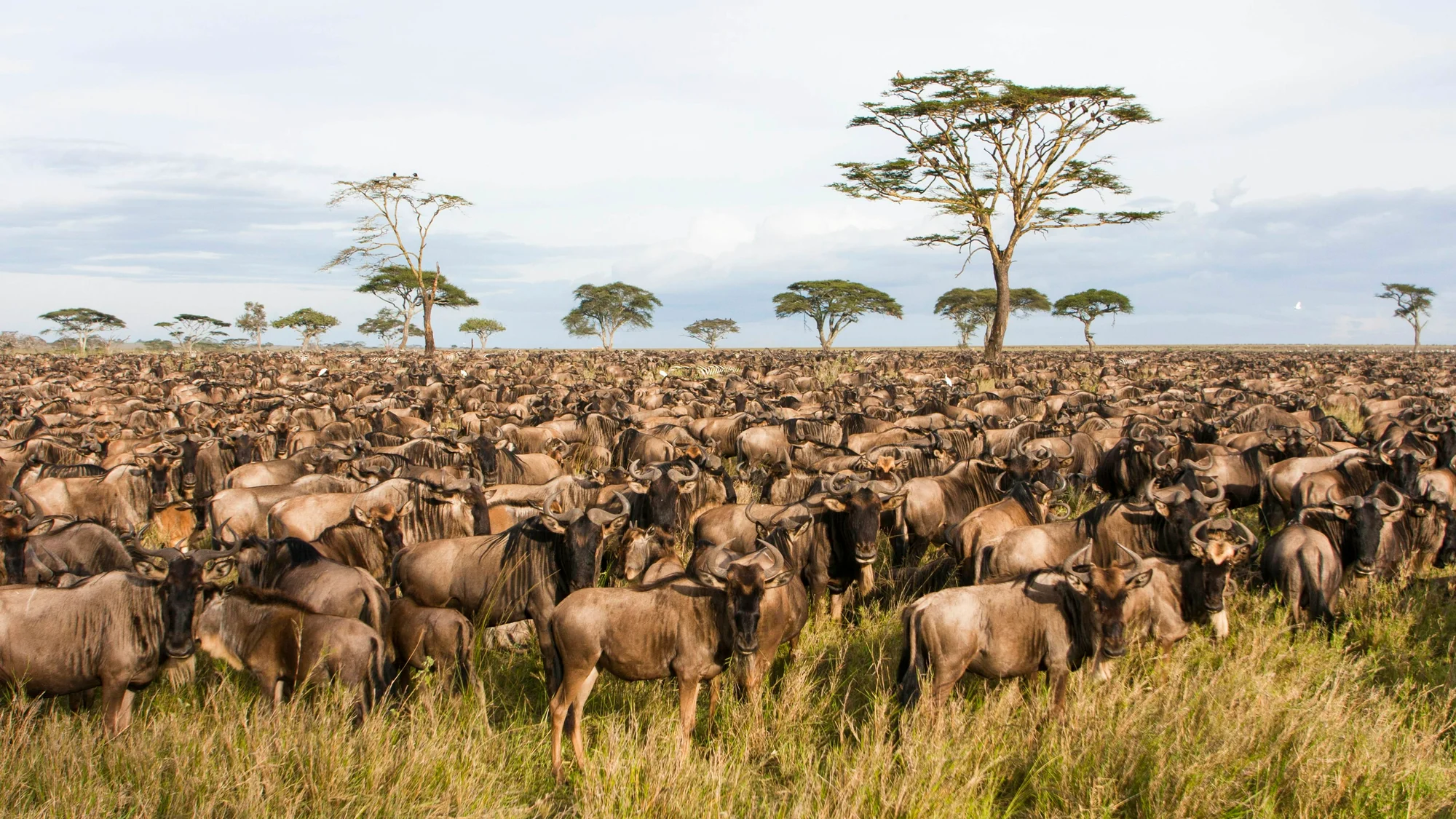
Around two million wildebeest, zebra and Thomson's gazelle loop continuously through the Serengeti in Tanzania and the Masai Mara in Kenya, following the rains and fresh grass in one of nature's greatest spectacles. The migration never stops — the animals are somewhere in this ecosystem every day of the year. What changes month by month is where the herds are, what they are doing, and how dramatic the scene is. Matching your travel dates to the right corner of the map is the single most important planning decision you will make.
December–February — Southern Serengeti (Ndutu): The calving season begins. The short-grass plains around Ndutu fill with newborns and the predators that hunt them. February is the absolute peak — see the Calving season section below for the full story.
March — Central Serengeti: The herds begin dispersing northward as the short rains arrive. An underrated month: resident predators are still active on the southern plains, and the long rains have not yet started.
April–May — Central Serengeti: The long rains. Grass is waist-high, many seasonal camps close, and vehicle numbers drop sharply. The cheapest window of the year, but least reliable for finding herds.
June — Western Corridor (Grumeti): The herds push north-west toward the Grumeti River, roughly 100 km west of Seronera, for a smaller but dramatic crossing — see the Grumeti section below.
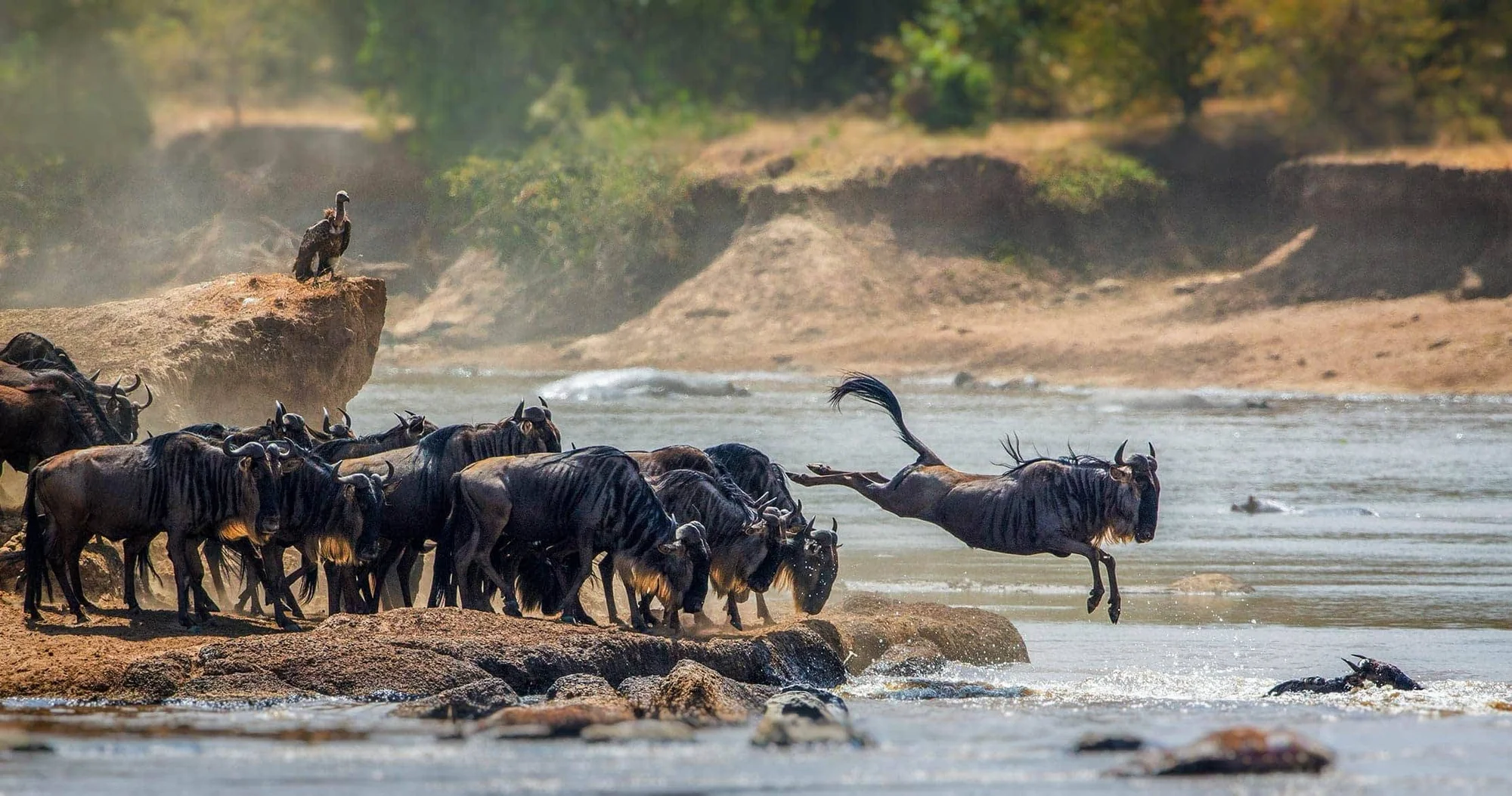
July–October — Northern Serengeti & Masai Mara: The iconic Mara River crossings. This is peak season; book six to twelve months ahead. Full logistics in the Mara River crossings section.
November — Central and Eastern Serengeti: The short rains begin and the herds start drifting south toward the calving grounds again. A quiet, green, and underpriced month.
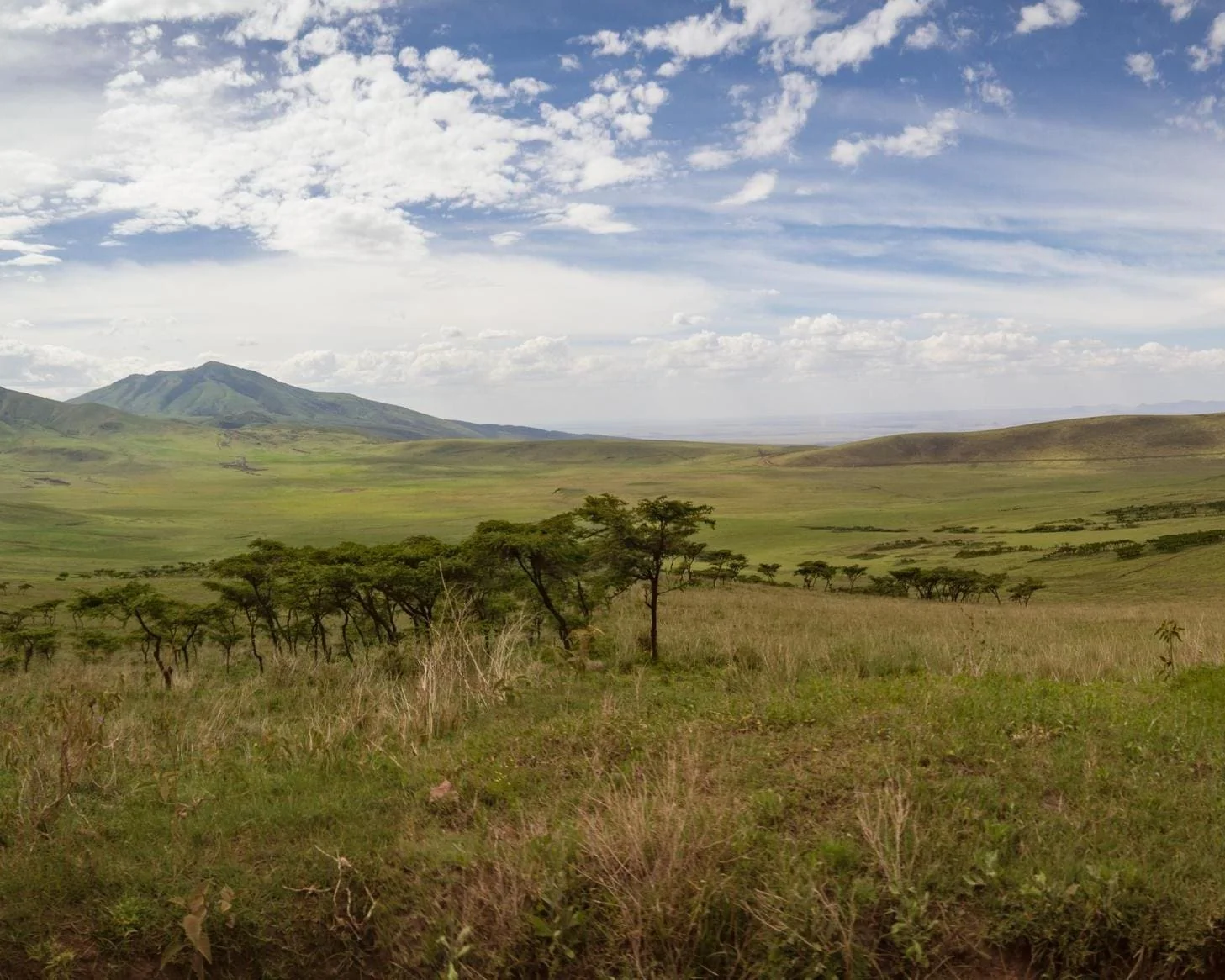
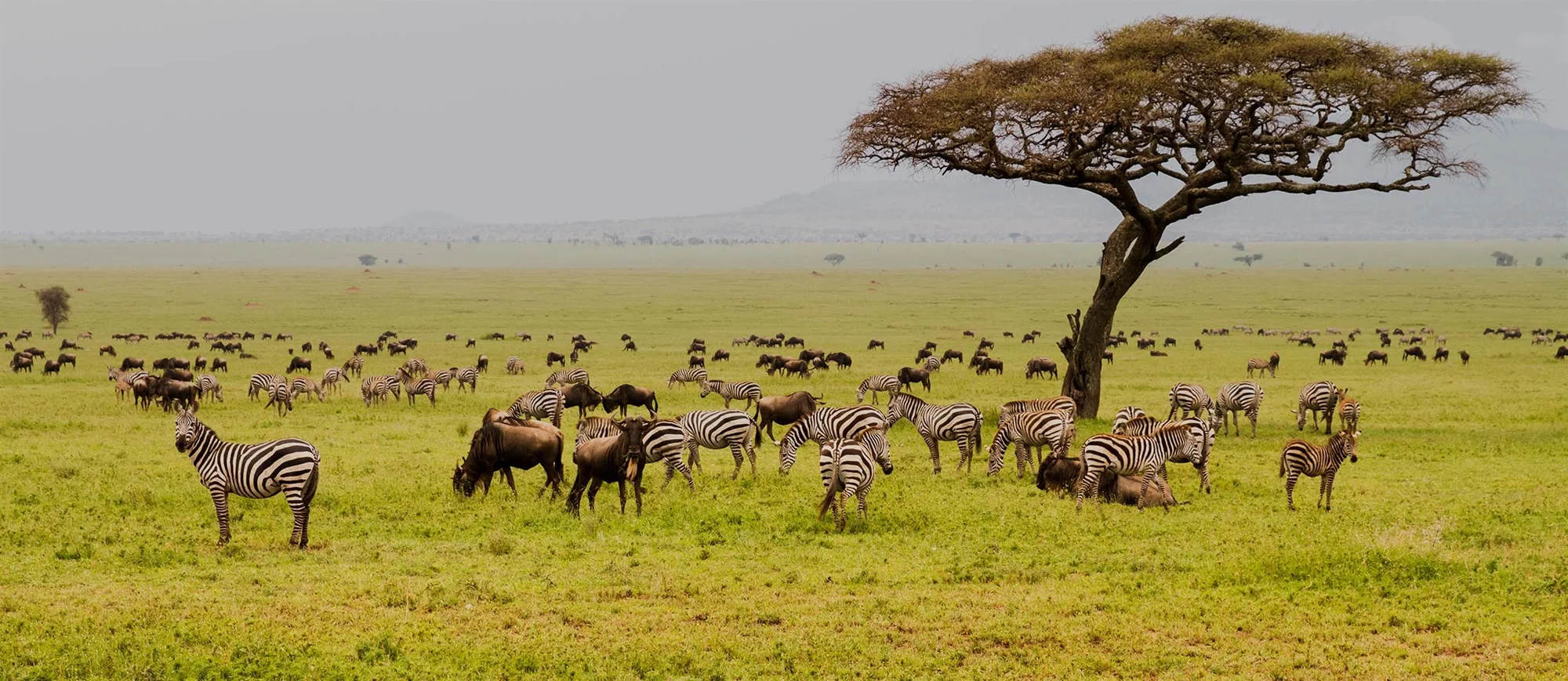
From December to March, the Great Migration's most productive phase unfolds on the short-grass volcanic plains of the southern Serengeti, centred on the Ndutu area on the boundary with the Ngorongoro Conservation Area. This is where the herds come to give birth: roughly 500,000 wildebeest calves are born within a few weeks, peaking in February.
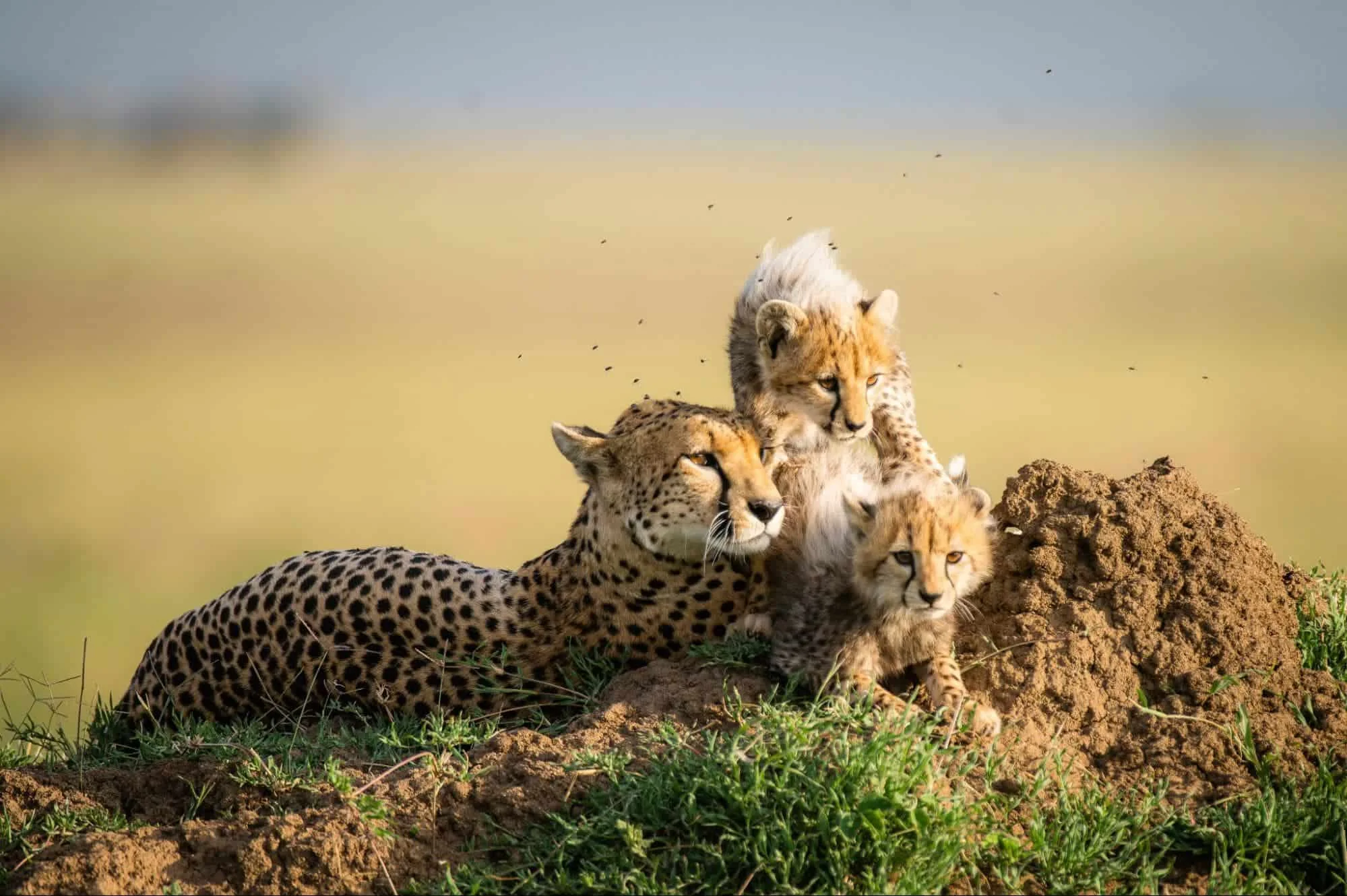
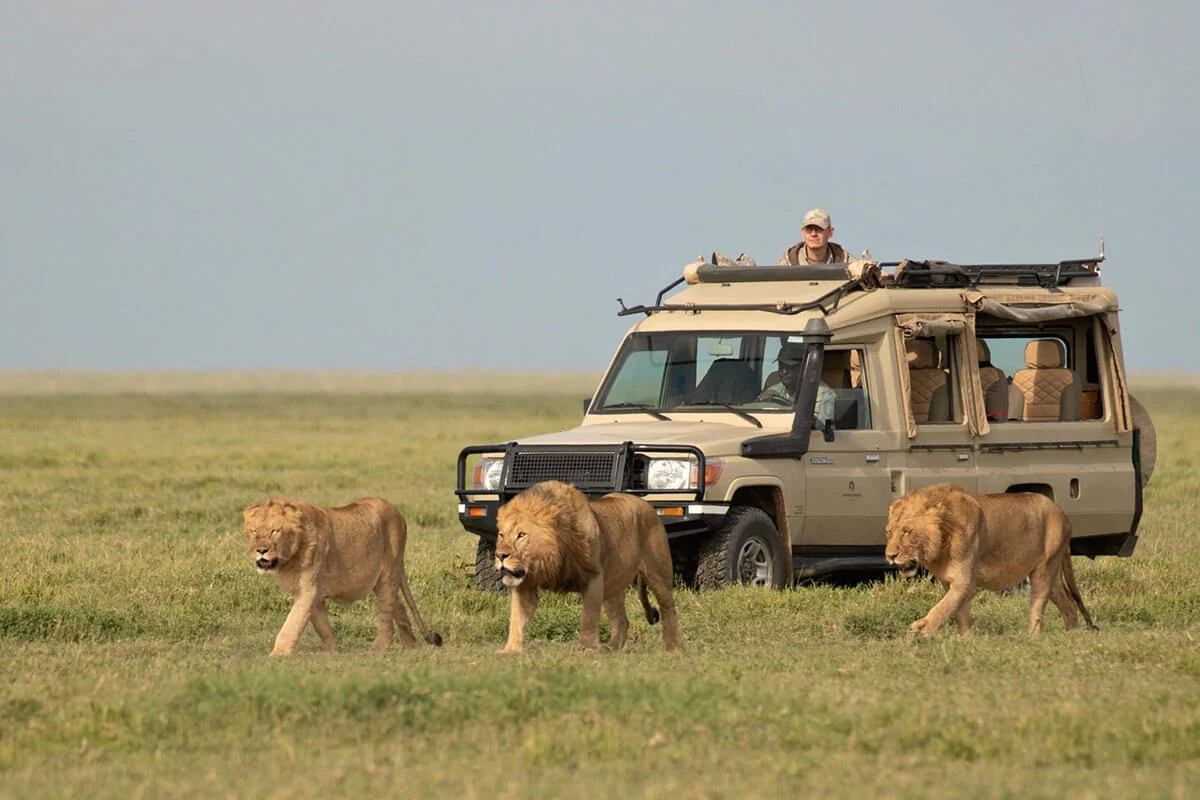
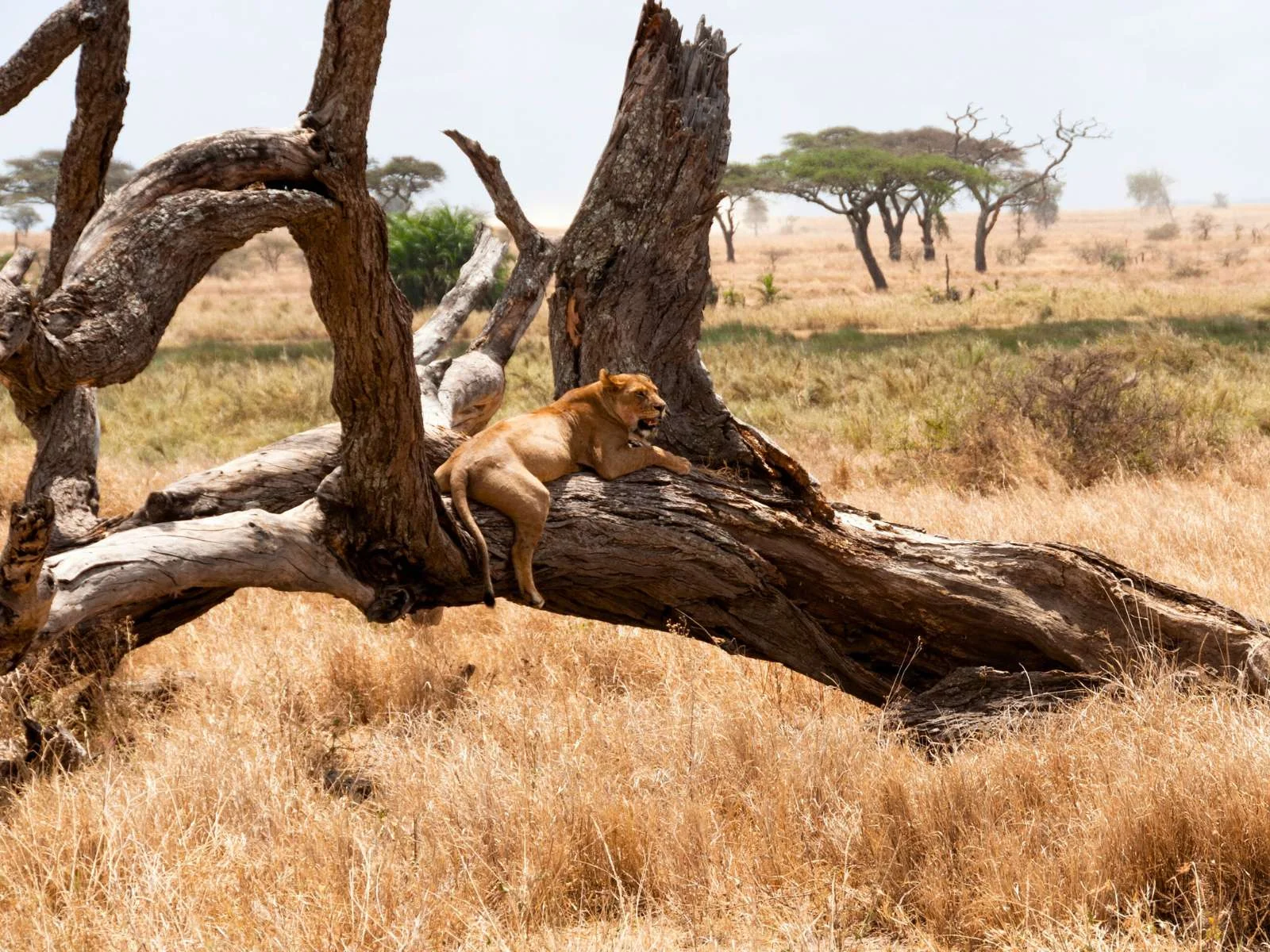
The mathematics are brutal and spectacular. Each newborn calf can stand within minutes and run within hours — but those first hours are when the predators strike. Lion, cheetah and spotted hyena concentrate on the open plains in numbers rarely seen elsewhere, and because the Ndutu grass is short and almost treeless, hunts play out in full view of the vehicle. Cheetah in particular favour these wide-open plains; you may watch a mother teach her cubs to hunt on a clear morning with Ngorongoro's rim visible on the horizon. For wildlife photographers, February on the Ndutu plains is one of the best single months anywhere in Africa.
The Ndutu area sits about 80 km south of Seronera — roughly a two-hour drive on park roads via the Naabi Hill Gate. From Karatu (the road-access base for the Ngorongoro Conservation Area), it is a 3–4 hour drive through the NCA to reach the Ndutu plains. The Ndutu airstrip is approximately one hour by bush flight from Arusha, which is the fastest option for most visitors.
Most camps in the southern Serengeti are seasonal — open December to March only and closed the rest of the year. Ndutu Safari Lodge is the main year-round property; every other camp here is timed to the calving season. Book six to twelve months ahead for February, when every bed in the area is taken.
Before the herds reach the Mara River, they tackle a smaller but equally dramatic obstacle: the Grumeti River in Tanzania's Western Corridor, about 100 km west of Seronera (a 2.5–3 hour drive on park roads). In June the columns of wildebeest push north-west through the woodland and open grassland of the western Serengeti, pressing toward the river as Nile crocodiles wait in the shallows below the banks.
The Grumeti crossings rarely make the front page of nature documentaries, but there are real advantages to choosing them over the more famous northern crossings. Far fewer vehicles attend — the Western Corridor is a longer drive from the central Serengeti camps, and most packages are routed through Seronera and the north. If a quieter, less choreographed version of the same drama appeals, June in the Western Corridor is the answer.
The Grumeti/Sasakwa airstrip connects to Arusha in approximately 1.5–2 hours by charter — Coastal Aviation takes ~1.5 hours (via Manyara) and Auric Air takes ~2 hours; note that FlightLink does not serve this airstrip. The area is anchored by the Singita Grumeti concession — 350,000 acres of exclusive, ultra-luxury private land within the wider Serengeti ecosystem — alongside more accessible camps such as Mbalageti Lodge and Kirawira Serena Camp. The window is specific: most camps are open from June through the end of July; outside that period the wildlife disperses and the roads can be wet.
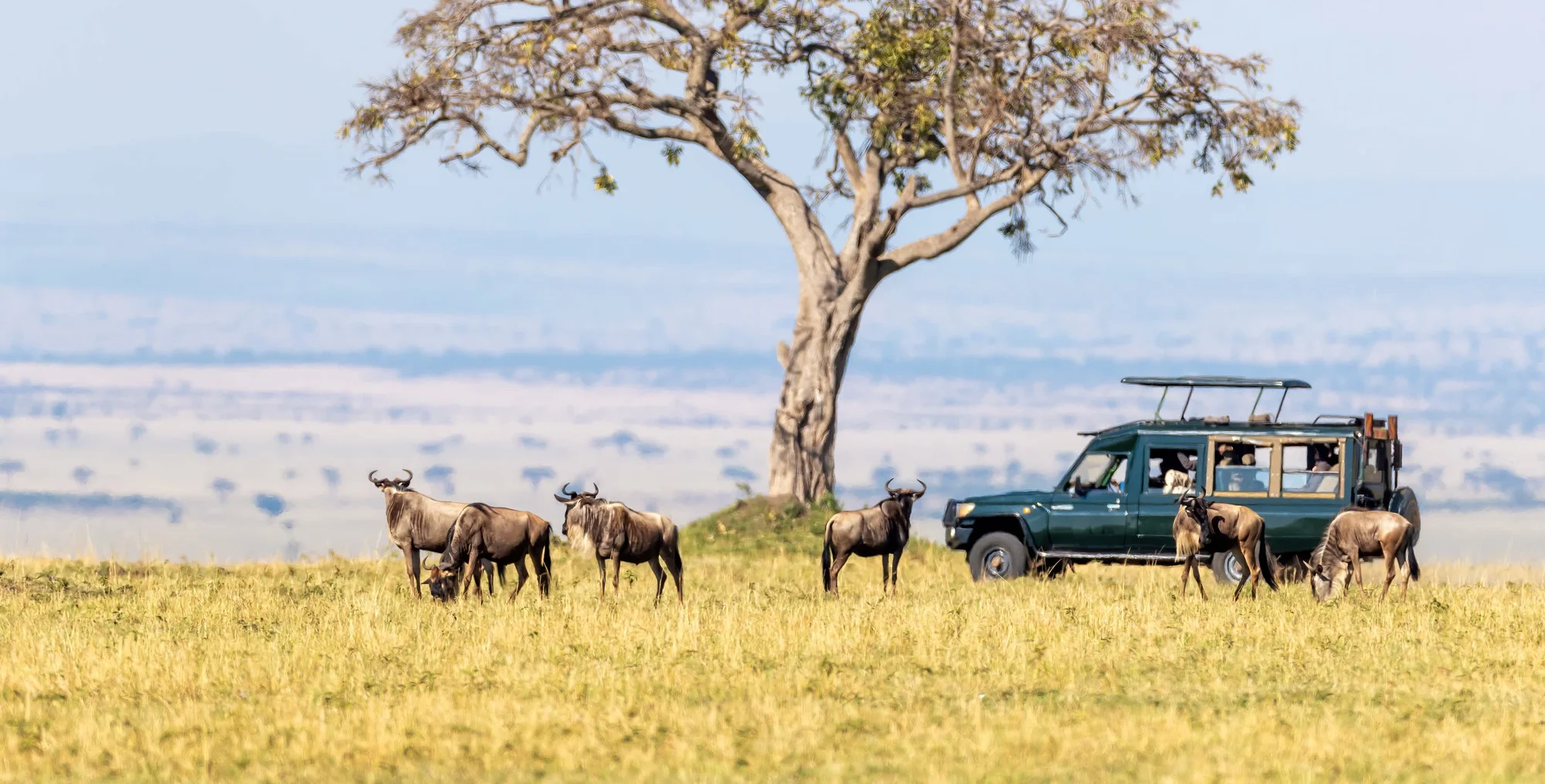
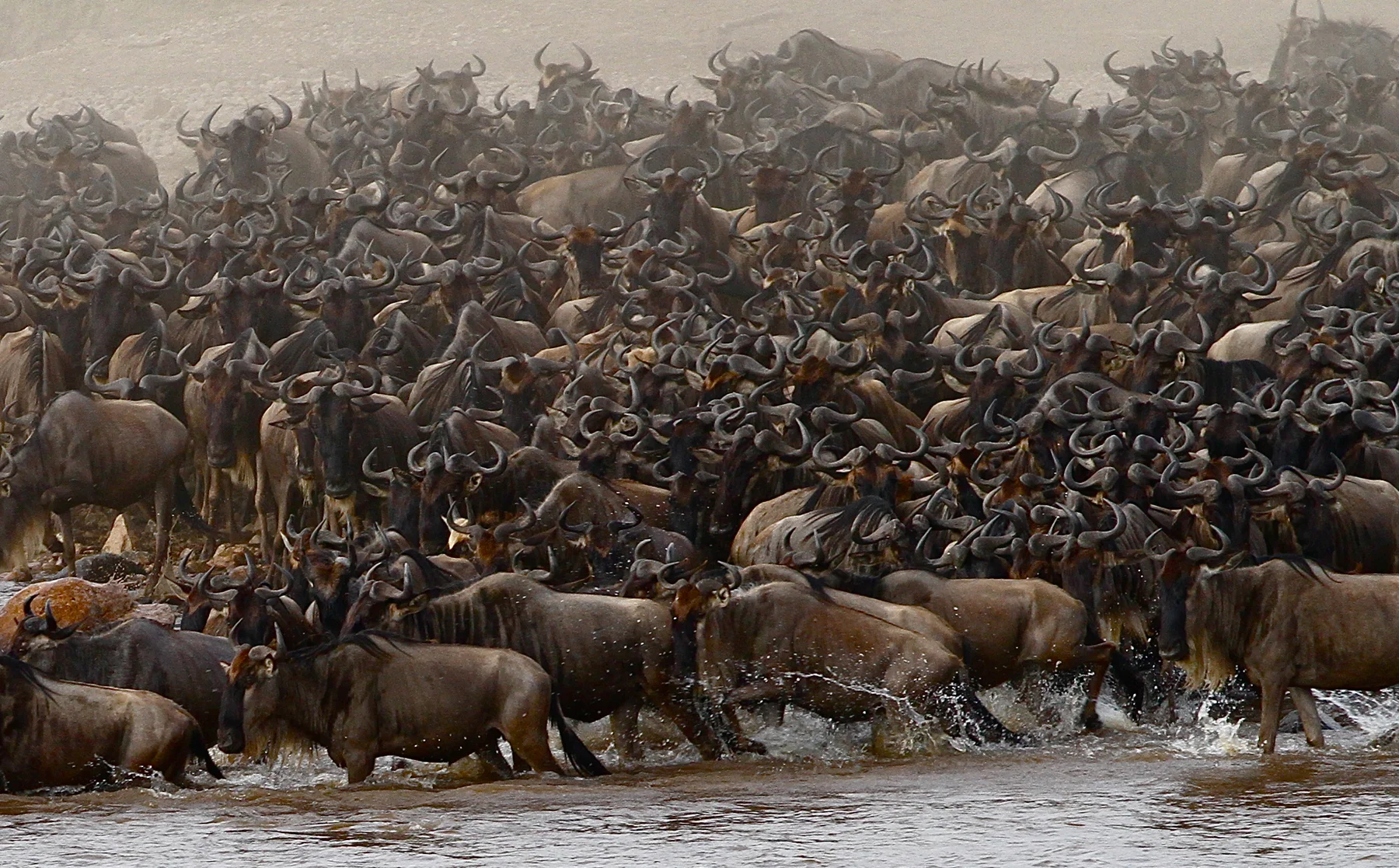
The Mara River is a single waterway that crosses the Kenya–Tanzania border. The wildebeest cross it on both banks: to the north in Kenya's Masai Mara, to the south in Tanzania's northern Serengeti — the Kogatende sector. You are watching the same herds at the same river; what differs is the experience, the logistics, and the number of other vehicles.
The northern Serengeti is 180 km from Seronera by park road — a 5–6 hour game drive that most operators treat as a full transfer day in its own right. Alternatively, a 45-minute bush flight from Seronera connects directly to Kogatende airstrip; from Arusha, it is approximately 1.5 hours by air. The distance is what keeps vehicle numbers low: a Mara River crossing in Kogatende typically has a fraction of the vehicles you will see on the Kenyan side of the same event.
Plan a minimum of two nights in Kogatende, ideally three. Crossings are triggered by herd behaviour and cannot be predicted to a specific day; the only strategy that works is staying long enough to wait one out. The best permanent camps here — Nomad Lamai, Serian's Lamai, Serengeti Bushtops — operate June through March (closed April–May); mobile camps typically run July to October.
From Nairobi's Wilson Airport, the Mara airstrips are approximately 45–50 minutes by bush flight (SafariLink or AirKenya, daily departures). The Musiara Airstrip, closest to the main river-crossing points, is about 6–7 hours from Nairobi by road via the Narok route — a viable road option but a long day.
The Masai Mara National Reserve operates on a 12-hour calendar-day fee: your entry ticket covers 6:00 AM to 6:00 PM regardless of when you enter, and a new day's fee applies at midnight. The private conservancies bordering the reserve (Olare Motorogi, Naboisho, Mara North) add a conservancy fee on top but unlock experiences the main reserve bans: night drives, off-road tracking and walking safaris. For the crossings, the Mara Triangle — the western section of the reserve managed separately by the Mara Conservancy — often has lower vehicle density than the main reserve.
Whether you choose the Kenyan or Tanzanian side, the rule is the same: three nights minimum in the crossing zone to have a realistic chance of witnessing a major crossing.
Neither side gives you better crossings — the herds move between them and the spectacle is the same river, the same crocodiles, the same chaos. The decision is one of logistics and experience style.
Choose Kenya if you want simpler access (a 45-minute flight from Nairobi rather than an Arusha connection), conservancy activities that are banned in Tanzanian national parks (night drives, walking safaris, off-road tracking), or are combining the Mara with Amboseli or the Laikipia highlands on the same trip.
Choose Tanzania if you want the full migration story across all four phases (calving, Grumeti, Kogatende, and the southern return — three of four happen in Tanzania), fewer vehicles at the crossings, or are already on a Serengeti-based itinerary and can fly or drive north to Kogatende.
Many itineraries combine both: a few nights in the Mara followed by a flight south into the northern Serengeti, or vice versa. The border crossing and additional flights add cost and logistics, but the payoff is two perspectives on the same great event.
The camps that work best for migration viewing are positioned within or adjacent to the movement corridors — not just geographically close to the park. For the northern crossings, riverside camps near Kogatende or the Mara Triangle are the gold standard; for calving, the Ndutu area specifically (not the central Serengeti). Mobile tented camps move to follow the herds and are often the best-placed option during peak season, while fixed permanent camps offer more consistent standards but may not always be right on the action.
The listing below is pre-filtered to show all migration-tagged itineraries across both Tanzania and Kenya — mid-range through ultra-luxury, driving and fly-in. Use the duration and price filters to narrow to your budget and travel style.