
NoMiddleManTours
Cross-Border Safaris: Tanzania + Kenya

Cross-Border Safaris: Tanzania + Kenya

The Serengeti and the Masai Mara share one ecosystem — only a border separates them. These 14 itineraries cross that line, pairing Tanzania's northern circuit with Kenya's Mara conservancies in routes that run point-to-point with no road driven twice.

25 tripsFrom $1,686 pp6–20 days
Browse all trips

Cross-border safaris work best as one-way arcs. Start in Nairobi or Arusha, move through the parks in geographic sequence, finish at the other end — no doubling back, no wasted transfer days. The two main Tanzania–Kenya crossings used by these itineraries are Namanga (road, central) and Isebania (road, western approach via Serengeti). A fly-in connection between the Serengeti and the Masai Mara is also available, covering the border in under an hour.

What a cross-border route adds#

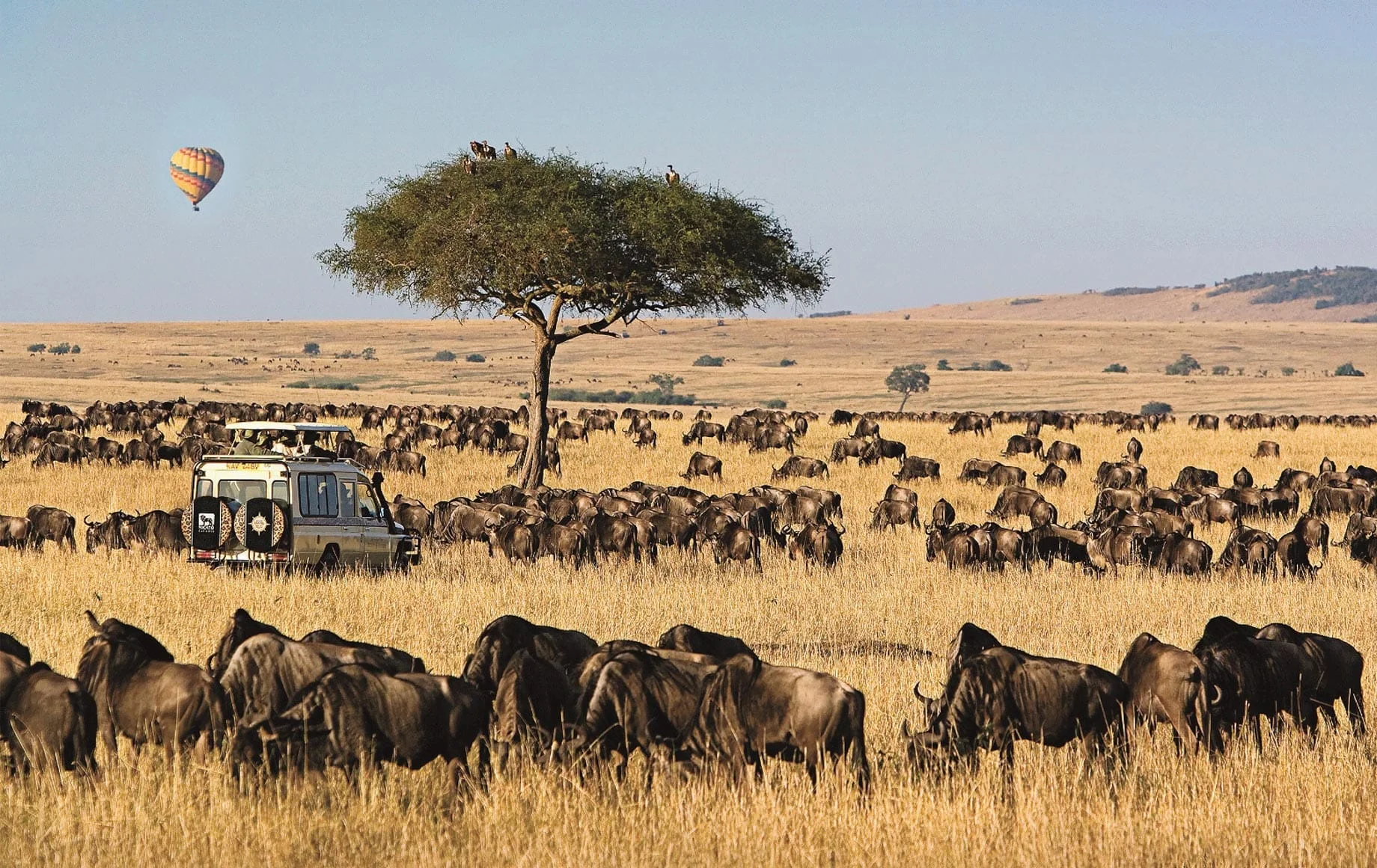
The Mara permits two things Tanzania's parks don't: night drives and off-road driving in private conservancies. Add Ngorongoro Crater descents and Tarangire elephant herds, and a cross-border itinerary covers more habitat variety than any single-country route. The tradeoff: two sets of park fees, a border crossing, and either an overland leg or a bush flight between countries.

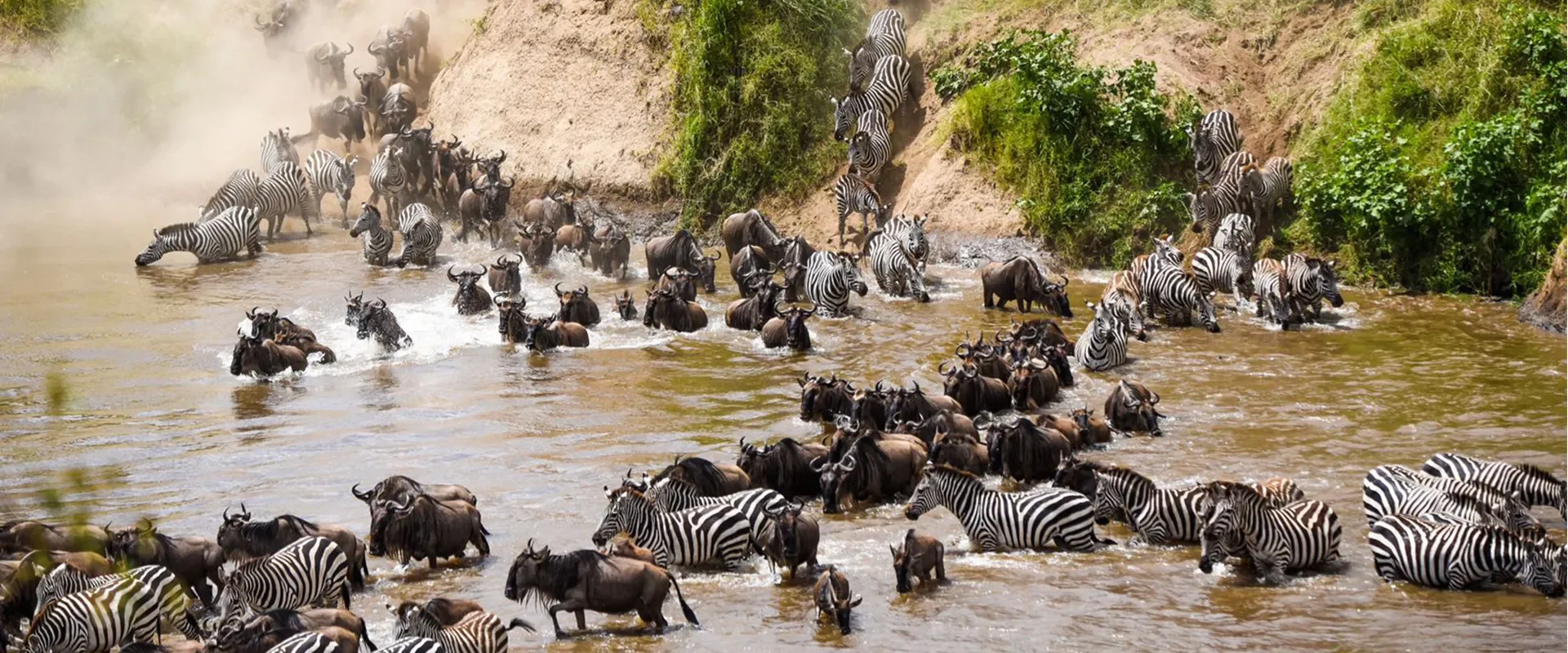
For the Great Migration, crossing the border is often the point. The wildebeest move north from Tanzania into the Mara between July and October, crossing the Mara River both ways. Following this arc tracks actual animal movement rather than waiting in one spot. See migration crossing safaris for itineraries built around those river crossings, or fly-in safaris if you want to bridge the two countries by bush plane rather than road.
25 itineraries · matching your filters · direct operator pricing

Grande Spedizione Kenya e Tanzania in 20 Giorni
SafariMisto (guida + volo)Circuito del Nord

Grande Spedizione Kenya e Tanzania in 20 Giorni

20 days / 19 nightsFacilemoderate pace

Dodici parchi in due paesi in venti giorni — la spedizione Kenya-Tanzania più completa disponibile. Il percorso inizia dove nessun altro itinerario cross-border comincia: nel Meru National Park, nel nord del Kenya, la wilderness di Born Free dove Joy Adamson liberò la leonessa Elsa, poi a nord verso Samburu per gli Special Five, specie presenti solo qui e non nel resto del circuito safari standard, e nell'Ol Pejeta per stare accanto agli ultimi due rinoceronti bianchi settentrionali rimasti sulla Terra. Seguono i laghi della Rift Valley — Nakuru per entrambe le specie di rinoceronte, Naivasha per l'unico safari a piedi senza recinzioni dell'intero percorso. Due notti nel Masai Mara regalano la libertà di tracciamento dei predatori tipica del sistema delle conservancy keniote. Poi un volo bush attraversa il confine fino ad Arusha, e si dispiega il circuito settentrionale della Tanzania: due notti nel Serengeti centrale, una giornata dedicata al Ngorongoro Crater, e le mandrie di elefanti nei boschi secchi del Tarangire. Il percorso rientra in Kenya a Namanga per l'Amboseli sotto il Kilimanjaro, attraversa entrambe le metà della wilderness del Tsavo, e si conclude sull'Oceano Indiano a Mombasa. Il percorso open-jaw — arrivo a Nairobi, partenza da Mombasa — significa che ogni chilometro va in avanti. Nessun ritorno sui propri passi. Nessun incrocio ripetuto. Dodici ecosistemi distinti vissuti nell'ordine voluto dalla geografia.

Meru National Park (Kenya)Samburu National Reserve (Kenya)Ol Pejeta Conservancy (Kenya)Lake Nakuru National Park (Kenya)+8 more

Frequently asked questions

Do I need a separate visa for both Tanzania and Kenya?
Yes. Most nationalities need a Tanzania visa and a Kenya ETA separately. Some nationalities qualify for the East Africa Tourist Visa covering both — check embassy sites before booking.
How long should a cross-border safari be?
A minimum of 8 days gives enough nights in each country to justify the border logistics. 10–14 days allows more nights per park and a beach extension if wanted.
Is the Nairobi-to-Arusha overland crossing practical, or should I fly?
The Namanga crossing is a 4–5 hour road transfer and is commonly used. Flying Nairobi to Kilimanjaro (under 1 hour) is faster and avoids the border queue, but costs more.
When is the best time of year for a Tanzania–Kenya cross-border safari?
July to October suits the Mara River crossings. December to March is calving season in southern Serengeti. Both seasons give excellent game viewing; the border crossing itself is viable year-round.
Can I do a cross-border safari as a loop, returning to the same city?
Yes — several 10-day and 13-day circle itineraries start and end in Nairobi, using the Isebania border crossing to enter Tanzania and the Namanga crossing to exit.