 Tours
Tours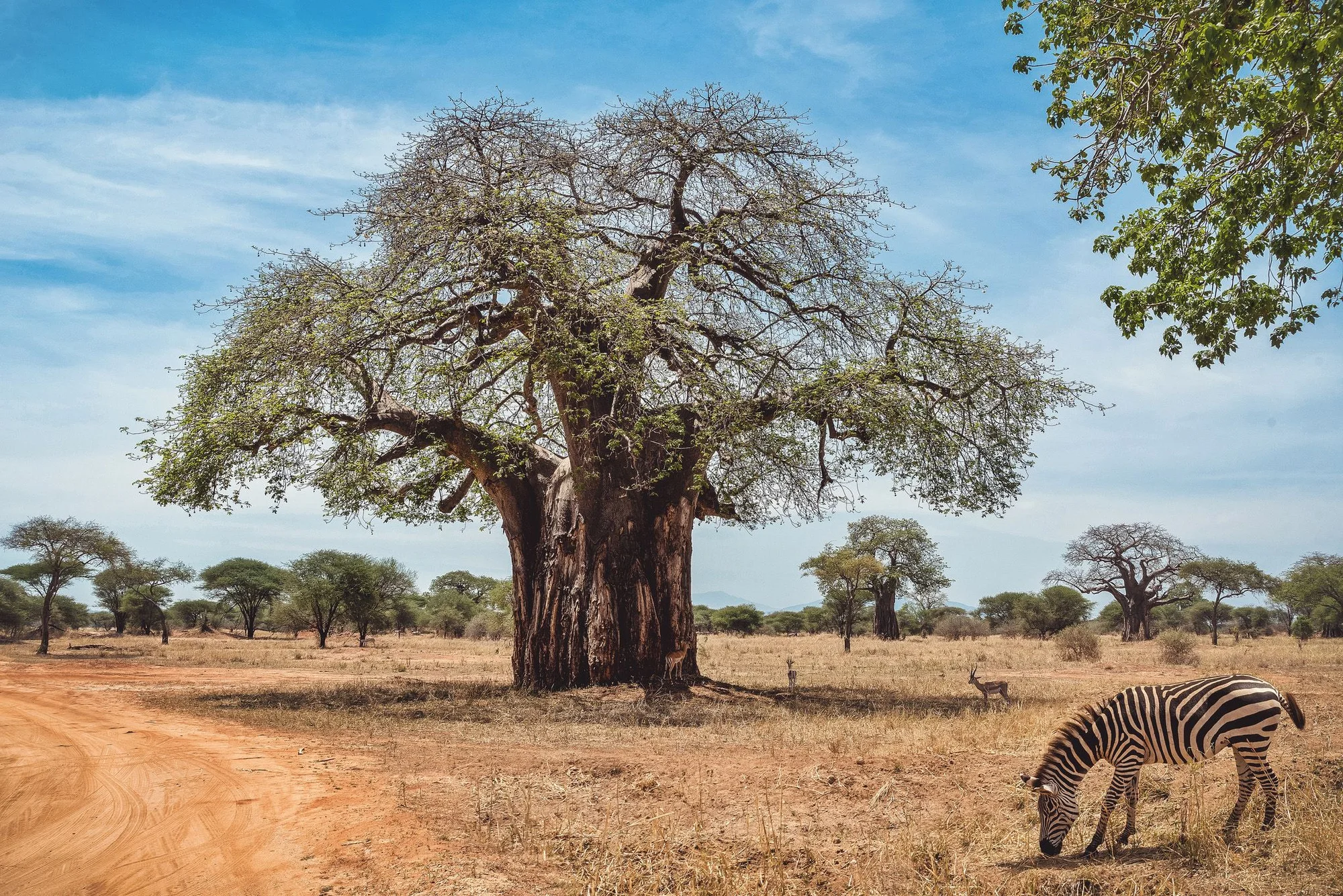
NoMiddleManTours · Jun 22, 2026 · 12 min read
A field guide to Tanzania's baobabs — where the densest stands are (Tarangire above all), how the upside-down tree stores water and lives a thousand years, why elephants tear its bark apart in the dry season, and the bat-pollinated flowers almost no one sees.
The first thing every guide says when a vehicle rounds the escarpment into Tarangire is some version of "look up" — because the baobabs here are the size of buildings, swollen grey trunks holding bare-branched crowns that look like a root system pointed at the sky. If you have come to Tanzania to see one tree, this is it, and Tarangire National Park is where the country puts on its greatest baobab show: hundreds of giant Adansonia digitata standing across the valley, some of them more than a thousand years old. This guide is about the tree itself — where the biggest specimens grow, how a plant survives ten dry months a year, why elephants gouge it open, what its night-blooming flowers are really for, and how the Maasai and other peoples have used every part of it for centuries.
 Destination
Tarangire National Park
national_park
The short answer: where to see baobabs in Tanzania#
Baobabs grow in hot, dry, low-altitude country across northern and central Tanzania, but they cluster where the soil and rainfall suit them. Here is the at-a-glance version before the detail.
| Where | Baobab density | Why it works | Best months |
|---|---|---|---|
| Tarangire | Very high — the signature park | Low, hot valley floor; perfect baobab soil; elephants everywhere | Jun–Oct (dry, herds concentrate) |
| Ruaha | High — baobab-studded hills | Hot, remote, low-altitude southern wilderness | Jun–Oct (most camps close Dec–Apr) |
| Lake Manyara escarpment base | Moderate | Warm, low ground below the Rift wall | Year-round |
| Mkomazi & northern lowlands | Scattered | Dry savanna near the Kenya border | Jun–Oct |
| Serengeti | Almost none | Too high, too cool, wrong soil | n/a |
The planning takeaway: if baobabs are the reason you are going, build the trip around Tarangire. It is roughly a 2 to 2.5-hour drive from Arusha, the Minjingu gate opens at 6:30 AM and closes at 6:30 PM, and one to three nights here puts you among the densest, most photogenic stand of giants in East Africa. Adult park entry is currently around US$59 per person per day.
Why Tarangire is baobab country — and the Serengeti is not#
This is the question almost nobody answers properly: why are baobabs everywhere in Tarangire and essentially absent from the central Serengeti (Seronera) roughly six to seven and a half hours away via Karatu and the Ngorongoro Conservation Area? The answer is elevation and heat. Baobabs are a tree of hot, low, semi-arid country — they thrive below roughly 1,200 metres on free-draining soils where the dry season is long and brutal. Tarangire sits in a low, hot basin around the Tarangire River, and that is exactly the niche a baobab wants.
The Serengeti, by contrast, is high open grassland — much of it above 1,500 metres, cooler, with deeper soils and a grass-fire regime that young baobabs cannot survive. So the famous endless plains have acacias and the occasional sausage tree, but no baobab forest. The same logic explains the southern wilderness of Ruaha: hot, low, remote, and consequently studded with baobabs along its rocky hills. When a planner tells you Tarangire is "the baobab park," this is the real reason — it is not branding, it is biogeography.
Within Tarangire itself, the densest and most scenic baobabs are in the northern section between the main gate and the river, where about 90% of visitors game-drive and where the trees rise straight out of the elephant-grazed valley floor. A bluff-top base over that valley is the classic way to wake up inside the scene.
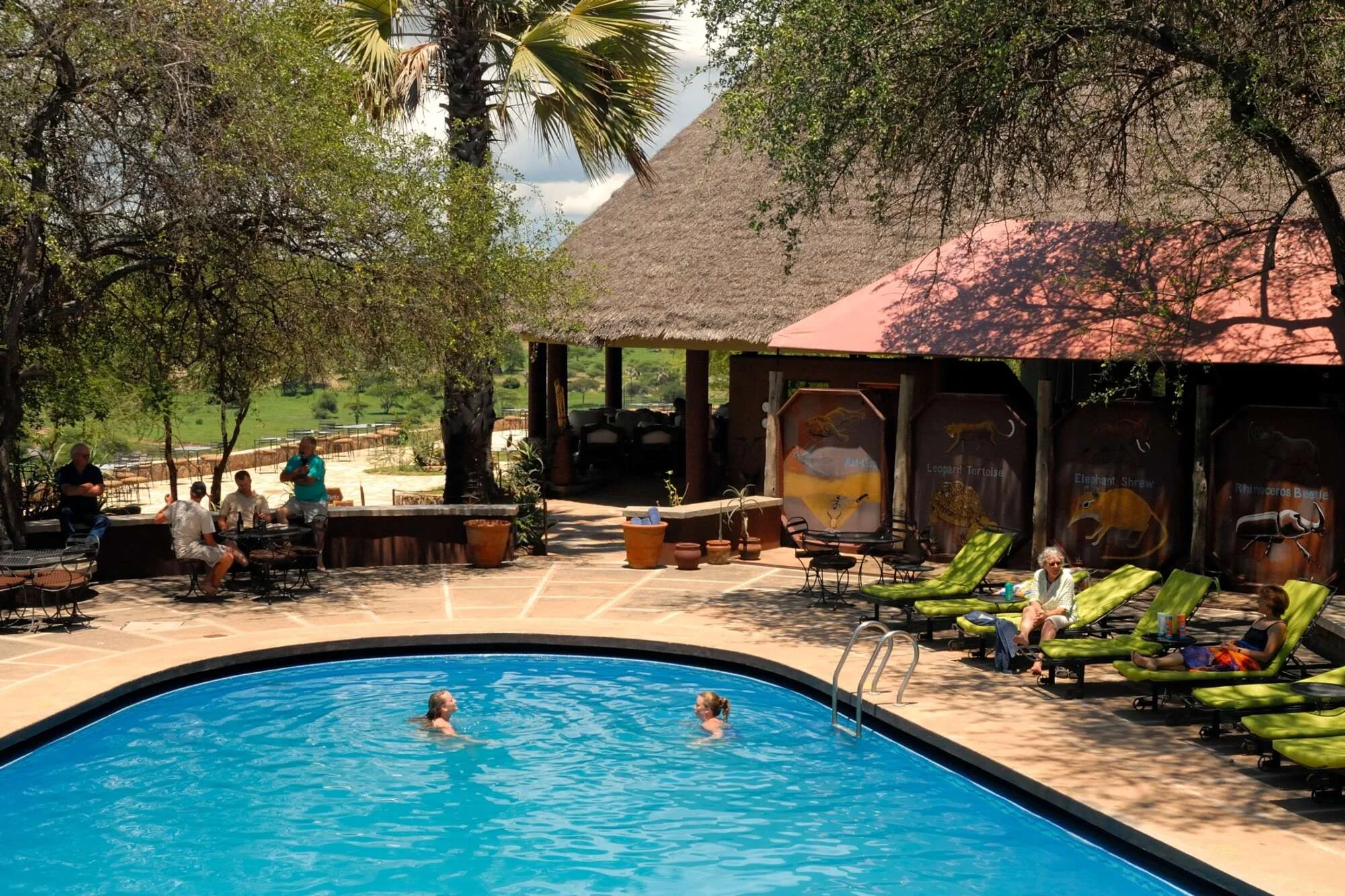 Mid Range
Tarangire Safari Lodge
Mid Range · Tarangire National Park
Adansonia digitata: how the upside-down tree actually works#
The baobab's nickname — the upside-down tree — comes from a San legend that God, displeased with the baobab, yanked it out and replanted it head-first, leaving its roots in the air. What you are really looking at is one of the most extraordinary survival machines in the plant kingdom. A few facts worth carrying with you on a drive:
It is a water tank, not a hardwood. A baobab trunk is not dense timber; it is soft, fibrous, spongy tissue that stores water. A large tree can hold tens of thousands of litres in its trunk, swelling visibly in the wet season and shrinking through the dry months as it draws the reserve down. Press a guide on it and you will hear the same thing: you can sometimes see a tree look "fatter" after rain. This is why the trunk feels almost cork-like rather than woody.
It drops its leaves to survive, not because it is dying. For most of the year a baobab stands bare — the leafless, branch-tangled crown that gives it the upside-down look. It carries leaves for only a few weeks around the rains, minimising water loss the rest of the time. A bare baobab in August is a healthy baobab.
It is genuinely ancient. Baobabs are among the longest-lived flowering plants on Earth. Radiocarbon dating of the largest African specimens has returned ages well over 1,000 years, and a few have been estimated at 2,000-plus. The very biggest Tanzanian trees you pass in Tarangire are plausibly older than the country, older than most cathedrals — a sobering thing to register from a vehicle window. Because the trunk is hollow-cored and fibrous, you cannot age a baobab by counting rings; the wood does not lay them down the way an oak does.
The flowers open at night and are pollinated by bats. Here is the detail most visitors never learn, because they are asleep when it happens. The baobab's large, white, faintly sour-smelling flowers open in the evening and last barely 24 hours. They are pollinated chiefly by fruit bats — and in places hawkmoths and bushbabies — that work the canopy after dark. By the time the safari vehicles roll out at dawn, the spent flowers are already browning on the ground. If you are at a camp near baobabs in the wet season, step outside after dinner and look up with a torch: the bats over a flowering crown are the show nobody photographs.
Elephants and baobabs: the dry-season relationship#
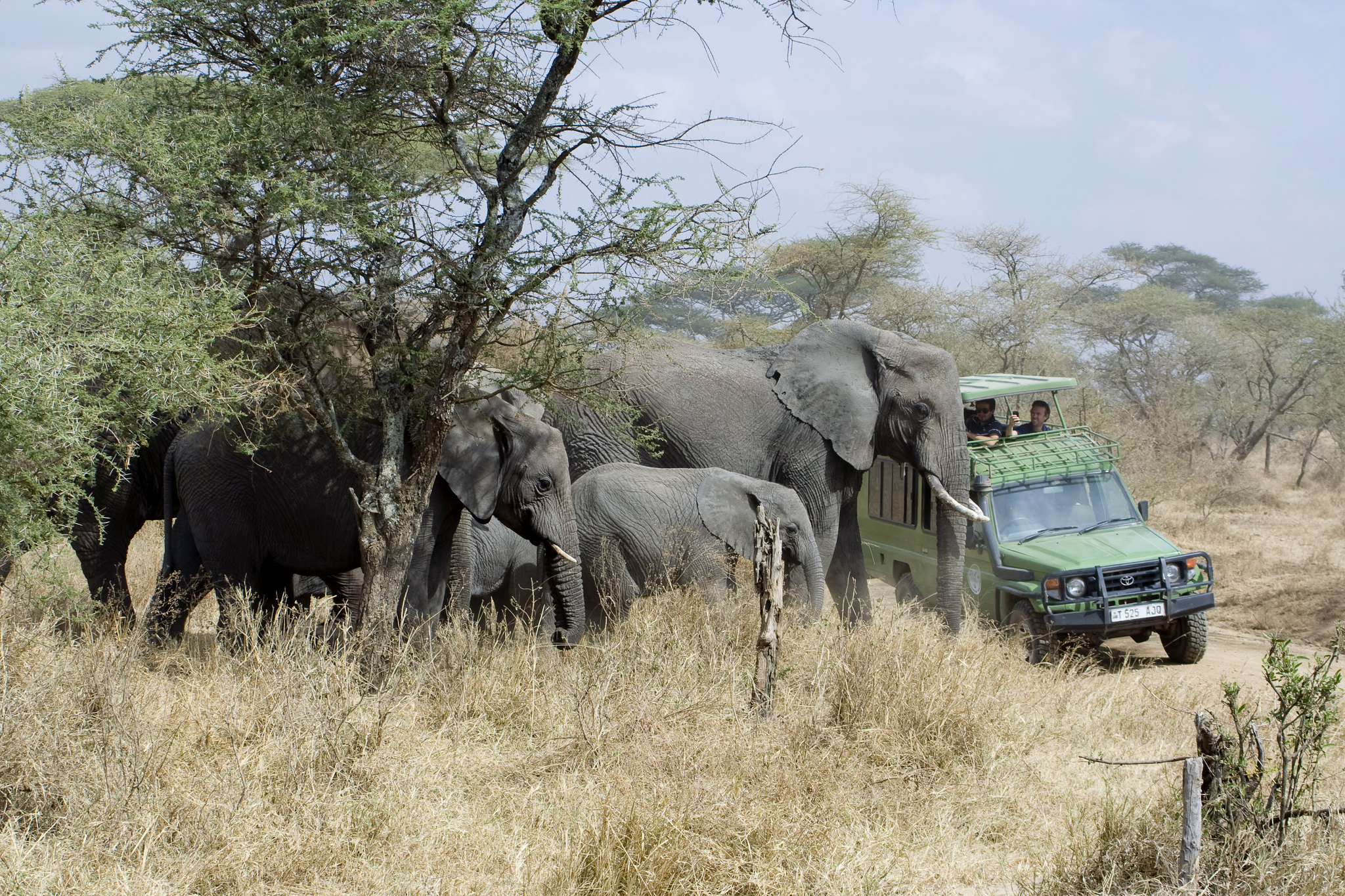
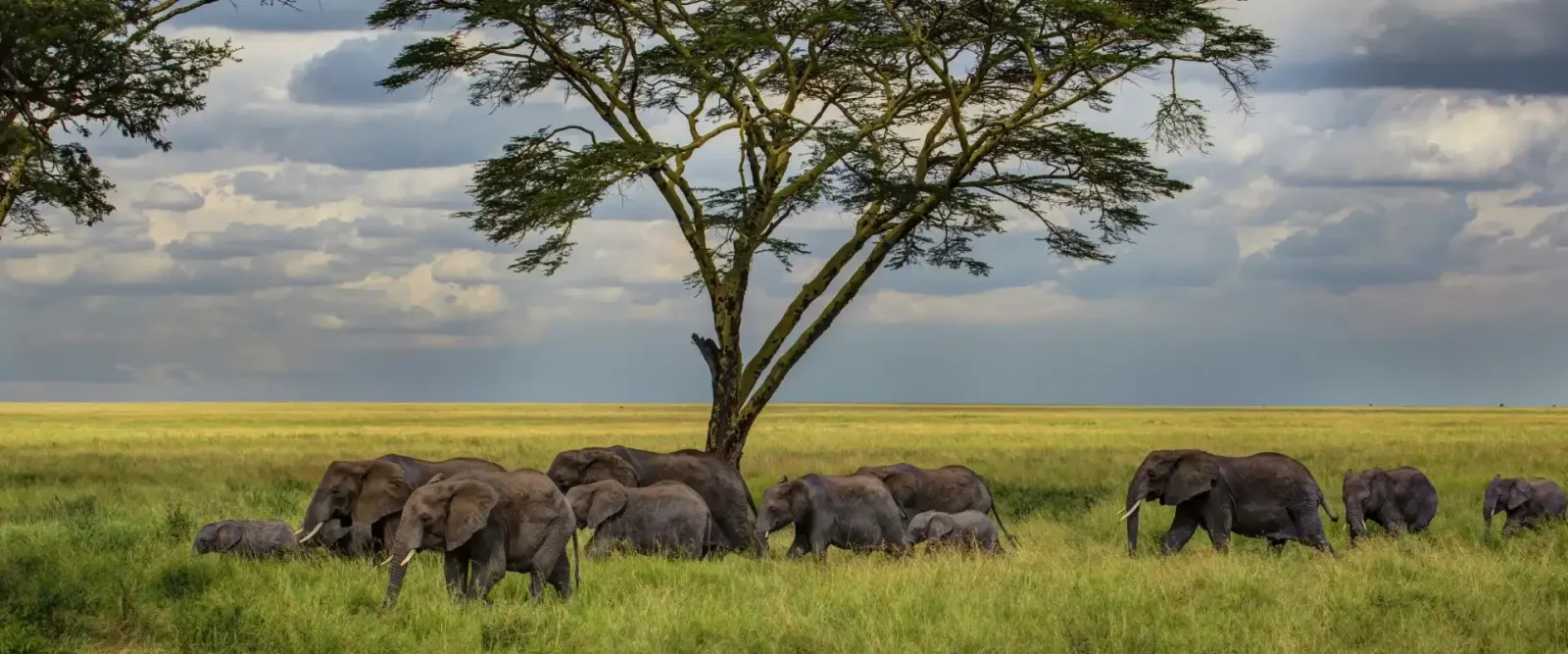
Watch a Tarangire baobab closely in the dry season and you will often see raw, pale gouges running up the trunk to head height and above. That is not disease — it is elephants. In the dry months elephants strip and chew baobab bark and gouge into the soft, moisture-rich trunk wood to get at the water and fibre inside, exactly when the surrounding country has dried to dust. A big bull can do remarkable structural damage, and in heavily browsed areas you will find trees hollowed, scarred, or even toppled.
The relationship is double-edged, and it is a real conservation conversation in Tarangire, where the dry-season elephant concentration is the densest in Tanzania — over 3,000 animals gather along the river from roughly August to October. The same elephants that make Tarangire unmissable are also the baobabs' main agent of damage. The trees are extraordinarily resilient: a baobab can regrow stripped bark and survive being half-eaten in a way no normal tree could. But the oldest giants are not replaceable on any human timescale, which is why guides will point out a freshly gouged thousand-year-old tree with a mix of awe and unease. It is one of the quiet dramas of the park — the country's biggest animal and one of its oldest living things, locked together over water.
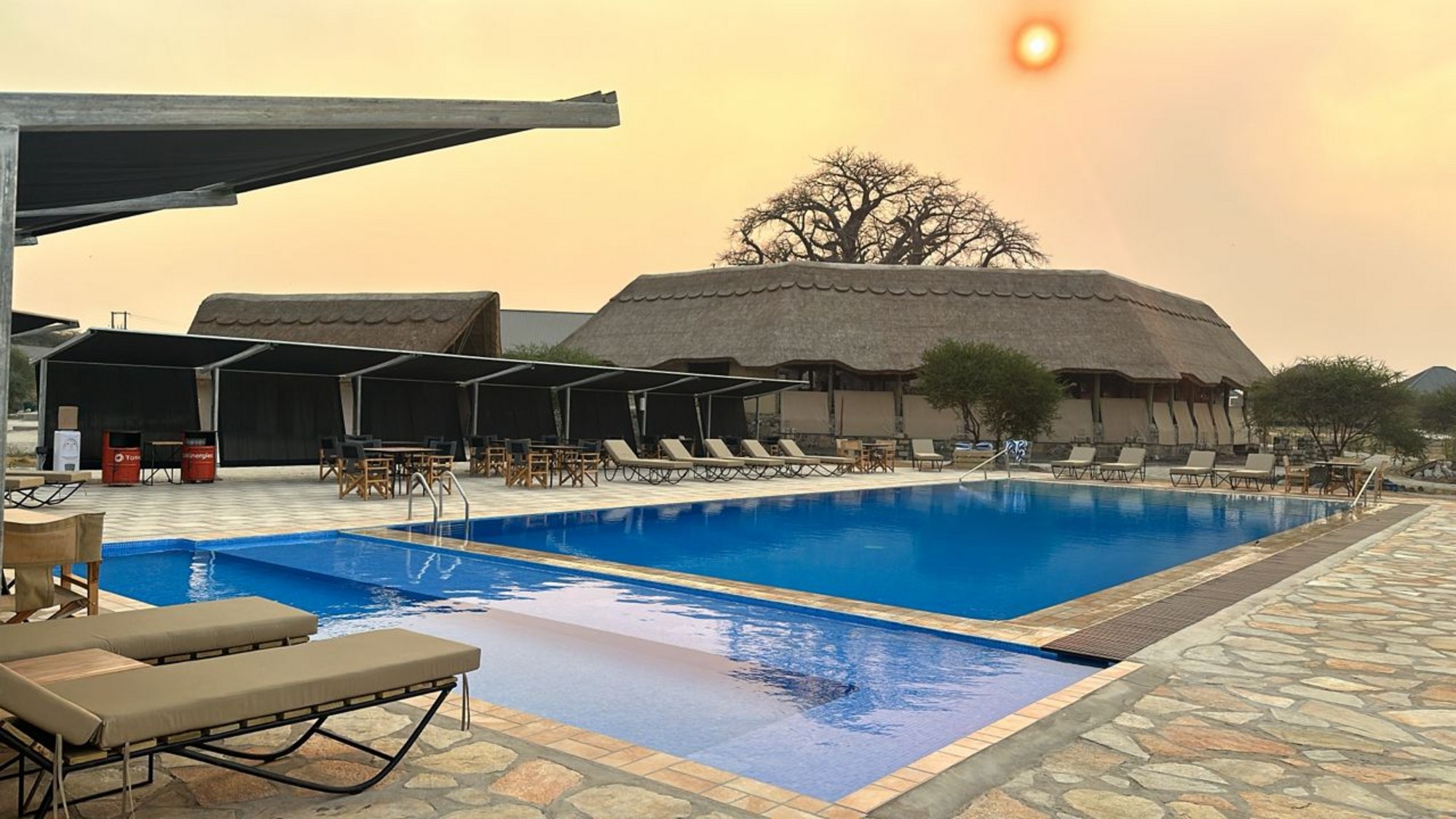 Luxury
Lake Burunge Baobab Tented Lodge
Luxury · Tarangire National Park
The tree of life: what the baobab gives people#
Across Africa the baobab is called the "tree of life," and in Tanzania that is not poetry — it is a near-complete pantry and pharmacy. Almost every part is used, and a good guide will hand you a piece of one of them on a drive.
The fruit is the headline. Inside a hard, velvety, gourd-like pod is a chalky white pulp that is naturally dry and tangy — extremely high in vitamin C, and now exported worldwide as a "superfruit" powder. Locally it is sucked straight, mixed into water for a sherbet-like drink, or pressed into the bright, sweet-sour boiled sweets ("ubuyu") that Tanzanian children buy coloured red and sold all over the coast. The seeds are pressed for oil or roasted. The leaves, when the tree carries them, are cooked as a spinach-like green and used medicinally. The bark fibre is stripped and twisted into rope, baskets, mats and cloth — and because the tree regrows its bark, harvesting it need not kill it. Hollow old trunks have served as shelters, water cisterns, grain stores, and in a few famous cases meeting places.
For the Maasai, Datoga and other peoples of the Tarangire and Rift country, the baobab has long been a landmark, a water source in drought, a source of food, fibre and medicine, and a tree heavy with story and ceremony. When you stand under one, you are standing under something that has fed and watered the people of this landscape for as long as anyone can remember.
Where the biggest baobabs are — and how to plan around them#
If your goal is simply the most baobabs in the most beautiful setting, the answer is the northern section of Tarangire, where the giants line the route between the gate and the Tarangire River and frame the elephant herds below them. For a deeper, quieter baobab experience — and the southern Adansonia country of hot, remote hills — the wilderness park of Ruaha in the south is the connoisseur's choice, though it is a fly-in trip on its own circuit and most of its camps close from December through April.
A few honest planning notes a guide would give you:
Photograph baobabs at the edges of the day. The trunks glow at golden hour and the bare crowns make their best silhouettes against a low sun. Midday flattens them.
The dry season is the baobab season — and the wildlife season. From June to October the country is brown, the trees are bare and sculptural, and the elephants are packed along the river. The wet season (roughly November to May) greens everything and is the only time you will see the tree in leaf and flower, but the giant herds disperse.
Give Tarangire its own night or two. Tarangire is too often reduced to a half-day stop on the way to the Serengeti. A single night inside the park lets you do a dawn and a dusk drive among the trees instead of passing through at noon. The deep-Tarangire trip below builds the whole stay around exactly that.
 Itinerary
4-Day Tarangire Deep Safari (3 Nights Inside Park)
4 days · From $1,060 pp
If you would rather explore the wider baobab and southern-wilderness country — Ruaha and the off-circuit parks where the trees grow thickest and the crowds thin out — start here:
See off-the-beaten-path safarisFrequently asked questions#
Where is the best place to see baobab trees in Tanzania? Tarangire National Park, about 2 to 2.5 hours from Arusha, has the densest and most photogenic stand of baobabs in the country — hundreds of giant trees across the valley floor among the largest dry-season elephant herds in Tanzania. The southern wilderness park of Ruaha is the runner-up and is also studded with baobabs.
Why does the Serengeti have no baobabs while Tarangire is full of them? Baobabs need hot, low, semi-arid country, generally below about 1,200 metres on free-draining soil. Tarangire sits in a low, hot basin that suits them perfectly. The Serengeti is high, cool grassland, mostly above 1,500 metres, with regular grass fires young baobabs cannot survive, so it has acacias instead.
How old do baobab trees get? Baobabs are among the longest-lived flowering plants on Earth. Radiocarbon dating of the largest African specimens has returned ages well over 1,000 years, with a few estimated beyond 2,000. The biggest trees in Tarangire are plausibly more than a thousand years old. You cannot age a baobab by counting rings because its soft, fibrous wood does not form them like a normal tree.
Why is the baobab called the upside-down tree? For most of the year it stands leafless, and its bare, tangled crown looks like a root system pointing at the sky. A San legend says God uprooted the tree and replanted it head-first. In reality it sheds its leaves to conserve water through the long dry season and only carries them for a few weeks around the rains.
Do baobabs really store water in their trunks? Yes. The trunk is soft, spongy, fibrous tissue rather than dense hardwood, and a large tree can hold tens of thousands of litres. The trunk swells in the wet season and shrinks through the dry months as the tree draws the reserve down, which is also why elephants gouge into it for moisture in the dry season.
Why do elephants damage baobab trees? In the dry season elephants strip the bark and gouge into the soft, water-rich trunk to reach moisture and fibre when other food and water are scarce. This causes real structural damage and is an active conservation concern in Tarangire, where over 3,000 elephants concentrate from roughly August to October. Baobabs are unusually resilient and can regrow stripped bark, but the oldest giants are irreplaceable.
When do baobab flowers bloom, and what pollinates them? The large white flowers open in the evening, last only about a day, and are pollinated mainly by fruit bats working the canopy after dark, with help from hawkmoths and bushbabies in places. They appear in the wet season, roughly November to March, so the only way to see them is to be at a camp near flowering trees and look up after dinner.
Is the baobab fruit edible? Yes. The dry, tangy white pulp inside the hard pod is very high in vitamin C and is eaten straight, mixed into a drink, or made into the coloured boiled sweets sold across coastal Tanzania. The seeds are pressed for oil, the leaves are cooked as a green when the tree carries them, and the bark fibre is used for rope and baskets — which is why it is called the tree of life.
Ready to plan the real thing?
Compare honest, all-in safari packages with real lodge choices — straight to the local operator, no middleman.
Browse safari packagesKeep reading
destinations
The Landscapes That Power the Serengeti Migration
wildlife
The Big Five in the Serengeti: Four You’ll Find, One You’ll Earn
wildlife
Hyenas in Tanzania: Spotted, Striped and Wildly Misunderstood
wildlife
Black Rhino in Tanzania: Finding the Rarest of the Five
planning
What a Tanzania Safari Really Costs, Line by Line
planning
Lodge, Tented Camp or Mobile? Safari Stays in Tanzania, Explained