
NoMiddleManTours
Cross-Border Safaris: Tanzania + Kenya

Cross-Border Safaris: Tanzania + Kenya

The Serengeti and the Masai Mara share one ecosystem — only a border separates them. These 14 itineraries cross that line, pairing Tanzania's northern circuit with Kenya's Mara conservancies in routes that run point-to-point with no road driven twice.

25 tripsFrom $1,686 pp6–20 days
Browse all trips

Cross-border safaris work best as one-way arcs. Start in Nairobi or Arusha, move through the parks in geographic sequence, finish at the other end — no doubling back, no wasted transfer days. The two main Tanzania–Kenya crossings used by these itineraries are Namanga (road, central) and Isebania (road, western approach via Serengeti). A fly-in connection between the Serengeti and the Masai Mara is also available, covering the border in under an hour.

What a cross-border route adds#

The Mara permits two things Tanzania's parks don't: night drives and off-road driving in private conservancies. Add Ngorongoro Crater descents and Tarangire elephant herds, and a cross-border itinerary covers more habitat variety than any single-country route. The tradeoff: two sets of park fees, a border crossing, and either an overland leg or a bush flight between countries.

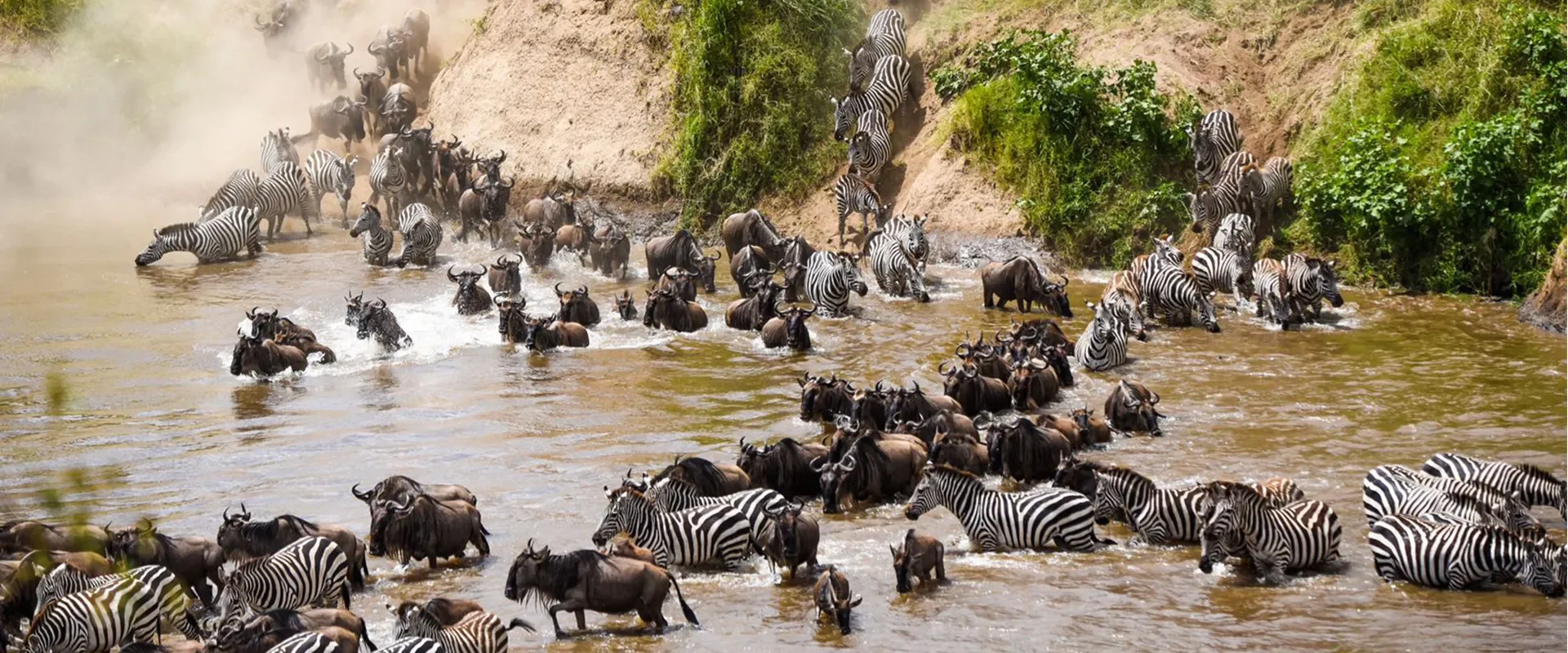
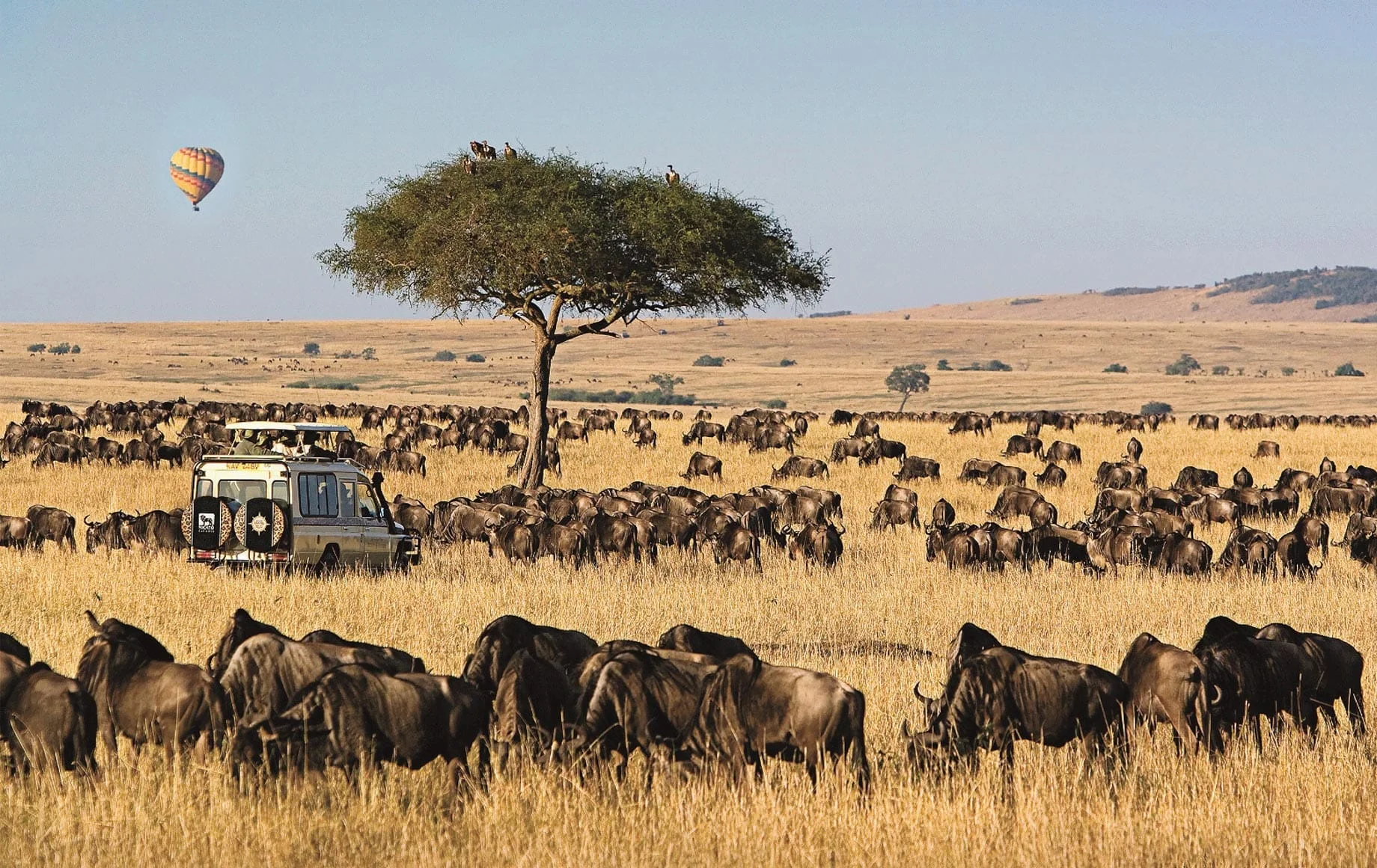
For the Great Migration, crossing the border is often the point. The wildebeest move north from Tanzania into the Mara between July and October, crossing the Mara River both ways. Following this arc tracks actual animal movement rather than waiting in one spot. See migration crossing safaris for itineraries built around those river crossings, or fly-in safaris if you want to bridge the two countries by bush plane rather than road.
25 itineraries · matching your filters · direct operator pricing

Gran Expedición de 20 Días por Kenya y Tanzania
SafariMixto (carretera + vuelo)Circuito Norte

Gran Expedición de 20 Días por Kenya y Tanzania

20 days / 19 nightsFácilmoderate pace

Doce parques en dos países en veinte días: la expedición Kenya-Tanzania más completa que existe. La ruta comienza donde ningún otro itinerario transfronterizo lo hace: en el Parque Nacional Meru, en el norte de Kenya, la naturaleza salvaje de Born Free donde Joy Adamson liberó a la leona Elsa, luego sube hacia Samburu en busca de las Cinco Especiales que no se encuentran en ningún otro punto del circuito de safari estándar, y entra en Ol Pejeta para estar junto a los dos últimos rinocerontes blancos del norte que quedan en el planeta. Le siguen los lagos del Valle del Rift: Nakuru para ambas especies de rinoceronte, Naivasha para el único safari a pie sin vallas de toda la ruta. Dos noches en el Masai Mara aportan la libertad de rastreo de depredadores propia del sistema de conservancies de Kenya. Después, un vuelo en avioneta cruza la frontera hasta Arusha, y se despliega el circuito norte de Tanzania: dos noches en el Serengeti central, un día dedicado por completo al Cráter de Ngorongoro y las manadas de elefantes del bosque seco de Tarangire. La ruta vuelve a cruzar a Kenya por Namanga hacia Amboseli, bajo el Kilimanjaro, atraviesa las dos mitades de la naturaleza salvaje de Tsavo y termina en el Océano Índico, en Mombasa. La ruta de tipo open-jaw —llegada a Nairobi, salida desde Mombasa— hace que cada kilómetro avance hacia delante. Sin retrocesos. Sin cruces repetidos. Doce ecosistemas distintos vividos en el orden que la geografía dispuso.

Meru National Park (Kenya)Samburu National Reserve (Kenya)Ol Pejeta Conservancy (Kenya)Lake Nakuru National Park (Kenya)+8 more

Frequently asked questions

Do I need a separate visa for both Tanzania and Kenya?
Yes. Most nationalities need a Tanzania visa and a Kenya ETA separately. Some nationalities qualify for the East Africa Tourist Visa covering both — check embassy sites before booking.
How long should a cross-border safari be?
A minimum of 8 days gives enough nights in each country to justify the border logistics. 10–14 days allows more nights per park and a beach extension if wanted.
Is the Nairobi-to-Arusha overland crossing practical, or should I fly?
The Namanga crossing is a 4–5 hour road transfer and is commonly used. Flying Nairobi to Kilimanjaro (under 1 hour) is faster and avoids the border queue, but costs more.
When is the best time of year for a Tanzania–Kenya cross-border safari?
July to October suits the Mara River crossings. December to March is calving season in southern Serengeti. Both seasons give excellent game viewing; the border crossing itself is viable year-round.
Can I do a cross-border safari as a loop, returning to the same city?
Yes — several 10-day and 13-day circle itineraries start and end in Nairobi, using the Isebania border crossing to enter Tanzania and the Namanga crossing to exit.