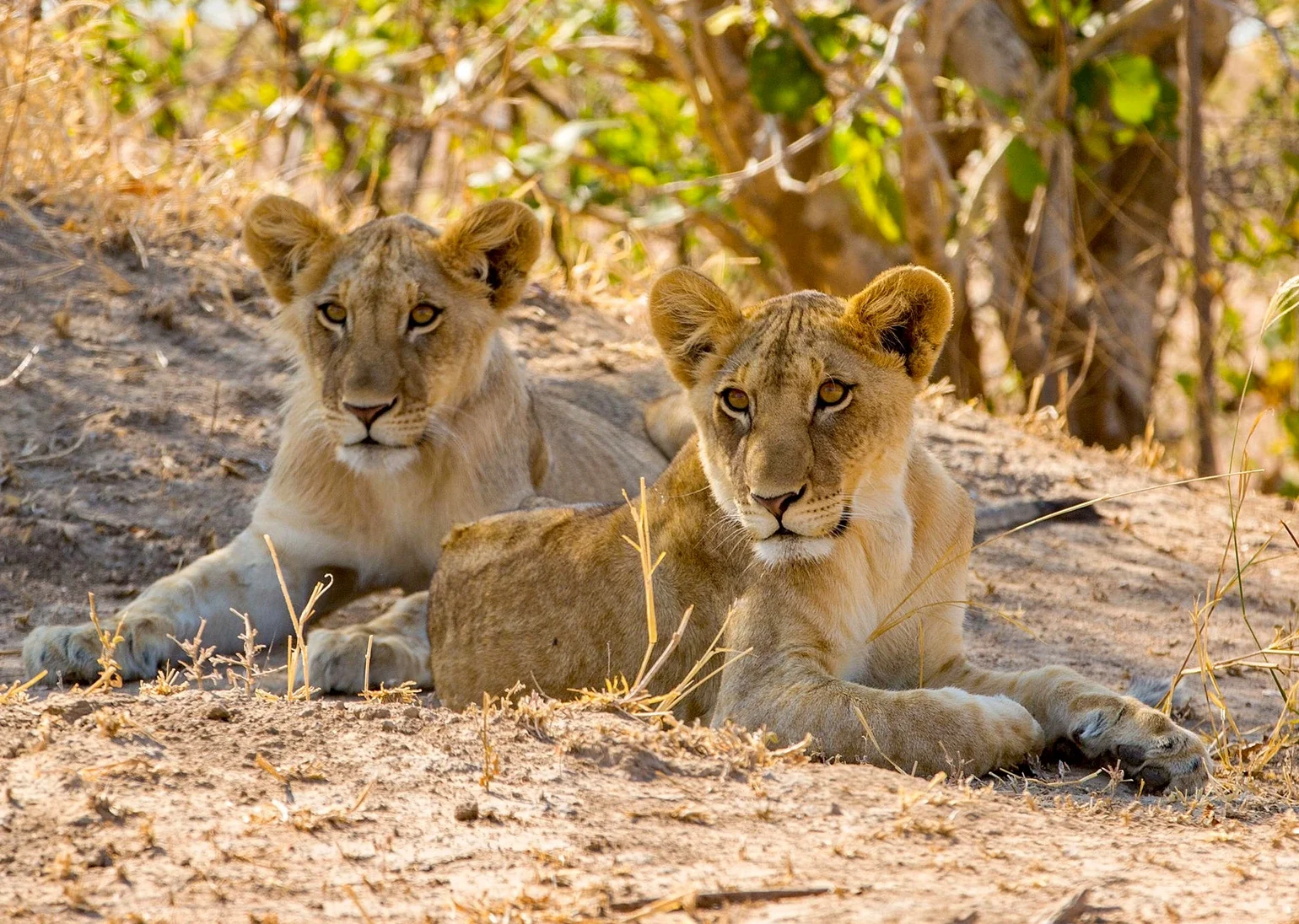
Tanzania is Africa's premier safari destination, drawing more than 90% of its visitors to the northern circuit — a sequence of parks that runs from the elephant country of Tarangire through the volcanic Ngorongoro highlands and into the vast grasslands of the Serengeti. For those with more time or a taste for solitude, the southern parks of Ruaha and Nyerere and the remote western wilderness of Mahale and Katavi offer fly-in alternatives where you may go entire game drives without seeing another vehicle.
The standard northern circuit runs in a single direction: Arusha → Tarangire → Lake Manyara → Karatu/Ngorongoro → Serengeti. Each leg follows a well-maintained road and there are no backtrack days, so the route works efficiently even on tighter schedules.
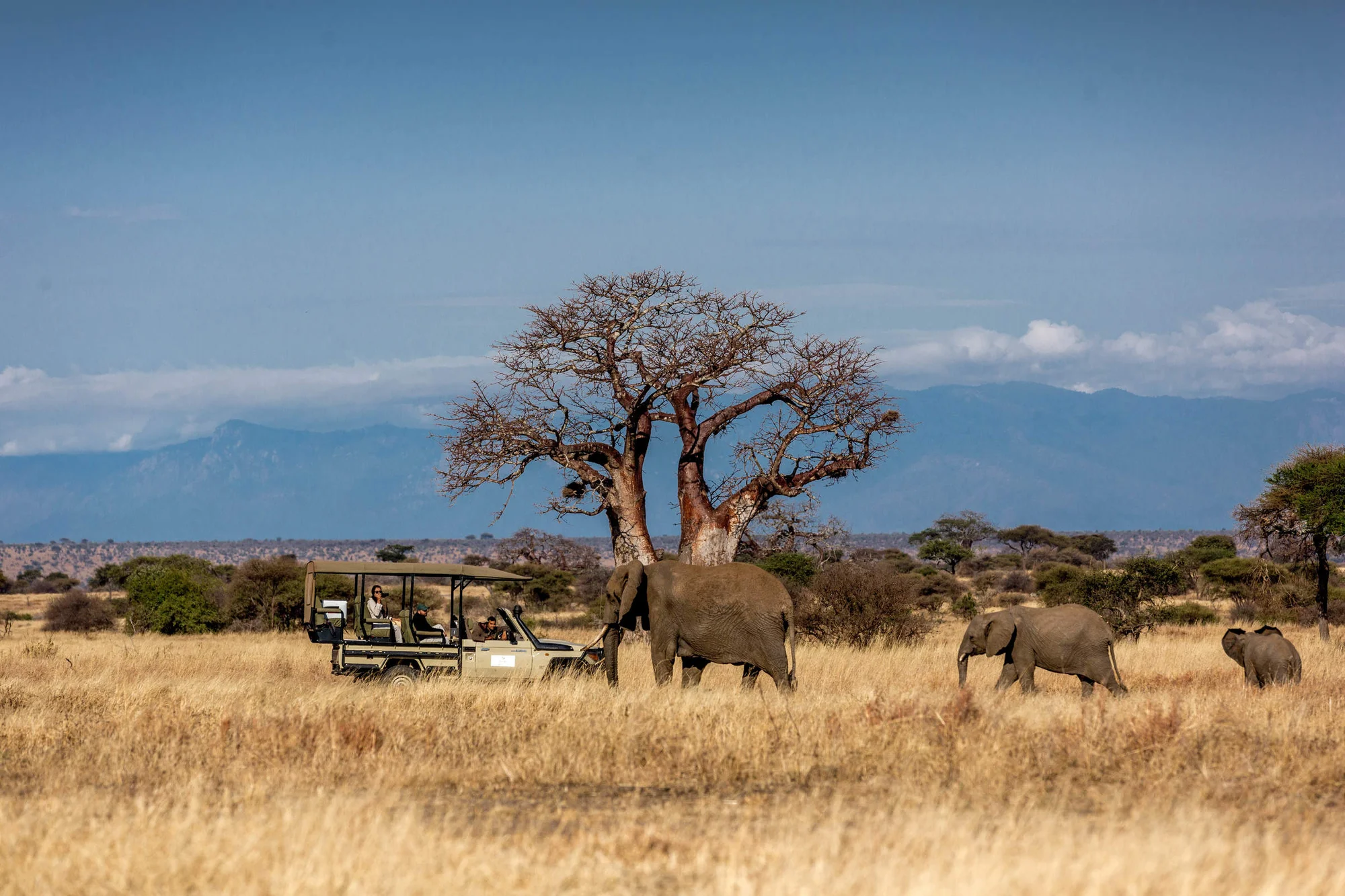
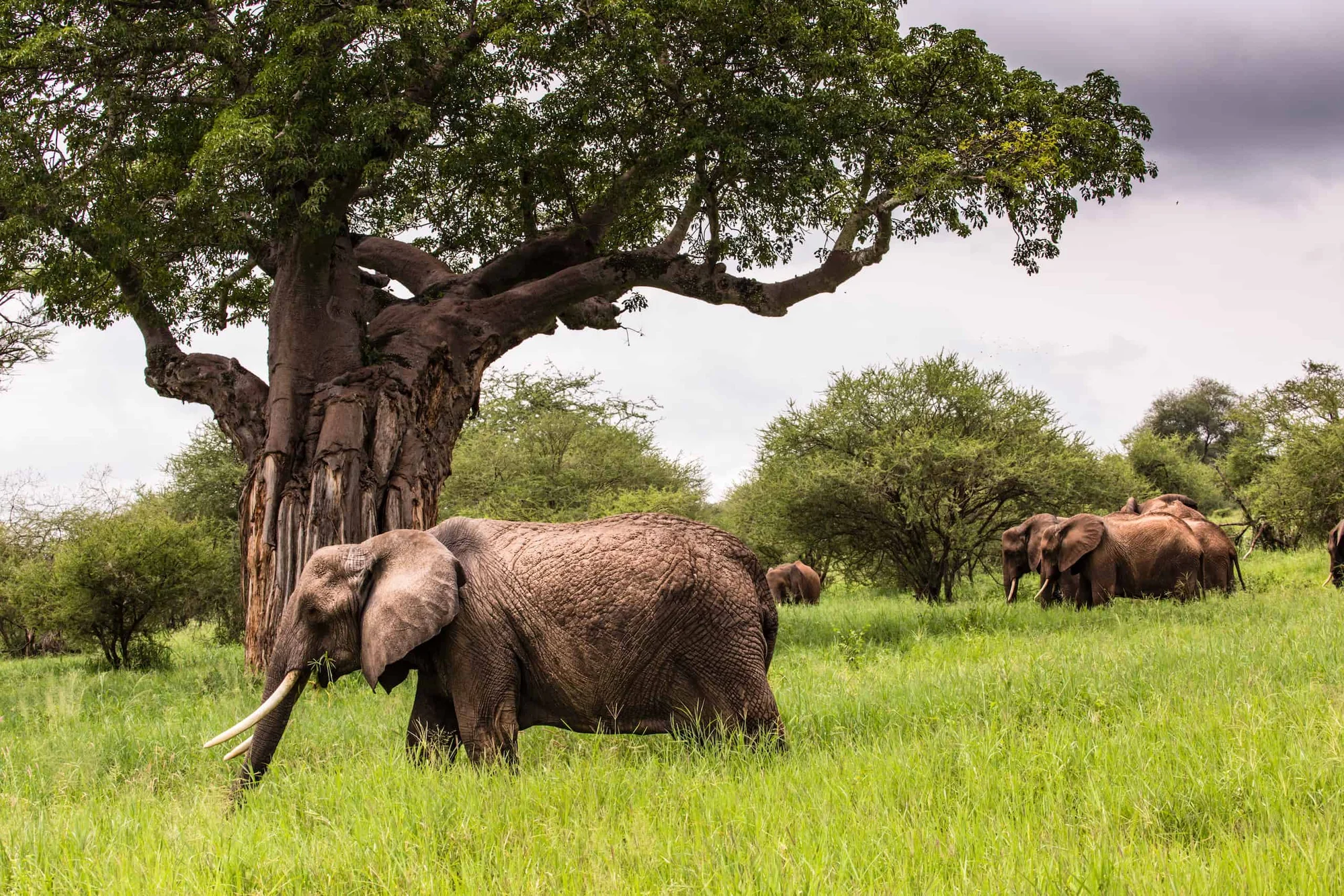
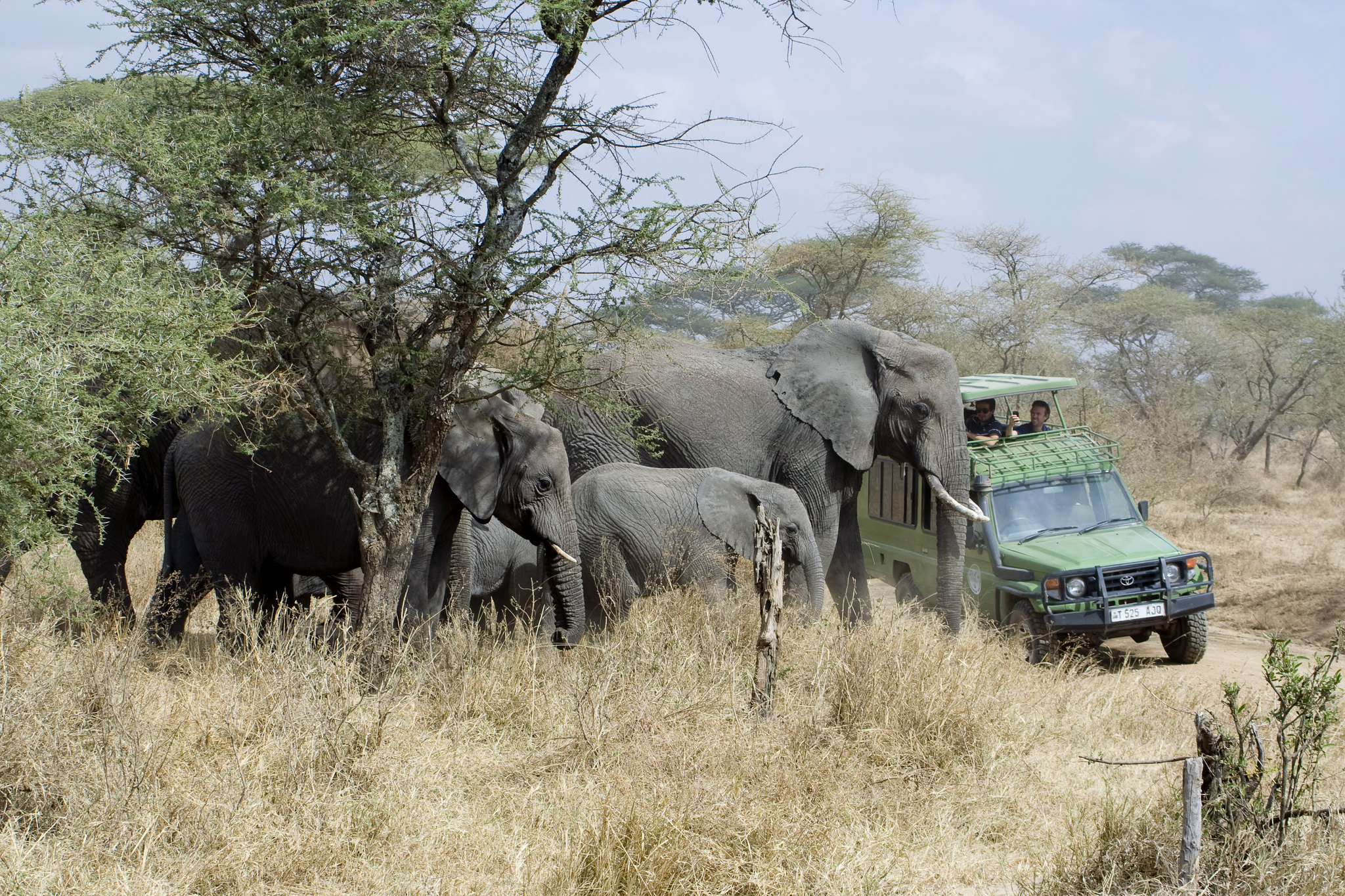
Tarangire National Park (2–2.5 hrs from Arusha): Africa's highest elephant densities in the dry season, ancient baobab forests, and 550+ bird species. Park fee: $59.10/adult/day. Best June–October when the Tarangire River acts as the only water source for miles around and animals converge in thousands.
Lake Manyara National Park (1.5–2 hrs from Tarangire gate): Famous for its tree-climbing lions, groundwater forest, and flamingo-ringed alkaline lake. A half-day here pairs well with a stay in Karatu, 30–45 minutes away. Park fee: $59.10/adult/day.
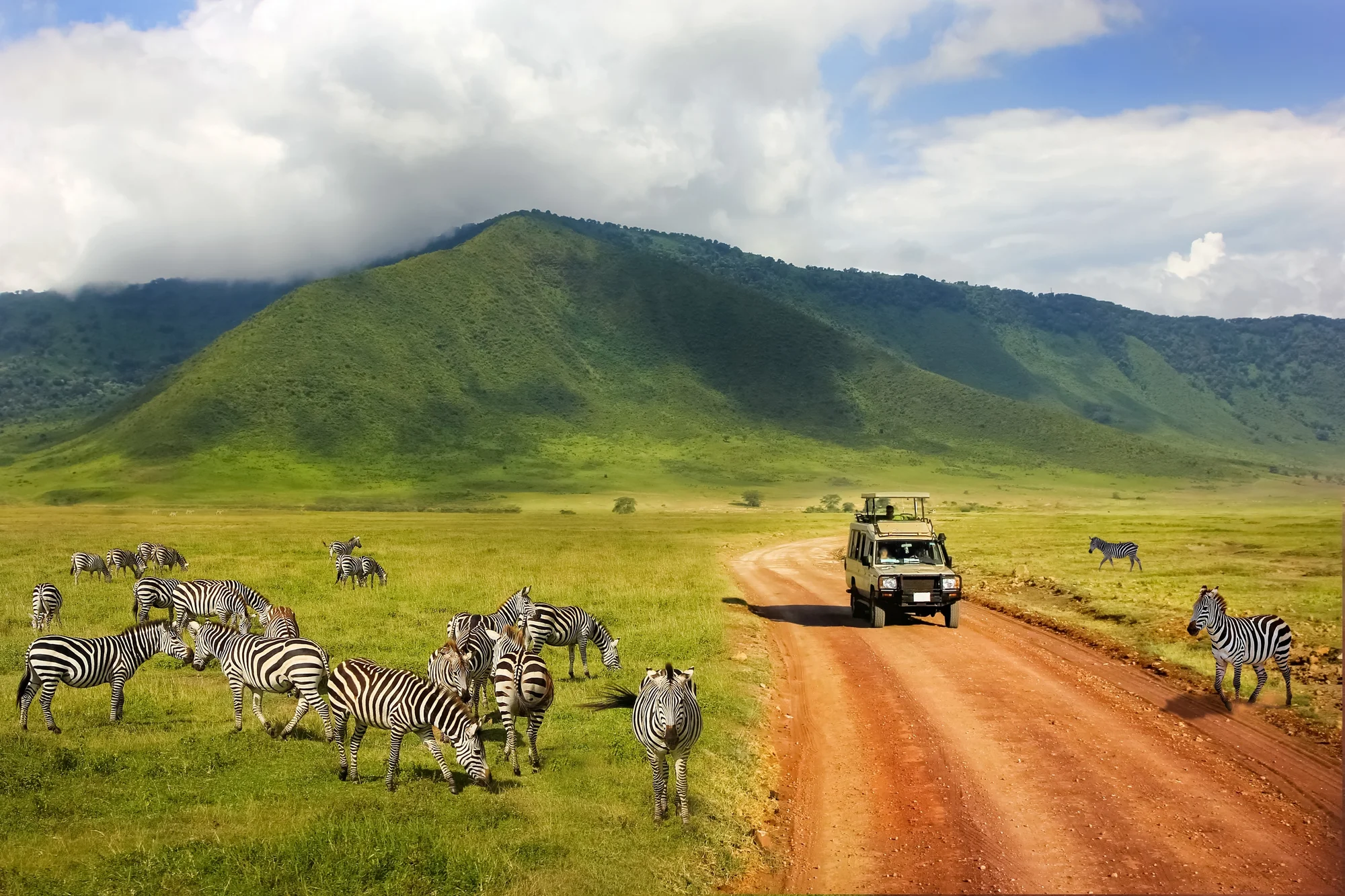
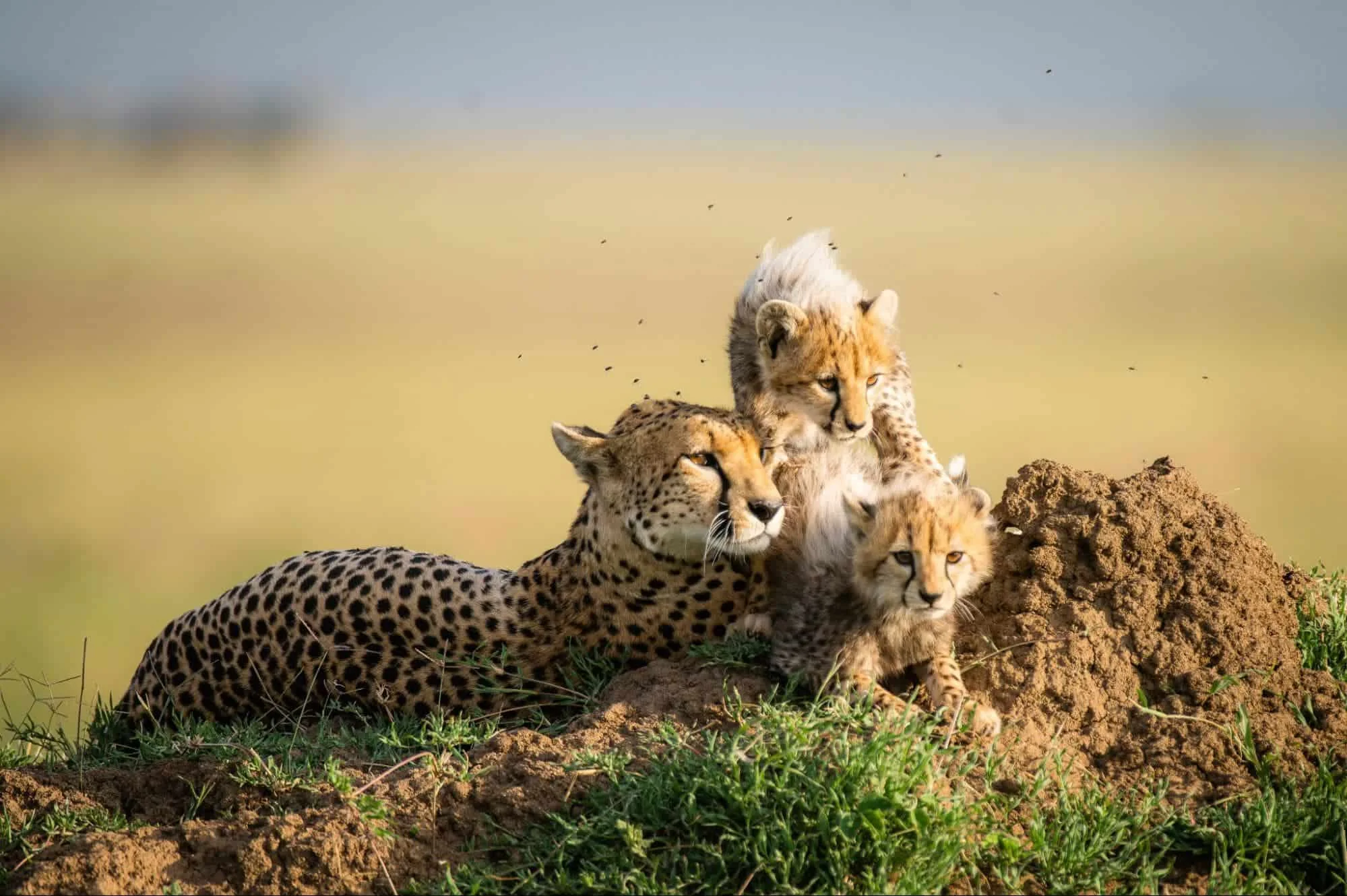
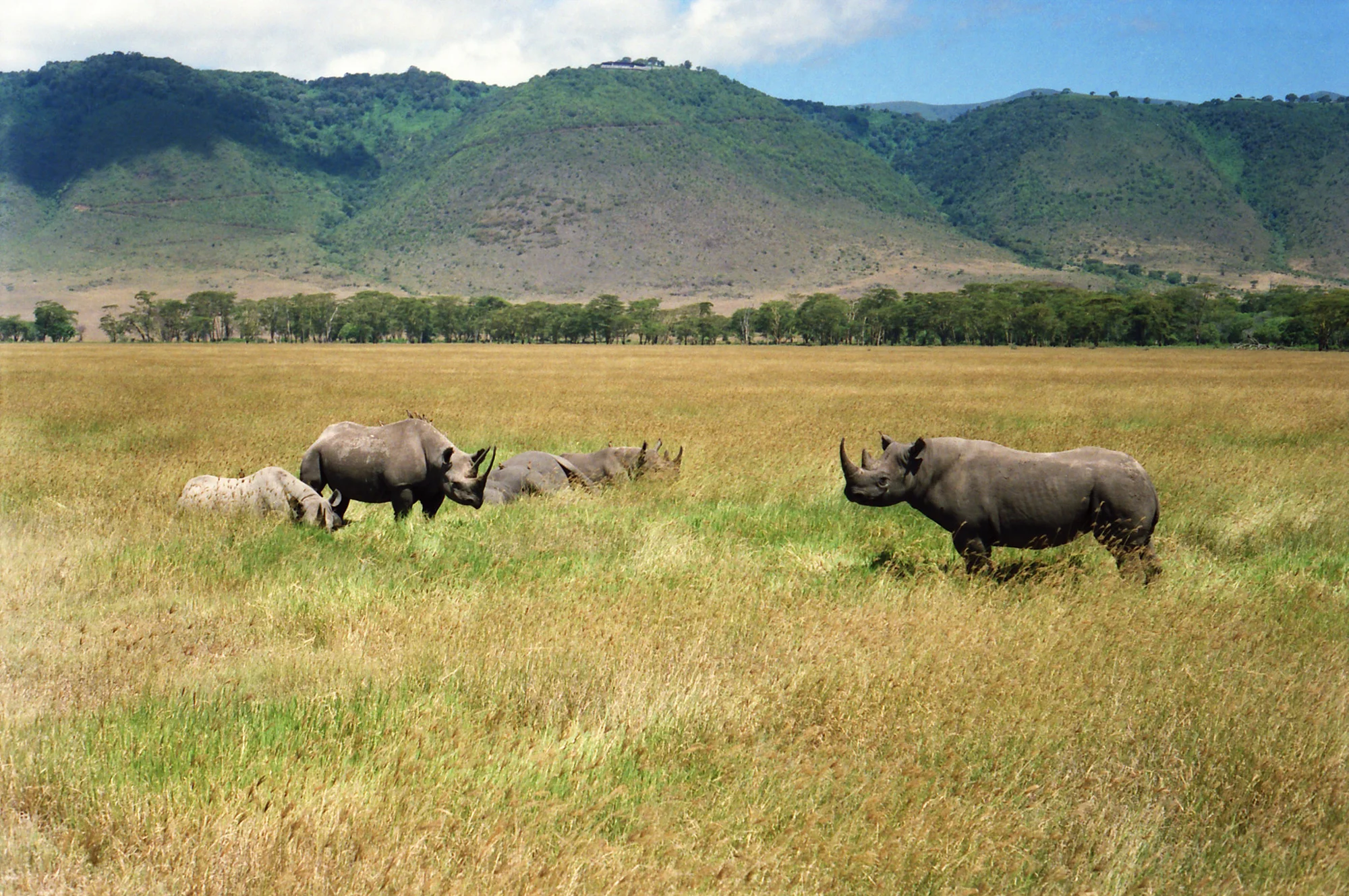
Ngorongoro Conservation Area (20–30 min from Karatu): The crater — 264 sq km on its floor — holds one of Africa's densest wildlife populations: black rhino, lion, elephant, buffalo, and cheetah compressed into a world-heritage caldera. Karatu is the standard overnight base (45 min to the crater rim), though rim lodges are available for those who want the crater at their doorstep. NCA conservation fee: $82.60/adult/day. The crater floor has a strict 6-hour maximum stay per visit.
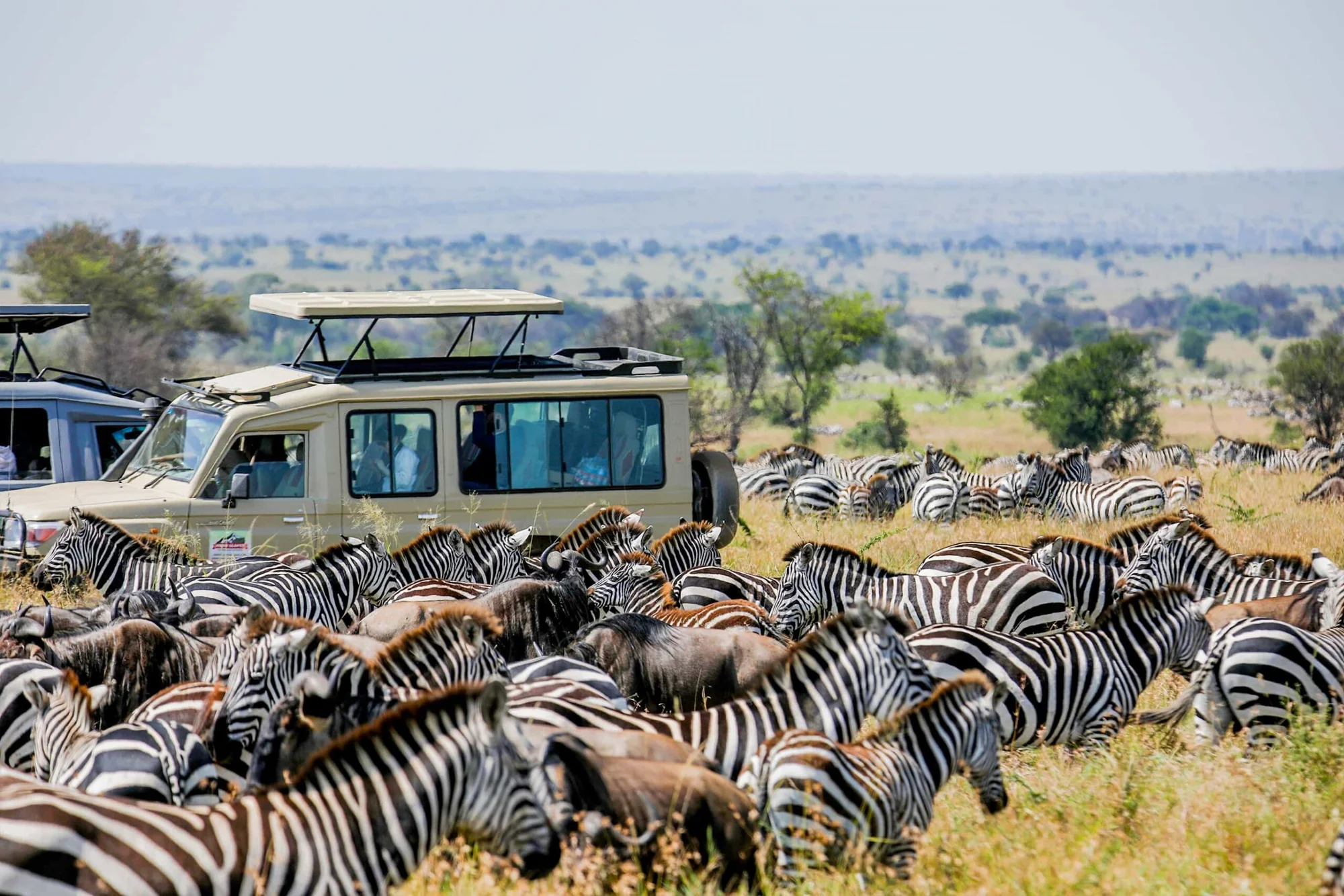
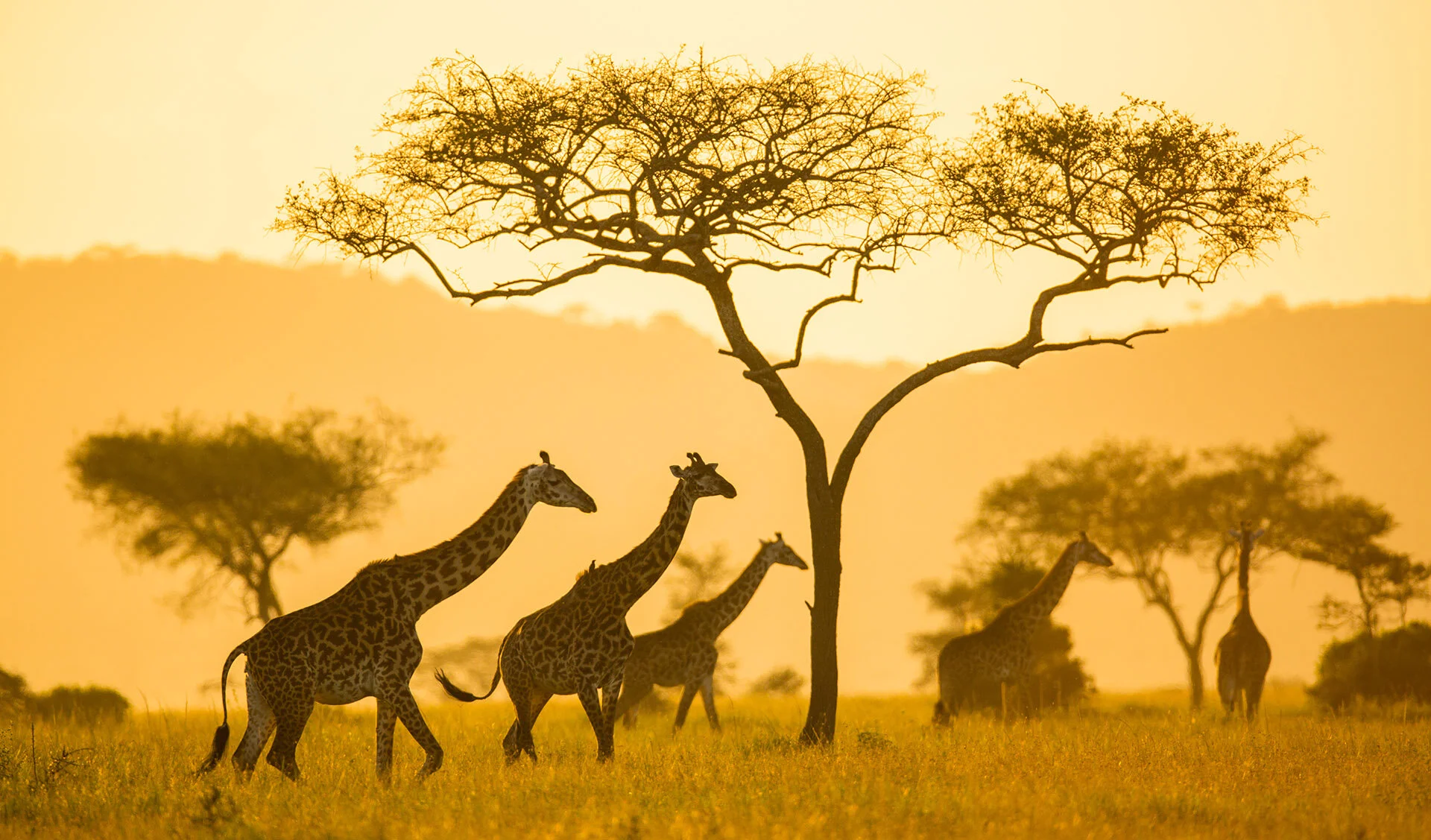
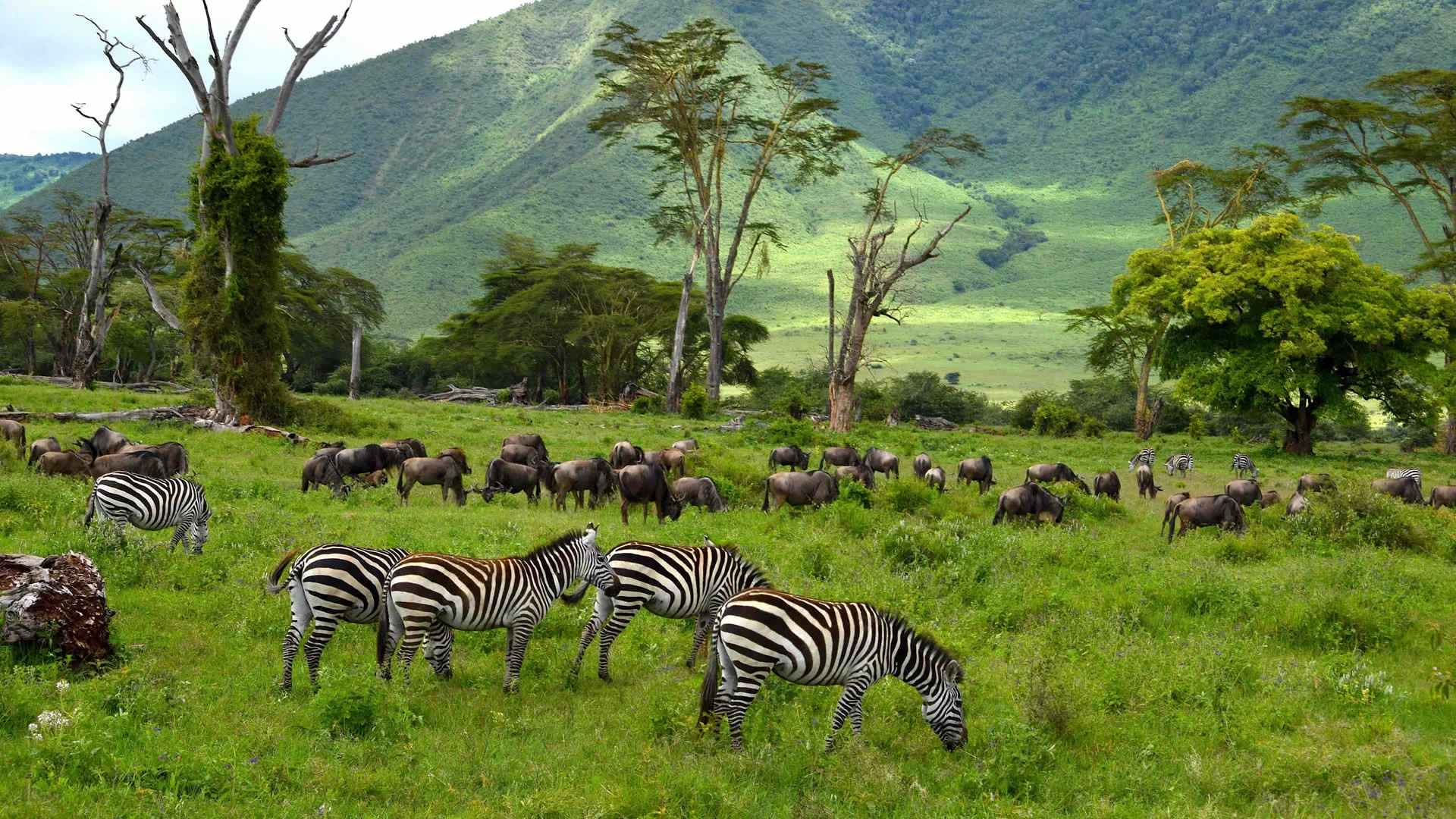
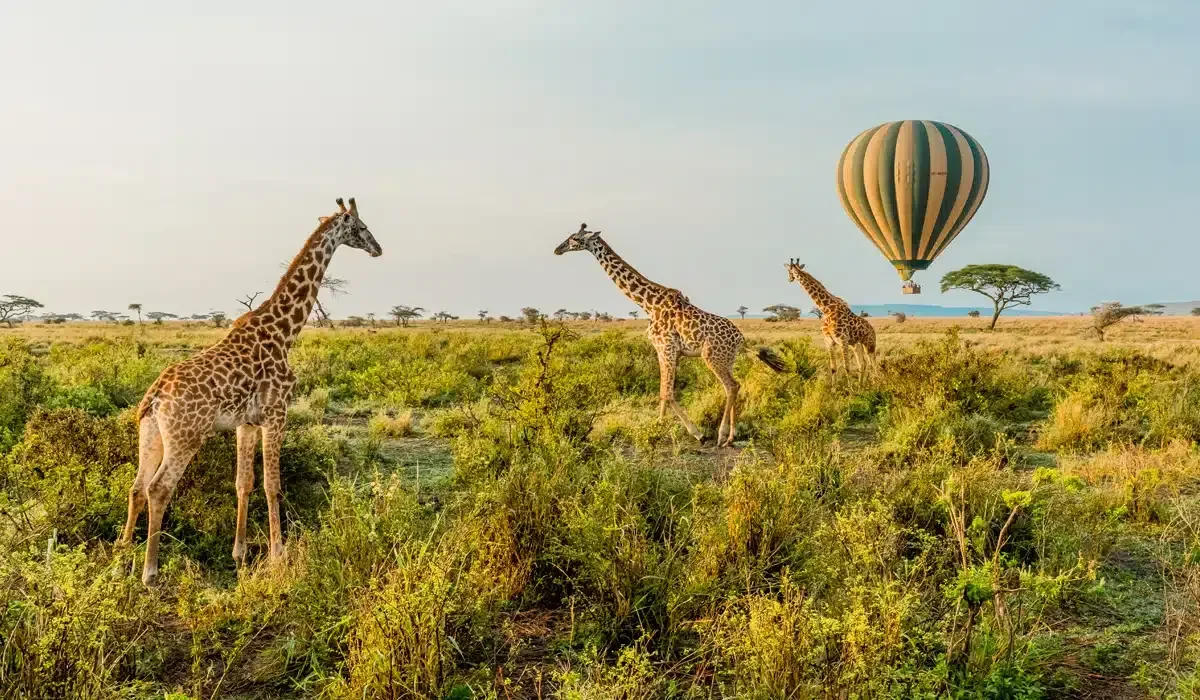
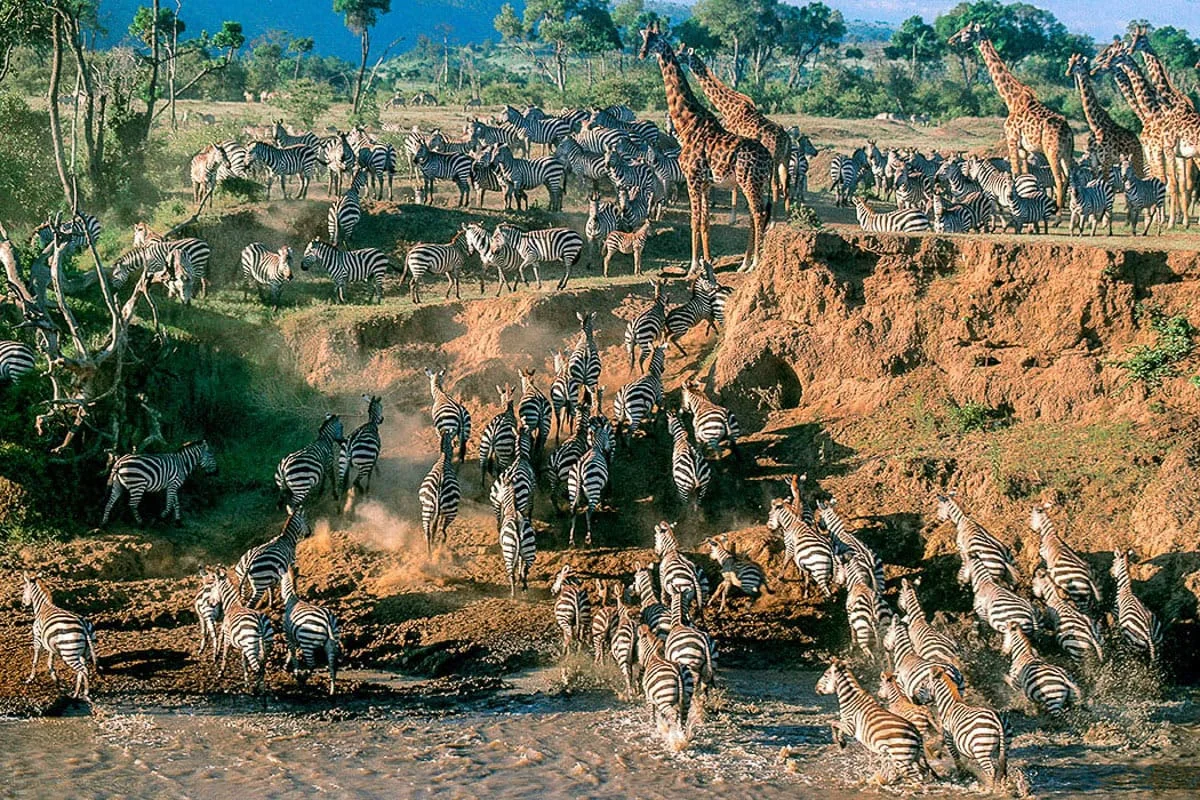
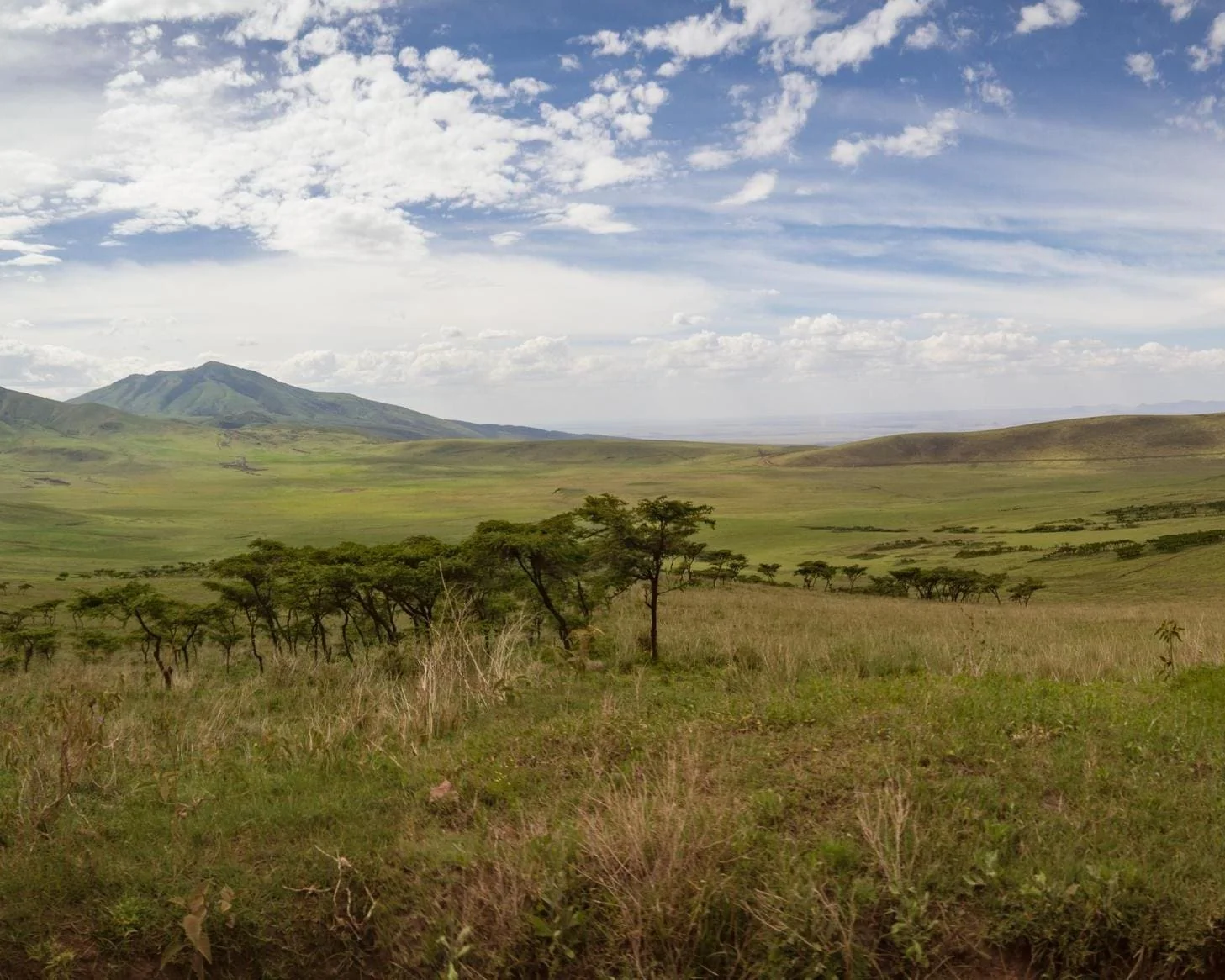
Serengeti National Park (3–4 hrs from Karatu via Ngorongoro): Africa's most iconic savanna. Park fee: $82.60/adult/day. The Serengeti has four distinct areas — central Seronera (year-round predators, the standard base), southern plains/Ndutu (calving December–March), western corridor (Grumeti River crossings in June), and northern Kogatende (Mara River crossings July–October). Which part you visit should depend on your travel dates.
Cross-links: great migration timing · Kilimanjaro climbing · Zanzibar safari and beach combos
Tanzania's southern parks sit in a different league from the north: more remote, with fewer visitors, a longer immersion required, and experiences not possible in the national parks — boat safaris, walking safaris, fly-camping.
Ruaha National Park covers 20,226 sq km, making it Tanzania's largest national park. It holds an estimated 10% of the world's remaining lions, the largest elephant population in East Africa, and is one of very few places where both greater and lesser kudu coexist. The relative quiet is matched by a relative bargain on fees: $35.40/adult/day, less than half the Serengeti rate. Flying from Dar es Salaam takes roughly two hours.
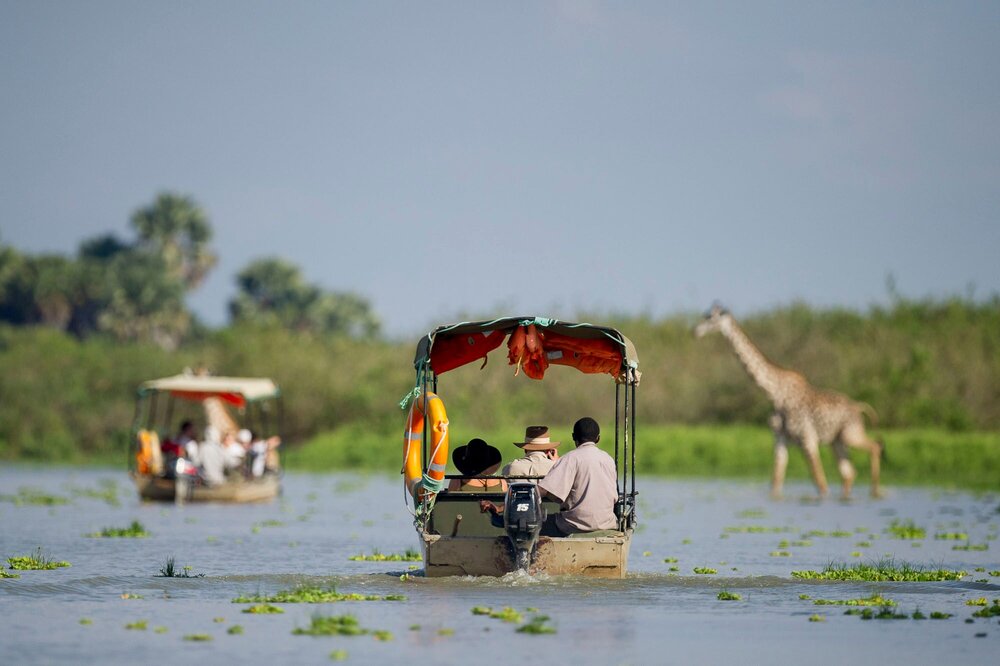
Nyerere National Park (formerly the Selous Game Reserve) is Africa's largest protected area and the only park in Tanzania offering Rufiji River boat safaris — the hippos and crocodiles come to you rather than the other way round. Walking safaris and fly-camping are also permitted. Park fee: $82.60/adult/day. Gateway: Dar es Salaam, 30–45 minutes by air or 4–5 hours by road. Most camps close March–May during the long rains.
For true remote wilderness, the western circuit adds Katavi (vast dry-season hippo and crocodile spectacles, June–October only) and Mahale (chimpanzee trekking on the shore of Lake Tanganyika). Both are fly-in only destinations requiring at minimum three to four nights each.
Cross-links: Tanzania's remote southern parks
| Month | Best area | Notes |
|---|
| Dec–Mar | Southern Serengeti (Ndutu) | Calving season — 500,000 wildebeest born; intense predator action |
| Jun | Western Corridor (Grumeti) | Grumeti River crossings; far fewer vehicles than the north |
| Jul–Oct | Northern Serengeti (Kogatende) | Mara River crossings; peak season — book well ahead |
| Jun–Oct | Tarangire | Dry season: elephant herds at Tarangire River |
| Jun–Oct | Ngorongoro, Ruaha, Nyerere | Peak dry across all parks — reliable game viewing |
| Apr–May | Anywhere | Long rains; most southern camps close; not recommended |
The largest variable is lodge tier. Verified accommodation rack rates for Tanzania mainland (per double room per night, high season, full-board including game drives) run: mid-range $200–$420, luxury $500–$850, and ultra-luxury $900–$4,000. Park fees add to this: Serengeti and Ngorongoro are $82.60/adult/day; Tarangire and Lake Manyara are $59.10/adult/day; Ruaha and Mikumi are $35.40/adult/day.
The prices on this site are per person, direct from the operator — no middleman markup layered on. For comparison between budget and luxury options, see value-tier Tanzania safaris and Tanzania's top luxury lodges.
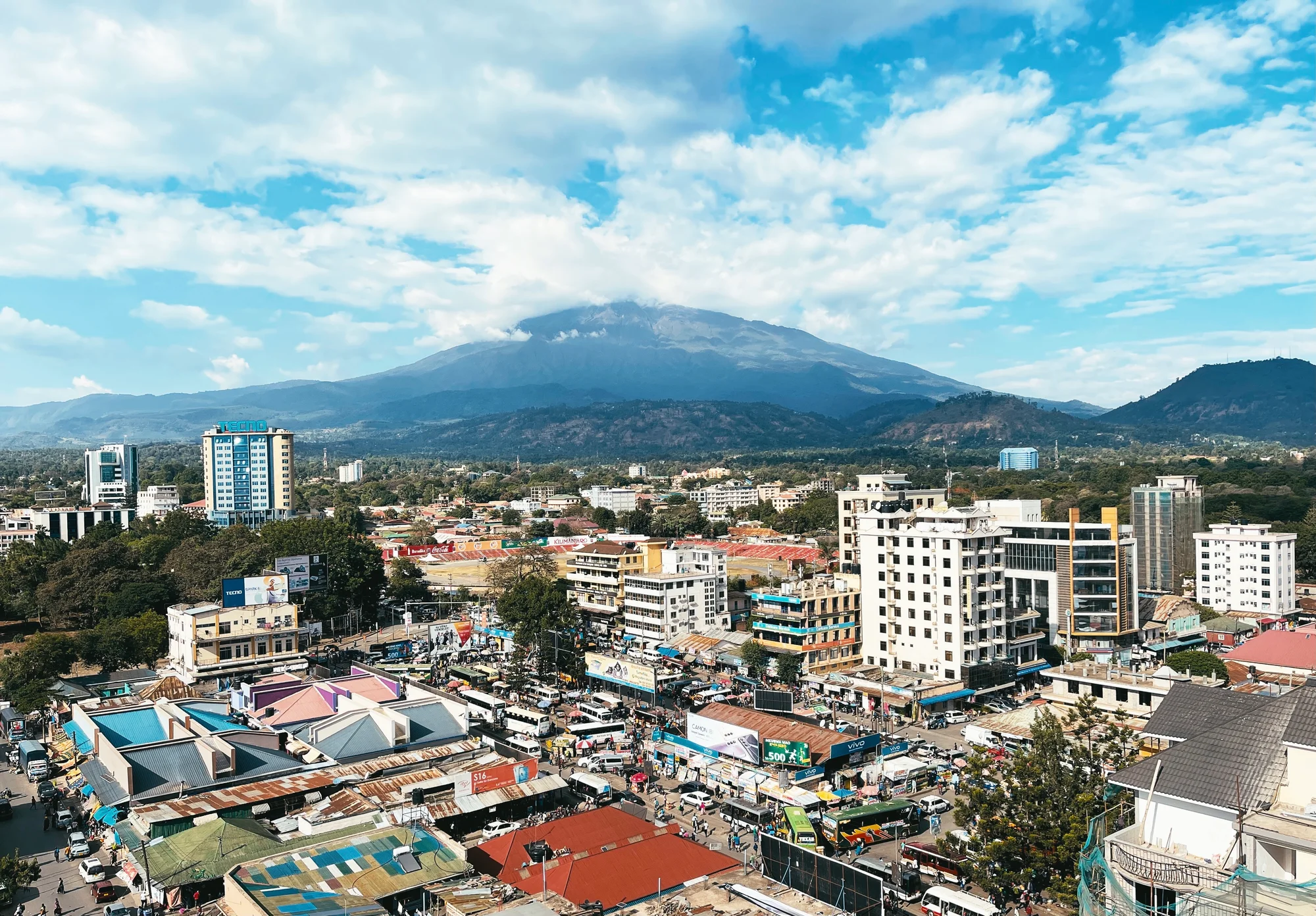
The international gateway for Tanzania's northern circuit is Kilimanjaro International Airport (JRO), about 45 km east of Arusha. Most international visitors fly via Nairobi, Addis Ababa, Dubai or Doha. Arusha is 2–2.5 hours from Tarangire gate. For the southern circuit the gateway is Dar es Salaam Julius Nyerere International Airport (DAR).
Bush flights from Arusha connect to all northern-circuit airstrips: Seronera (central Serengeti) in approximately 1 hour, Ndutu in approximately 1 hour, and Kogatende (northern Serengeti) in approximately 1.5 hours. If you start or finish in Nairobi, see Tanzania safari from Nairobi.
Tanzania for the Great Migration's full arc — three of its four seasonal phases happen on the Tanzanian side of the border, in the Serengeti. Also Tanzania for Kilimanjaro, Zanzibar, and the southern wilderness parks that have no Kenyan equivalent. Kenya for conservancy experiences (night drives, walking safaris, horseback) that are not permitted in Tanzania's national parks, easier access from Nairobi, and northern dry-country specials in Samburu that you won't find in the south. Many itineraries combine both countries. See Kenya safari itineraries.
 Tours
Tours LujoPrivado