 Tours
Tours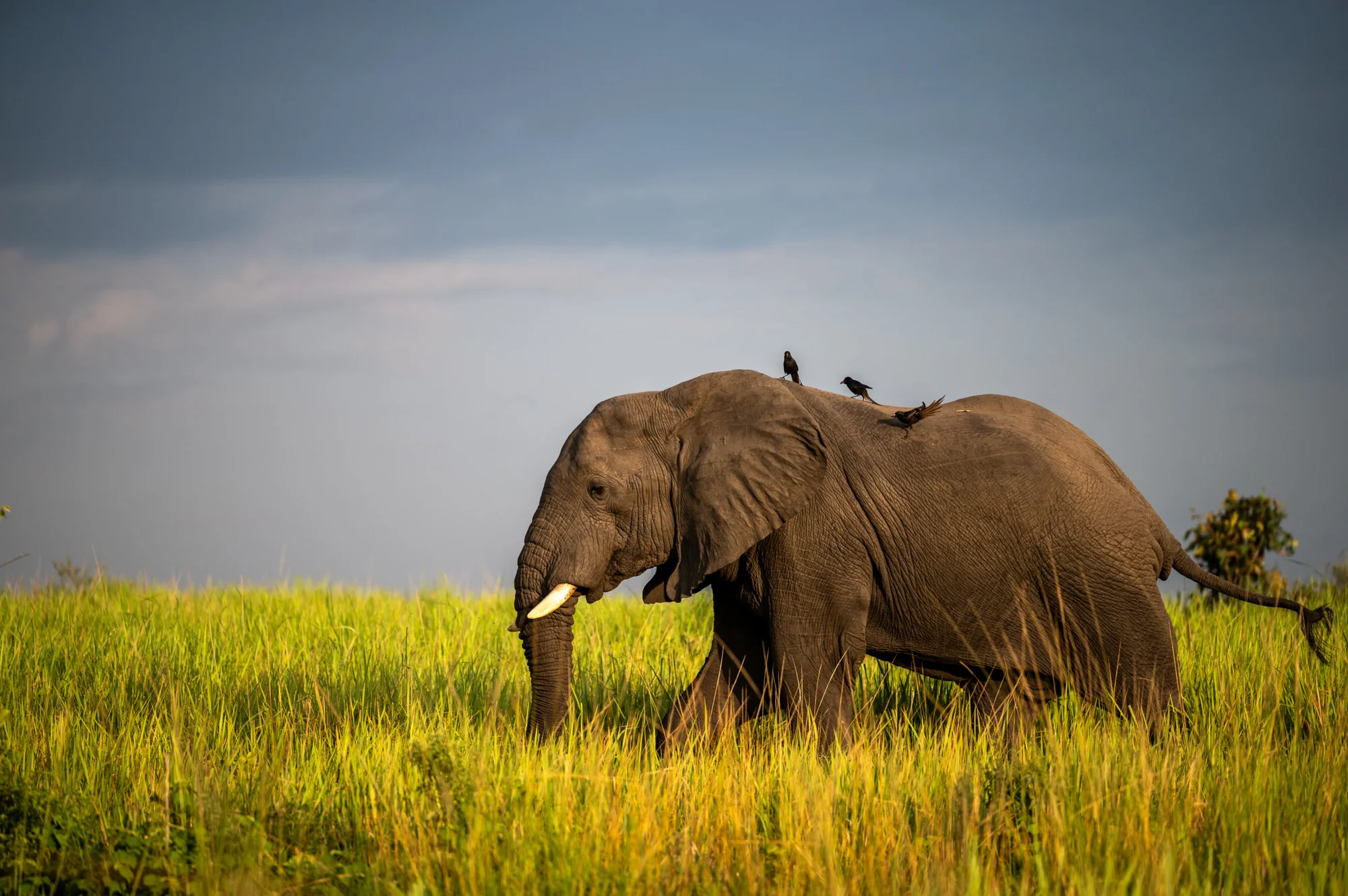
NoMiddleManTours · Jun 22, 2026 · 13 min read
A guide-grade comparison of Tanzania and Kenya across safari, mountain treks and beaches — with the migration truth, real park fees, crowd and cost differences, and a clear verdict on who should pick which.
Here is the honest verdict before the detail: for most first-time travellers, Kenya is the easier, cheaper, faster-to-reach safari — shorter hops from a single hub at Nairobi, lower park fees, more open-sided 4x4s and the option to walk and night-drive in private conservancies. Tanzania is the bigger, wilder one — vaster parks, the Ngorongoro Crater, the highest mountain in Africa, and the Serengeti, which holds the great migration for the majority of the year. The single most repeated myth in safari planning is "go to Kenya for the migration." The migration is one herd, and it spends roughly nine months a year in Tanzania; Kenya's slice is only the river-crossing window of about July to October. This guide settles that, then compares both countries across safari, treks and beaches so you can decide which one — or which combination — fits your trip.
 Destination
Serengeti National Park
national_park
The short answer: Tanzania vs Kenya at a glance#
Both countries border each other and share the same migration ecosystem, so the wildlife is broadly the same — lion, leopard, elephant, buffalo, cheetah, the works. The differences are about scale, access, cost, crowds and what else you can bolt on. Here is the head-to-head before the detail.
| Tanzania | Kenya | |
|---|---|---|
| Safari | Bigger, wilder parks; holds the migration ~9 months; Ngorongoro Crater; lower vehicle density deep in the Serengeti | Pioneered the modern safari; easier game viewing; open-sided 4x4s; walking + night drives in conservancies |
| The migration | Serengeti, most of the year — Ndutu calving Dec–Mar, Grumeti west May–Jul, Kogatende crossings Jul–Oct | Masai Mara, river crossings only ~Aug–Oct (the same herd, same river system) |
| Treks | Kilimanjaro — 5,895m, Africa's highest, an iconic non-technical walk-up | Mount Kenya — Point Lenana 4,985m trekkers' summit; quieter, more alpine, true peaks are technical |
| Beaches | Zanzibar — Stone Town culture + reefs; Pemba and Mafia for diving | Diani, Lamu, Watamu — white sand, Swahili heritage, marine parks |
| Cost | Higher park fees (US$82.60/day Serengeti & Ngorongoro); pricier internal flights | Lower park fees (US$80/day Masai Mara); cheaper to reach; shorter transfers |
| Crowds | Quieter in the deep/northern Serengeti; crater rim is busy | Busier in the central Mara reserve; conservancies are exclusive and uncrowded |
| Best months | Jun–Oct dry season; calving Dec–Mar; long rains Apr–May | Jul–Oct (migration + dry); Jan–Feb dry; long rains Apr–May |
| Easier to reach | Kilimanjaro Airport (JRO) near Arusha; more connections add a hop | Nairobi (JKIA) is the regional hub with the most direct flights |
| Pick it if | You want the migration most months, the crater, Kili, Zanzibar, big wilderness | You want a faster, cheaper trip, conservancy walking/night drives, the famous crossings |
The genuinely useful takeaway: if your dream image is the wildebeest pouring across a river, both countries deliver the same event — Kenya in roughly August–October, Tanzania at the northern Kogatende crossings in the same months, and Tanzania also delivers calving, the western corridor and the rest of the year. If your priority is an easy, well-paced first safari without long drives, Kenya usually wins. We run trips in both countries, so the rest of this is written to help you choose, not to sell you one flag.
Safari: bigger and wilder vs easier and cheaper#
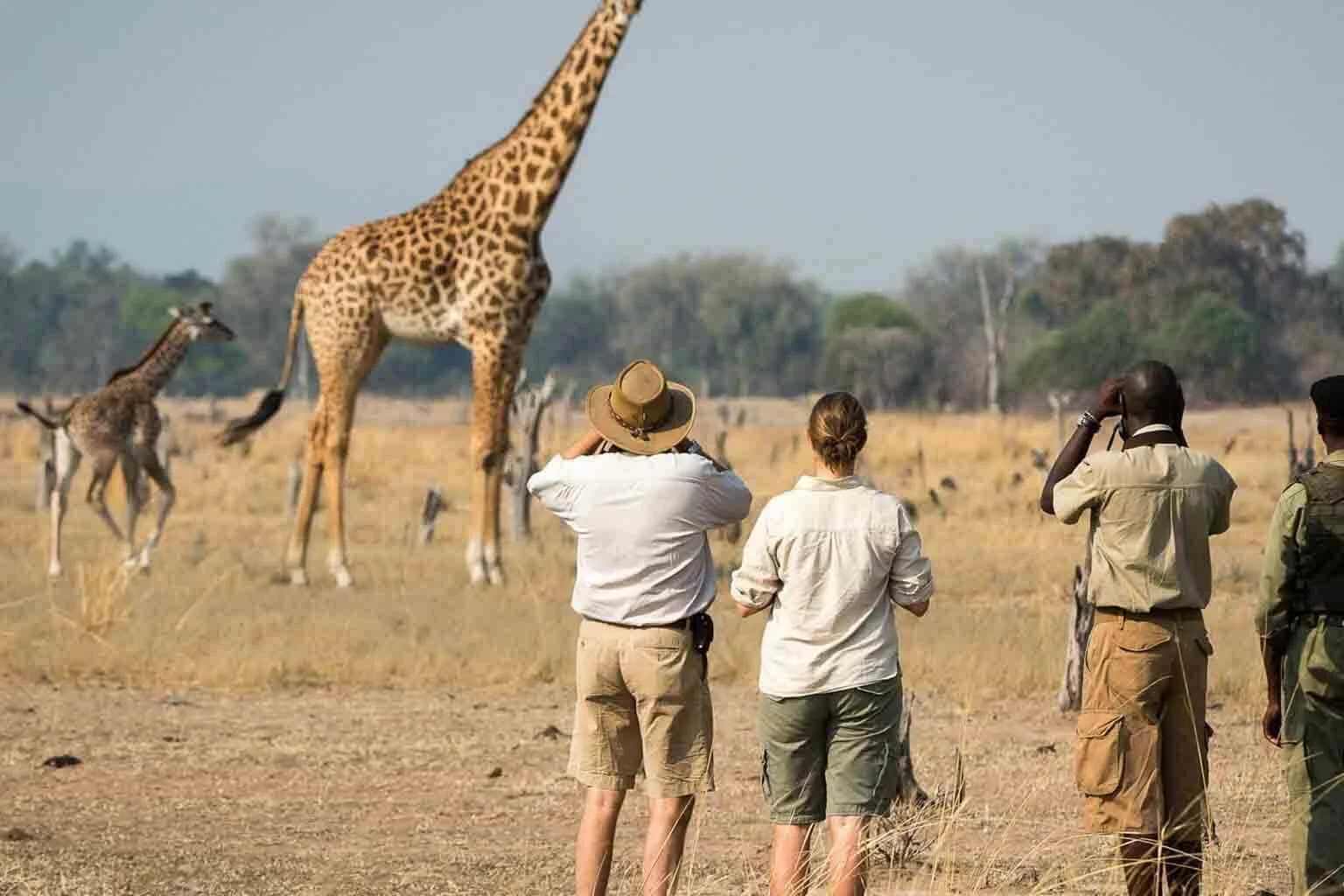
Kenya is where the modern photographic safari was invented, and it still shows. The classic Masai Mara experience is built around open-sided 4x4s with roll-back roofs, short flights from Wilson Airport (about 45 minutes Nairobi to the Mara versus a 5–6 hour drive), and — crucially — the private conservancies that ring the main reserve. Inside the national reserve you cannot leave the road, drive at night or walk. In the bordering conservancies (Olare Motorogi, Naboisho, Mara North and others) you can do all three, with strict limits on vehicle numbers, so a sighting is yours rather than shared with twenty other cars. That combination — easy access, lower fees, and the conservancy model — is why Kenya is the more relaxed first safari.
 Destination
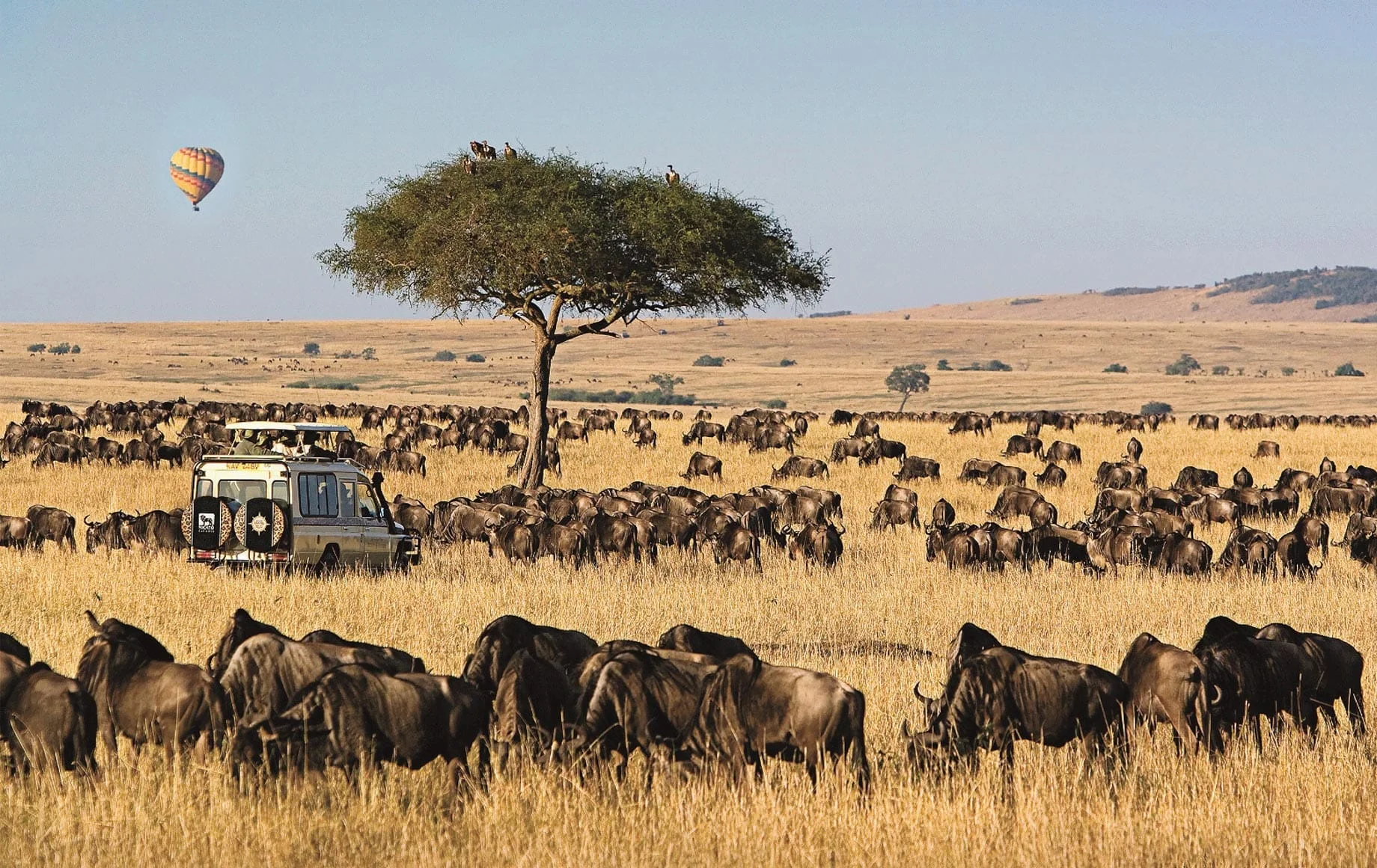
Masai Mara National Reserve
national_reserve
Tanzania trades convenience for scale and depth. The Serengeti alone is roughly 14,750 square kilometres — about ten times the size of the Masai Mara reserve — and it is not one place but four sub-regions you must name when you plan: central Serengeti (Seronera, the year-round predator core), the south (Ndutu, the calving plains), the west (Grumeti corridor) and the north (Kogatende, the Mara River crossing sector). Seronera to Kogatende is a 5–6 hour drive, so "the Serengeti" is a region, not a stop. Add the Ngorongoro Crater — a 264-square-kilometre collapsed caldera holding around 20–30 critically endangered black rhino and the most reliable Big Five day in the country — and Tarangire, where more than 3,000 elephants concentrate along the river in the dry months of August to October, and Tanzania's northern circuit is hard to match for sheer variety inside one loop.
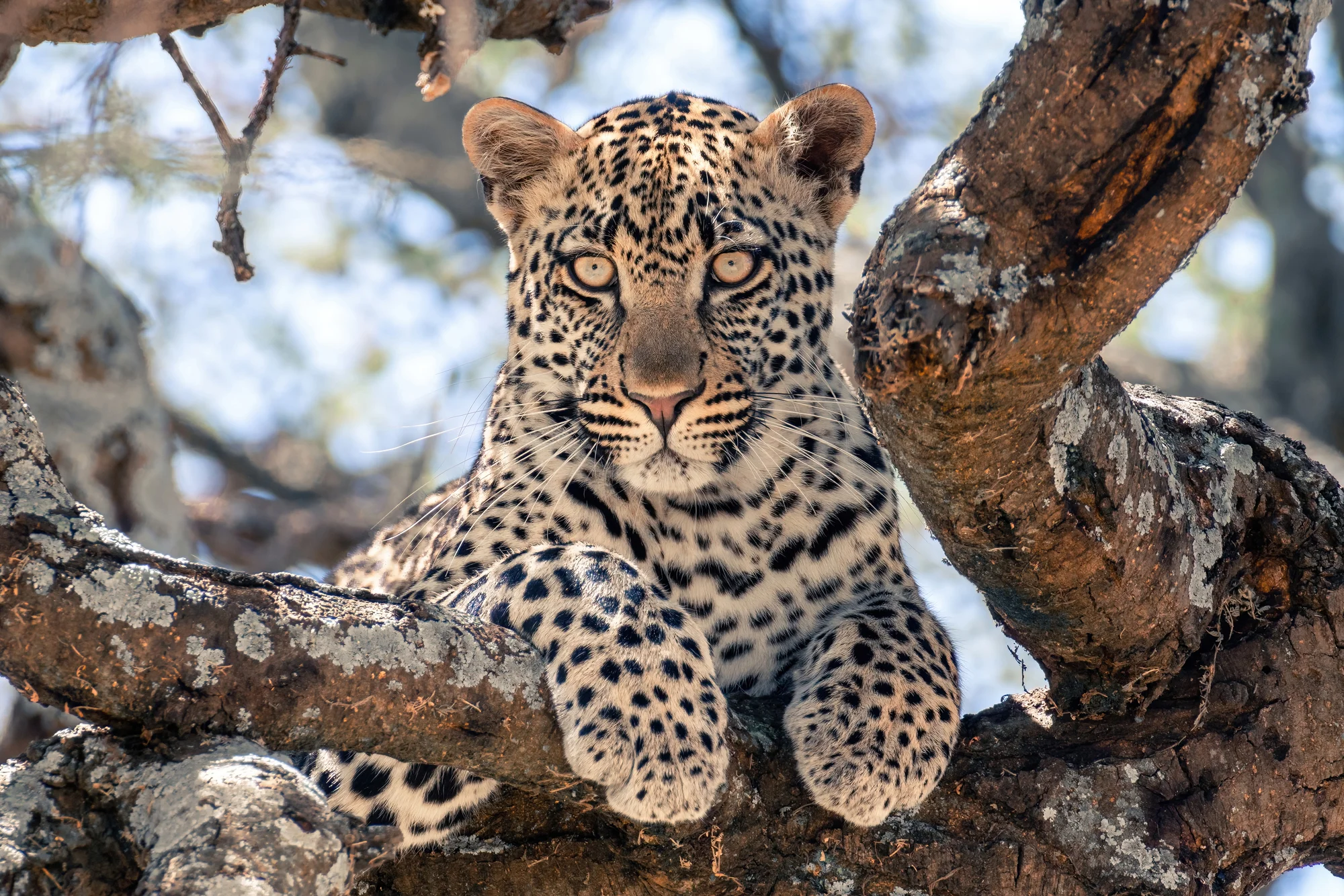
Game viewing itself is excellent in both. Kenya's Mara has arguably the highest big-cat density per square kilometre you will find anywhere, and the open terrain makes them easy to spot. Tanzania's Serengeti carries the larger absolute lion population and a famously dense leopard population along the Seronera River. Northern Kenya adds species the southern parks and Tanzania's north largely lack — the "Samburu Special Five" of Grevy's zebra, reticulated giraffe, gerenuk, beisa oryx and Somali ostrich, all viewable in Samburu. Amboseli gives you the picture-postcard shot of big-tusked elephants framed against the snows of Kilimanjaro, which sits just over the border in Tanzania. Neither country is "better" for wildlife in the abstract; they are differently shaped.
The migration: one herd, mostly in Tanzania#
This is the fact that should drive half of all safari planning and almost never does. The Great Migration is a single, continuous, roughly 1.5-million-strong herd of wildebeest (plus several hundred thousand zebra and gazelle) moving in a clockwise loop around the Serengeti–Mara ecosystem. It does not "happen in Kenya." It passes through Kenya's Masai Mara for only part of the year.
Here is the real calendar:
| Months | Where the herd is | Country |
|---|---|---|
| Dec–Mar | Ndutu / southern short-grass plains — calving season, 500,000+ calves born over Feb–Mar | Tanzania (Serengeti) |
| Apr–May | Moving north-west through central Serengeti | Tanzania |
| May–Jul | Grumeti corridor (western Serengeti), Grumeti River crossings | Tanzania |
| Jul–Oct | Kogatende (northern Serengeti) and the Masai Mara — Mara River crossings | Tanzania and Kenya |
| Nov | Returning south into the Serengeti | Tanzania |
The dramatic river crossings everyone pictures happen on the Mara River, which the herd crosses in both directions across the Tanzania–Kenya border. Kenya's famous Mara crossings and Tanzania's Kogatende crossings are the same animals on the same river system, just different banks. So "go to Kenya for the migration" is only true for roughly three months — August, September and October. For the other nine months the herd is in Tanzania, including the entire calving spectacle, which Kenya never sees. If you specifically want the river crossings and you want them with the easiest logistics, the Mara in August–October is a superb choice. If you want the migration at almost any other time of year, you are going to Tanzania.
Great Migration
Tour package collection
The planning move many experienced travellers make is to chase the herd to the right border in the right month rather than committing to a country first. In peak crossing season (roughly August–September) you can even combine both: northern Serengeti and the Masai Mara are adjacent across the border, and trips can be built to work both sides of the river.
Treks: Kilimanjaro vs Mount Kenya#
If a mountain is part of the trip, the two countries offer genuinely different climbs rather than two versions of the same thing.
Tanzania has Kilimanjaro — at 5,895 metres the highest peak in Africa and the highest free-standing mountain in the world. Its pull is that the summit, Uhuru Peak, is a non-technical walk-up: no ropes, no ice-axe skill, no climbing experience required. What it demands instead is endurance and, above all, acclimatisation, because altitude sickness — not technical difficulty — is what turns people back. Routes range from five days (Marangu, the only hut route) to seven, eight, or nine days (Lemosho and the Northern Circuit, which give the best acclimatisation and the highest success rates); Machame is the most popular middle path. Park fees run around US$100 per climber per day, which is why Kilimanjaro is a meaningful line item, not a casual add-on.
Mount Kenya is the quieter, more alpine choice — and a better climb for some people precisely because it is less of a procession. Its trekkers' summit, Point Lenana at 4,985 metres, is a walk-and-scramble reached on three- to four-day routes (Sirimon, Chogoria, Naro Moru), and the Chogoria approach in particular is widely rated more scenically beautiful than anything on Kilimanjaro, with tarns, gorges and giant lobelias. The mountain's two true summits, Batian (5,199m) and Nelion (5,188m), are technical rock-and-ice climbs requiring ropes and mountaineering skill — so unlike Kilimanjaro, the actual top of Mount Kenya is off-limits to trekkers. The trade is clear: Kilimanjaro for the iconic "roof of Africa" walk-up and the bragging rights of the continent's highest point; Mount Kenya for solitude, alpine character and a tougher, prettier trek that still tops out below 5,000 metres at Lenana.
Beaches: Zanzibar vs the Kenya coast#
Both countries put you on the warm Indian Ocean within an hour or two of the savanna, but the beach cultures differ.
Tanzania's headline is Zanzibar. The archipelago pairs Stone Town — a UNESCO-listed Swahili-Arab-Indian trading port of carved doors, spice markets and narrow lanes — with white-sand beaches that change character by coast: Nungwi and Kendwa in the north for swimmable beaches and nightlife, Paje and Jambiani in the east for kitesurfing and big tidal flats. The reefs are excellent, and for serious diving the quieter sister islands of Pemba and Mafia (the latter famous for whale sharks roughly October to March) are world-class and far less developed. The classic Tanzanian trip is binoculars in the morning, beach by sunset — Zanzibar is a short flight from the Serengeti or Arusha.
Kenya's coast is older and arguably more characterful for culture. Diani Beach, south of Mombasa, is the country's premier resort strip — ten-plus kilometres of white sand and reef, easy to reach and family-friendly. North of Mombasa, Watamu sits beside a marine national park with turtle nesting and superb snorkelling and diving. And then there is Lamu: a roadless UNESCO Swahili island where transport is by donkey and dhow, the oldest continuously inhabited town in Kenya, and the most atmospheric beach destination in either country if heritage and slow travel are what you want. As a rough rule: Zanzibar edges it for sheer beach variety and dive sites; Lamu and the Kenya coast win for lived-in Swahili culture and a less resort-heavy feel.
Cost and crowds: the practical differences#
On cost, Kenya is generally the cheaper trip, and it comes down to three things: getting there, getting around, and park fees. Nairobi's JKIA is the busiest hub in East Africa with the most direct long-haul flights, so airfares and connections are usually better than flying into Kilimanjaro Airport for the Tanzanian north. Once on the ground, Kenya's circuits involve shorter hops — Nairobi to the Mara is a 45-minute flight — whereas Tanzania's distances are longer and bush flights between sectors add up. And the headline park fees favour Kenya at the margin: the Masai Mara reserve charges US$80 per adult per day, while both the Serengeti and the Ngorongoro Conservation Area charge US$82.60 per adult per day, with Ngorongoro adding a US$295-per-vehicle crater service fee on top for the descent. None of these gaps is huge on its own, but stacked across a week they make Kenya the more budget-friendly option for a comparable itinerary.
On crowds, the picture is more nuanced than "Tanzania is emptier." The central Masai Mara reserve in peak crossing season (August–September) is the single busiest piece of safari real estate in East Africa — popular crossing points can draw dozens of vehicles. But Kenya's private conservancies are among the least crowded high-end safari experiences anywhere, with capped vehicle numbers and exclusive traversing rights. Tanzania's Ngorongoro Crater rim and the Seronera core get busy in peak season too, while the deep south and the northern Kogatende sector of the Serengeti stay genuinely wild. The honest rule: book the conservancies in Kenya or the less-trafficked Serengeti sectors in Tanzania and you will avoid crowds in either country; book the central Mara reserve or the crater floor in August and you will share them.
Browse Tanzania safarisBrowse Kenya safarisWho should pick which — and why we cover both#
Choose Kenya if you want the most efficient first safari: a single hub at Nairobi, short flights, open 4x4s, the option to walk and night-drive in conservancies, lower fees, and — if you go in July to October — the river crossings without the longer Tanzanian distances. It is the easier, cheaper, more relaxed trip, and northern Kenya (Samburu, Laikipia) adds species and conservancy experiences Tanzania does not match.
Choose Tanzania if you want the migration outside that narrow crossing window (especially the Dec–Mar calving), the Ngorongoro Crater, the densest single-loop variety in the northern circuit, the highest mountain in Africa, and the reef-and-spice combination of Zanzibar. It is the bigger, wilder, more bucket-list country, and you accept slightly higher costs and longer transfers for it.
And for a lot of travellers the right answer is both. Because the Serengeti and the Masai Mara sit across the same border in the same ecosystem, a combined trip — northern Serengeti and the Mara in peak crossing season, or a broader loop taking in the crater and a Kenyan conservancy — gives you the best of each. NoMiddleManTours plans and runs trips in both Kenya and Tanzania, which is the entire reason we can be honest here: we have no incentive to push you across one border or the other. Tell us the months you can travel and what matters most — crossings, calving, a mountain, a beach, a budget — and the country, or the combination, usually chooses itself.
Frequently asked questions#
Is Tanzania or Kenya better for the migration? Tanzania, for most of the year. The migration is one herd that spends roughly nine months in Tanzania's Serengeti — calving on the southern Ndutu plains December to March, the Grumeti corridor in the west around May to July, and the northern Kogatende crossings July to October. Kenya's Masai Mara only holds the herd for the river-crossing window of about July to October. If you want the famous crossings with easy logistics, Kenya in those months is excellent; for the migration at any other time, you go to Tanzania.
Is a Kenya safari cheaper than a Tanzania safari? Generally yes. Kenya is cheaper to reach (Nairobi is East Africa's main flight hub), has shorter and cheaper internal transfers, and slightly lower headline park fees — the Masai Mara is US$80 per adult per day versus US$82.60 for the Serengeti and Ngorongoro, and Ngorongoro adds a US$295-per-vehicle crater fee. Across a week the gaps add up in Kenya's favour for a comparable itinerary.
Which country is easier for a first safari? Kenya, for most people. Everything runs from one hub at Nairobi, the flights between parks are short (45 minutes to the Mara), the vehicles are open-sided 4x4s, and the private conservancies allow walking and night drives. Tanzania's parks are bigger and the distances longer, which is wonderful for depth but less efficient for a short first trip.
Kilimanjaro or Mount Kenya — which trek should I do? Kilimanjaro (5,895m, Tanzania) if you want Africa's highest peak as a non-technical walk-up — no climbing skills, just fitness and good acclimatisation over five to nine days. Mount Kenya if you want a quieter, more alpine trek to Point Lenana (4,985m) over three to four days; its scenery (especially the Chogoria route) is superb, but its true summits, Batian and Nelion, are technical climbs closed to trekkers.
Zanzibar or the Kenya coast for a beach add-on? Zanzibar (Tanzania) edges it for beach variety, reefs and diving, and pairs white-sand coasts with the culture of Stone Town; Pemba and Mafia add world-class quieter diving. Kenya's coast — Diani for resorts, Watamu for its marine park, and roadless, donkey-and-dhow Lamu for Swahili heritage — wins for lived-in culture and a less resort-heavy feel. Both are short flights from the safari.
Can you combine Kenya and Tanzania in one trip? Yes, and in peak crossing season it is one of the best trips in Africa. The northern Serengeti (Kogatende) and the Masai Mara are adjacent across the same border in the same ecosystem, so a combined itinerary can work both sides of the Mara River. A broader loop can also take in the Ngorongoro Crater in Tanzania and a private conservancy in Kenya.
Are the wildlife and the crowds different between the two countries? The wildlife is broadly the same — both share the migration ecosystem and all the big cats. Kenya's Mara has exceptional big-cat density and northern Kenya adds the Samburu Special Five; Tanzania has the larger Serengeti lion population, the Ngorongoro rhino, and Tarangire's elephant herds. On crowds, the central Mara reserve in August is the busiest spot in East Africa, but Kenyan conservancies and the deep or northern Serengeti are genuinely uncrowded — book those and you avoid the crush in either country.
Ready to plan the real thing?
Compare honest, all-in safari packages with real lodge choices — straight to the local operator, no middleman.
Browse safari packagesKeep reading
planning
What a Tanzania Safari Really Costs, Line by Line
planning
Lodge, Tented Camp or Mobile? Safari Stays in Tanzania, Explained
planning
Getting Your Tanzania Visa: The 2025–2026 Playbook

planning
Shots, Pills & the Yellow-Fever Trap: Health Prep for Tanzania & Kenya
planning
Sleeping in the Wild: Fly-Camping & Walking Safaris in Tanzania
planning
On Foot in East Africa: Walking Safaris in Tanzania & Kenya